
二十多年前,我十几岁的时候住在洛杉矶,去过旧金山。说实话,我对那次旅行几乎没什么印象了。直到成年后,因为工作调动,我才终于有机会以成年人的身份再次体验这座城市。
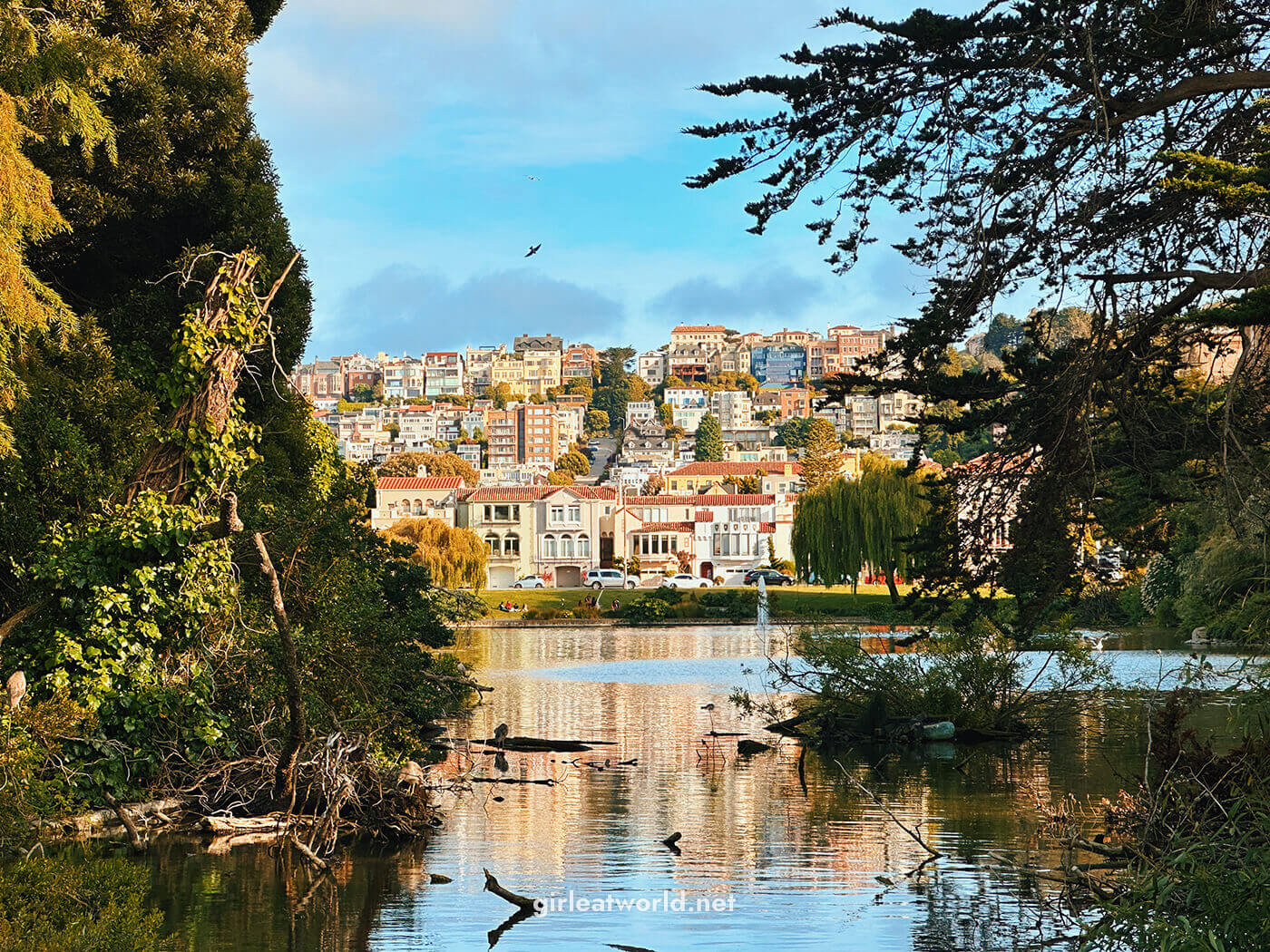
这次去旧金山,我心里其实挺忐忑的。之前看过一些报道,说疫情之后这座城市每况愈下,轻微犯罪率也达到了历史新高。但是,在旧金山待了五天之后,我觉得托尼·贝内特说得没错——我的心真的留在了旧金山。而且,我敢说,旧金山或许是我在美国最喜欢的城市。
当然,我必须避开某些区域。走路时我必须格外小心,以免踩到人行道上的粪便。有天晚上,我离开米慎区几个小时后,那里就发生了一起驾车枪击案。但这座城市如此美丽迷人,我情不自禁地爱上了它。
那么,请允许我带您领略我最爱的旧金山风情。
- 首次游览旧金山的贴士
- 我应该在旧金山待多久?
- 什么时候是游览旧金山的最佳时间?
- 如何从旧金山国际机场 (SFO) 前往旧金山
- 旧金山交通指南
- 旧金山的社区
- 旧金山住宿指南
- 旧金山行程
- 旧金山哪里可以吃饭
- 旧金山购物指南
- 旧金山发生的重大事件
首次游览旧金山的贴士
1. 旧金山地势起伏很大——我觉得光看网上的地图很难体会到这一点,但没错,这座城市确实有很多(陡峭的)高低起伏。我个人很喜欢这种地形,因为拍出来的照片很漂亮,但我知道有些人会希望我提醒一下。所以,如果你打算步行游览(我确实认为步行是体验旧金山的最佳方式),请务必穿上合适的鞋子!
 100vw, 1400px” data-lazy-src=”https://girleatworld.net/wp-content/uploads/2023/06/san-francisco-itinerary-15.jpg” /><figcaption class=) 旧金山丘陵地带一条坡度陡峭的街道
旧金山丘陵地带一条坡度陡峭的街道2. 旧金山是个早起的城市——大多数商店晚上7点就关门了,餐馆晚上10点就歇业了。请提前做好计划!我听说在这个城市,下午5点或6点吃晚饭是很正常的。
3. 注意加州销售税!在加州,每次购物都要缴纳 8.5% 的销售税。这笔销售税通常不包含在标价中,会在付款时单独收取。例如,假设你看到一个漂亮的钱包标价 30 美元,那么付款时实际价格可能是 32.55 美元。购买时务必将这笔税款考虑在内。
4. 学习美式小费习惯——我知道,美国的小费文化会让每个外国游客都感到困惑。确实很让人摸不着头脑!但是,你也不应该仅仅因为不认同这种社会习俗就少给别人小费。最常见的需要给小费的情况是在餐厅用餐。一般来说,服务一般给15%的小费,服务很好给20%,服务特别好给25%。在食物制作完成但不直接送到你面前的场所,比如快餐店、面包店或甜品店,不需要给小费。但如果你觉得店员的服务特别好,给点小费当然更好。你也不需要给网约车司机小费(不过,给点小费总是没错的),但出租车司机必须给小费。
5. 旧金山安全:避开某些街区并保持警惕——在旧金山,安全问题是一个值得关注的话题。我相信你也从新闻中有所了解。一般来说,你应该避开田德隆区(Tenderloin)的某些区域。通常指的是市场街(Market Street)与第五街至第九街交汇处附近的区域。如果你开车进城,停车时务必确保不要将任何贵重物品留在车内显眼处,并且只停在安全的停车场(而不是路边)。无论在哪个区域,汽车盗窃在旧金山都很常见。
 100vw, 1400px” data-lazy-src=”https://girleatworld.net/wp-content/uploads/2023/06/san-francisco-itinerary-09.jpg” /><figcaption class=) 从米申区眺望伯纳尔高地
从米申区眺望伯纳尔高地6. iPhone 用户——同时使用 Apple 地图和 Google 地图! ——在其他任何地方,我通常只用 Google 地图就足够了。但在旧金山,由于它离苹果总部所在地库比蒂诺很近,我发现 Apple 地图有时更准确,体验也更好。我还注意到当地人使用 Apple 地图的频率也高于 Google 地图。
7.购买数据 eSIM 卡——这是每个目的地旅行的必备品,尤其是在美国旅行时更是如此。手机拥有数据流量可以让你轻松查找路线、预订 Uber 以及充值交通卡。eSIM 卡的优势在于:你仍然可以保留原有的 SIM 卡,这意味着你不会完全失去与国内号码的连接。你可以在这里购买美国 eSIM 卡。购买前请务必确认你的手机支持 eSIM。
8. Wise卡在旧金山非常好用——实际上,在美国其他地方也一样。如果你像我一样是国际游客,一定要办一张Wise借记卡。使用Wise卡可以省下境外交易手续费。我在旧金山和纽约的时候从来没用过现金。
我应该在旧金山待多久?
我在旧金山待了五天,感觉还可以待更久。我觉得至少需要三天才能真正感受这座城市的魅力。
如果你把行程安排得满满当当,按照我的行程计划来,或许可以在两天内游览旧金山的大部分主要景点,但时间会很赶。
 100vw, 1400px” data-lazy-src=”https://girleatworld.net/wp-content/uploads/2023/06/san-francisco-itinerary-23.jpg” /><figcaption class=) 旧金山的栗树街
旧金山的栗树街什么时候是游览旧金山的最佳时间?
我五月下旬到六月初去了旧金山,我觉得那是一年中最好的时间。天气有时棒极了——晴空万里,阳光灿烂;有时阴天,但也不冷。说实话,天气好坏根本无法预测,你永远不知道“卡尔雾”什么时候会突然降临。
如何从机场 (SFO) 前往旧金山
前往旧金山的最佳方式是飞往旧金山国际机场 (SFO)。从 SFO 出发,您可以尝试以下几种交通方式:
1. 搭乘 Uber 或 Lyft——这当然是进入市区最直接的方式,但也是最贵的。作为对比,我从旧金山国际机场 (SFO) 搭乘 Uber 到渔人码头的费用为 58 美元(含小费)。
2. 搭乘 BART – BART 是旧金山湾区捷运系统的简称。这可能是最佳方式,因为旧金山国际机场 (SFO) 本身就设有 BART 车站。从 SFO 到市区的 BART 票价约为 9.90 美元,到达市区后,您可以继续搭乘旧金山公共交通系统 (MUNI) 前往市区。您可以使用 Clipper 卡支付 BART 车费(详情见下文)。
3. 搭乘加州火车 (Caltrain) – 这是前往旧金山最受欢迎的通勤方式之一。从旧金山国际机场 (SFO) 前往旧金山,您需要先到达圣布鲁诺加州火车站 (San Bruno Caltrain station )(注意不要与圣布鲁诺湾区捷运站 San Bruno BART station 混淆),然后乘坐火车前往旧金山站,票价为 3.25 美元。到达旧金山后,您可以继续搭乘旧金山公共交通系统 (MUNI) 前往旧金山市区。
 100vw, 1400px” data-lazy-src=”https://girleatworld.net/wp-content/uploads/2023/06/san-francisco-itinerary-18-1.jpg” /><figcaption class=) 联合广场的赫斯特大厦
联合广场的赫斯特大厦在旧金山出行
正如我之前所说,旧金山是一座非常适合步行的城市,我真心认为步行是探索这座城市的最佳方式。然而,有时您可能无法步行,在这种情况下,旧金山还有几种出行方式可供选择:
- 如果您是3-4人出行,使用Uber或Lyft等拼车服务是最佳选择之一。在市区内乘坐Uber的费用并不高。我通常在市区内乘坐Uber,费用仅为10-16美元(不含小费)。
- 乘坐旧金山公共交通系统 Muni ——Muni 是旧金山公共交通局 (The San Francisco Municipal Railway)的简称,是旧金山的公共交通系统。Muni 运营着公交线路、Muni Metro 轻轨系统、三条历史悠久的缆车线路和两条历史悠久的有轨电车线路。单程 Muni 票价为 2.5 美元,有效期为 120 分钟。这意味着您支付车费后,可以在 2 小时内无限次乘坐。另一个好消息是——19 岁以下人士可免费乘车(点击此处查看 Muni 票价)。
- 历史悠久的缆车——没错,乘坐缆车绝对是一个不错的选择。即使您不打算乘坐公共交通工具,也请务必体验一下缆车。它真的非常迷人!(点击此处了解更多缆车信息)
- 租车——我不太建议在旧金山开车,因为停车费很贵。而且,汽车被砸的概率也比较高。但如果你一定要开车,尽量租一辆挂加州牌照的车,并且表现得像个本地人。游客(包括来自外州的美国国内游客)更容易成为汽车被砸的目标。
 100vw, 1400px” data-lazy-src=”https://girleatworld.net/wp-content/uploads/2023/06/san-francisco-itinerary-56.jpg” /><figcaption class=) 渔人码头
渔人码头支付公共交通费用:在旧金山湾区使用 MuniMobile 卡还是 Clipper 卡
旧金山有两种交通卡系统:MuniMobile和Clipper卡。MuniMobile 卡仅限旧金山市区使用,而 Clipper 卡覆盖整个湾区,包括旧金山。
对于那些只计划偶尔乘坐公共交通工具(每天 1-2 次)的人来说,Clipper 卡是单次乘车最方便的方式,因为它允许您通过智能手机付款,而无需任何其他应用程序。
如何使用 Clipper 卡:点击此处查看如何将 Clipper 卡添加到手机的说明。
However, if you are planning to take a lot of public transport and get on cable cars while in SF, you might want to check out MuniMobile because they have visitor passports that will give you unlimited rides on all Muni public transportation including historic streetcars and cable cars. The passes are valid for 1 day (US$13), 3 days (US$31), or 7 days (US$41). This could be worthwhile as the price for a single ride on the cable car is already US$8.00. If you’re only planning to take Muni transports (and no cable cars), they also have a day pass for US$5. View the full list of fares here.
You don’t have to choose between only using MuniMobile or Clipper cards. You could use a mix of both. For example, you could get a 1-day pass on MuniMobile for the days that you’re planning to take the cable car and other transports. On other days when you aren’t taking the cable car anymore, you can use the Clipper card or get the MuniMobile Day Pass.
Taking the Historic Cable Car in San Francisco
Taking the cable car may not be practical for everyday use in San Francisco, but I think this is a cool and novel way to explore the city! You should try it at least once even if you’re not planning to take public transportation.
Here’s what you need to know about taking the cable car:
 100vw, 1400px” data-lazy-src=”https://girleatworld.net/wp-content/uploads/2023/06/san-francisco-itinerary-22.jpg” /><figcaption class=) Powell & Mason Cable Car
Powell & Mason Cable CarFare – A single, one-way cable car ride costs US$8 and it doesn’t allow you to hop on/off, so as much as possible you’ll want to ride the entire route. If you’re planning on taking the cable car, you might want to look into the visitor passes that are available through MuniMobile, which will allow unlimited rides on the cable car in case you do want to ride it multiple times a day.
Timing – The cable car service starts at 7 AM, but I don’t recommend going THAT early because most other attractions are open only from 9:30 AM onward. I think 9 AM is the perfect time if you’re up for an early start. Unless, you’re planning to go for early morning hiking or walking by the beach which is open 24/7.
 100vw, 1400px” data-lazy-src=”https://girleatworld.net/wp-content/uploads/2023/06/san-francisco-itinerary-12.jpg” /><figcaption class=) Historic Cable Car
Historic Cable CarRoutes – Usually, the starting point is from Union Square at Powell St & Market St, and you would likely have to queue for it unless you’re there early.
There are two routes you can take from Union Square to Fisherman’s Wharf:
- Powell-Hyde – Drops you off near Ghirardelli Square (Route Map)
- Powell-Mason – Drops you off near Pier 39 at the Powell/Mason Cable Car Turnaround (Route Map)
It doesn’t matter which one you take. The routes are pretty similar and endpoints are pretty close together.
Another option is to take the cable car down from Fisherman’s Wharf to Union Square. This is the lesser-popular way, and you might not have to line up to get on the cable car, as opposed to if you take it from Union Square to Fisherman’s Wharf.
 100vw, 1400px” data-lazy-src=”https://girleatworld.net/wp-content/uploads/2023/06/san-francisco-itinerary-59.jpg” /><figcaption class=) The cable car turnaround point at Fisherman’s Wharf was so empty!
The cable car turnaround point at Fisherman’s Wharf was so empty!Another lesser-popular route is the California Cable car, which takes you from east to west. Find out more about California cable cars here.
Lastly, if you’re interested in how the cable car works and its history in San Francisco, you should make sure to stop by the San Francisco Cable Car Museum. It’s free of charge! This museum gives you an overview of the history of the cable cars in San Francisco, how the cable cars work, as well as a view of the actual cable that runs the cable cars around the city. I highly recommend it.
Neighborhoods / Districts in San Francisco
San Francisco is not a big city, but each of its districts has its own personality. I’ll expand more on each neighborhood in the itinerary below, but here are a few notable districts you’ll want to know about as a visitor:
Union Square – This is the downtown area of San Francisco. Before the pandemic, this was where most people go to work and shop.
 100vw, 1400px” data-lazy-src=”https://girleatworld.net/wp-content/uploads/2023/06/san-francisco-itinerary-50.jpg” /><figcaption class=) Union Square district in San Francisco
Union Square district in San FranciscoSoMa – Short for “South of Market”. It’s an extension of Union Square and where many tech companies are headquartered.
Marina – The area northwest of the city. It’s considered a nice neighborhood, and it’s where some tourist attractions are located, such as the Palace of Fine Arts and Crissy Field. There are also nice neighborhoods and shops on Union Street.
Haight-Ashbury – A super cool and colorful neighborhood, channeling the 1960s hippie culture. This was my favorite neighborhood in San Francisco out of all the ones I visited.
Fisherman’s Wharf – A picturesque district. Fisherman’s Wharf is yet another district with plenty of touristy things to do: Pier 39 and Ghirardelli Square to name a few.
Mission District – The Latino central of San Francisco, the Mission District is the most vibrant, colorful, and exciting neighborhood in the city. There is so much to do at Mission that I dedicated one of my itinerary days entirely to Mission, and an entire section just for food at Mission, which was superb.
Castro – Although the whole of San Francisco is supportive of LGBTQ these days, Castro is where it all started. Not only is it the first LGBTQ neighborhood in SF, it’s the one of the first of such neighborhood in the whole of the states.
Tenderloin – Not everything about the district is bad, but Tenderloin has a seedy reputation. You can definitely still find interesting things to do here, but it’s wise to be aware of what you’re getting into before you go to the Tenderloin district. As a visitor, I recommend to do your best to stay away.
Where to stay in San Francisco
I stayed at Kimpton Alton at Fisherman’s Wharf, a new hotel that had just opened in 2021. I booked this hotel because it has great reviews. After 3 nights of staying here, I can definitely corroborate those positive reviews. I loved my stay at Kimpton Alton!
Initially, I was looking at hotels in Union Square since that seems to be where most hotels and shops are. But we decided against it since the group I was traveling with wanted a quiet and safe area.
 100vw, 1400px” data-lazy-src=”https://girleatworld.net/wp-content/uploads/2023/06/san-francisco-itinerary-27.jpg” /></figure>
<figure class=)
 100vw, 1400px” data-lazy-src=”https://girleatworld.net/wp-content/uploads/2023/06/san-francisco-itinerary-21.jpg” /></figure><figcaption class=) Our room at Kimpton Alton at Fisherman’s Wharf
Our room at Kimpton Alton at Fisherman’s WharfThe rooms at Kimpton Alton were modern and clean. Each room even came with a record player! Check-in was really fast. They gave us US$10 snack credit for each night we stayed, which could be redeemed for cookies and candies at the snack bar in the lobby. They also had a free flow wine hour from 5-6 pm every day.
The location of Kimpton Alton Hotel was convenient too. There was a Trader Joe’s within a 5-minute walk distance. The only In-N-Out Burger in the city is also within a 3-minute walk. And of course, there are plenty of tourist attractions nearby. We walked to Ghirardelli Square, Lombard Street, Chinatown, and Coit Tower on our first day in the city.
If Kimpton Alton doesn’t tick the boxes for you, here are other great accommodations in San Francisco that I considered:
- Chateau Tivoli B&B at Alamo Square – I happened to pass by Chateau Tivoli after visiting the painted ladies nearby, and the hotel caught my eye because of its iconic late-nineteenth-century architecture that can be seen all over San Francisco. Turns out, Chateau Tivoli is a historic residence that has been converted into a small bed and breakfast. I wish I had known about this place because I definitely would have booked here.
- citizenM Union Square – If you are traveling by yourself or as a couple, you can consider citizenM. The rooms are small, but the location is great. Right at the heart of Union Square with plenty of amenities nearby.
- The Clancy Autograph Collection at SoMa / Union Square – Located just a little south of Market Street, this hotel is also at the heart of Union Square and close to many shops and amenities. It’s within a block away from SF MoMA.
The San Francisco Itinerary
I’ve created daily itineraries you can do in San Francisco. Please note that you don’t need to do the itinerary in the same order as I’ve outlined below. I’ve simply grouped the activities and attractions that are close to each other so that they can be visited together.
- Day 1: The San Francisco Essentials (Part 1)
- Day 2: The San Francisco Essentials (Part 2)
- Day 3: Mission District and Dolores Park (Pick a sunny day for this)
- Day 4: Other things you can do in San Francisco
- Day 5 onward: Day trips from San Francisco
Day 1: The San Francisco Essentials (Part 1)
As a first-timer in San Francisco, this itinerary will cover nearly everything San Francisco is known for. Put your comfortable walking shoes on, because you’ll be walking a lot today – up and down the hilly streets of San Francisco. But like I said before – San Francisco is best experienced by walking!
1. Take Cable Car to Fisherman’s Wharf (OPTIONAL)
If you’re staying at Union Square, or any other location that isn’t Fisherman’s Wharf, you can start your morning by taking one of San Francisco’s historic Cable Cars. But if you can’t, don’t worry – there are other opportunities to get on the cable car later.
For today, I suggest taking Powell-Mason which will drop you off at Powell/Mason Cable Car Turnaround and closer to Pier 39 and our next destinations. Find out more about how to take the cable car here
 100vw, 1400px” data-lazy-src=”https://girleatworld.net/wp-content/uploads/2023/06/san-francisco-itinerary-57.jpg” /><figcaption class=) Powell & Hyde Cable Car turning around at Union Square
Powell & Hyde Cable Car turning around at Union Square2. Breakfast at Boudin
Start your day by having breakfast at Boudin Bakery. Boudin claims to be the inventor of San Francisco Sourdough, and to this day they are still baking their sourdough bread from a gold miner’s sourdough starter! This means, if you’re eating Boudin’s sourdough – you could be tasting something that is over 100 years old.
 100vw, 1400px” data-lazy-src=”https://girleatworld.net/wp-content/uploads/2023/06/san-francisco-itinerary-47.jpg” /><figcaption class=) Boudin Bakery
Boudin BakeryBoudin is also known for New England-style clam chowders served in sourdough bread bowls. Although touristy, I thought the clam chowder was pretty good. And you get to try the sourdough bread with it, so it’s a two-birds-one-stone type of situation!
3. Pier 39
Boudin is already at Pier 39, so once you’re done with breakfast – head on over to Pier 39. Some notable attractions nearby are:
- See the famous San Francisco Sea Lions – They are often found lounging about on Pier 39. You can check a live webcam here first if you are visiting and want to see if the sea lions are there.
- Pearl Factory – where you can see pearls harvested from an oyster
- Magowan’s Infinite Mirror Maze – A colorful mirror maze, a staple of any American beach carnival attraction. You go in and try to find your way out.
- Aquarium of the Bay – If you are interested in visiting this aquarium, please pre-buy the ticket online here for a cheaper price. General admission at the door is US$31.75 + Service = US$34.
- Musée Mécanique – A free museum showcasing antique and coin-operated arcade games
4. Ghirardelli Square
From Pier 39, take a short walk to the west and find Aquatic Cove and Fort Mason. This is a very nice walk that really shows off the beauty of San Francisco, especially on a good day. You’ll be able to see Alcatraz Island from here.
 100vw, 1400px” data-lazy-src=”https://girleatworld.net/wp-content/uploads/2023/06/san-francisco-itinerary-03.jpg” /><figcaption class=) Ghirardelli Square
Ghirardelli SquareThen, once you’re done, right to the south of it is Ghirardelli Square, where you can learn about the history of chocolate factories in San Francisco and taste their hot chocolate or buy the famous Ghirardelli chocolates.
5. Lombard Street
From Ghirardelli Square, head further south and up the hill to our destination: Lombard Street. I suggest walking through Francisco Park for a more scenic route.
From the park, Lombard Street is just a few minutes up the hill.
Enter from the Hyde Street side, so that you can walk down Lombard Street instead of walking up.
 100vw, 1400px” data-lazy-src=”https://girleatworld.net/wp-content/uploads/2023/06/san-francisco-itinerary-54.jpg” /><figcaption class=) View of Golden Gate Bridge from Francisco Park
View of Golden Gate Bridge from Francisco Park 100vw, 1400px” data-lazy-src=”https://girleatworld.net/wp-content/uploads/2023/06/san-francisco-itinerary-07.jpg” /><figcaption class=) Lombard Street
Lombard StreetLombard Street is a scenic street that is sloped steeply at 27% grade. And due to the steepness, it contains eight switchbacks to allow cars to safely climb up and down the street. Thanks to this design, Lombard is now famous for being “the crooked-est street in the world“. People who live on this street must be really good drivers – I can’t imagine having to park my car in the garage of any of the houses on this street.
 100vw, 1400px” data-lazy-src=”https://girleatworld.net/wp-content/uploads/2023/06/san-francisco-itinerary-08.jpg” /><figcaption class=) Looking up to Lombard Street
Looking up to Lombard StreetYou can use the stairs on either side of the street to go down Lombard Street to our next destination.
6. North Beach
From Lombard Street, go east to Columbus Avenue, where you’ll find yourself in North Beach, aka the Little Italy of San Francisco. Here are a few notable attractions you can explore in North Beach:
- City Lights Bookstore – An independent bookstore, and a MUST visit for book lovers. It was founded in 1953. The bookstore has plenty of books, including an entire section of a poetry room. In 2001, it became one of San Francisco’s Designated Landmarks.
 100vw, 1400px” data-lazy-src=”https://girleatworld.net/wp-content/uploads/2023/06/san-francisco-itinerary-10.jpg” /></figure>
<figure class=)
 100vw, 1400px” data-lazy-src=”https://girleatworld.net/wp-content/uploads/2023/06/san-francisco-itinerary-34.jpg” /></figure>
<figure class=)
 100vw, 1400px” data-lazy-src=”https://girleatworld.net/wp-content/uploads/2023/06/san-francisco-itinerary-39.jpg” /></figure>
<figure class=)
 100vw, 1400px” data-lazy-src=”https://girleatworld.net/wp-content/uploads/2023/06/san-francisco-itinerary-41.jpg” /></figure><figcaption class=) City Lights Bookstore
City Lights Bookstore- The Beat Museum – If you are a fan of the Beat Generation in the 1950s, especially the works of Jack Kerouac, you’ll want to check out this museum. Admission is only US$8.
- Sam’s Pizza & Burgers – This would be a great option for late lunch on this day. This place serves one of late Anthony Bourdain’s favorite burgers, which he says was one of his “top three in the world”. But take note, they open late. They are only open from 1 PM (Sun to Thu) or 2 PM (Fri & Sat).
- Graffeo Coffee Roasting Co – A famous coffee roaster. Take note they don’t serve coffee in the form of drinks, they only sell beans!
 100vw, 1400px” data-lazy-src=”https://girleatworld.net/wp-content/uploads/2023/06/san-francisco-itinerary-48.jpg” /><figcaption class=) Panamericana building from the San Francisco North Beach district
Panamericana building from the San Francisco North Beach district7. Coit Towers
From North Beach, head to Coit Tower. Coit Tower is an old tower built in 1933 on Telegraph Hill. From the outside of the tower, you can stop and admire the view of Bay Bridge and Treasure Island from up there.
 100vw, 1400px” data-lazy-src=”https://girleatworld.net/wp-content/uploads/2023/06/san-francisco-itinerary-46.jpg” /></figure>
<figure class=)
 100vw, 1400px” data-lazy-src=”https://girleatworld.net/wp-content/uploads/2023/06/san-francisco-itinerary-30.jpg” /></figure>
</figure>
<p data-slot-rendered-content=) There are beautiful murals in the lobby and staircase of the tower up to the 2nd floor, which was painted in 1934 and depicts scenes from California during the great depression era.
There are beautiful murals in the lobby and staircase of the tower up to the 2nd floor, which was painted in 1934 and depicts scenes from California during the great depression era.
 100vw, 1400px” data-lazy-src=”https://girleatworld.net/wp-content/uploads/2023/06/san-francisco-itinerary-02.jpg” /><figcaption class=) Murals at COIT Tower
Murals at COIT TowerAt the top of the tower, it gives you a cool 360 view of San Francisco city. Take note though, when we visited, the old elevator was closed so we had to walk up the stairs all the way to the 13th floor.
There is a $10 admission for non-SF residents to go up, and I think it’s worth every penny. Although the tower only 13 stories and doesn’t sound very tall, it’s located on top of a hill so you truly get a non-blocked view of the area, better than some of the skyscrapers in SF.
 100vw, 1400px” data-lazy-src=”https://girleatworld.net/wp-content/uploads/2023/06/san-francisco-itinerary-33.jpg” /></figure>
<figure class=)
 100vw, 1400px” data-lazy-src=”https://girleatworld.net/wp-content/uploads/2023/06/san-francisco-itinerary-20.jpg” /></figure><figcaption class=) View from the top of Coit Tower
View from the top of Coit Tower8. Choose your own adventure: Exploratorium, San Francisco Cable Car Museum, or In-N-Out Dinner
Depending on when you’re done with your Coit Tower, you could explore the following activities near the area:
- Exploratorium – Science and Technology Museum. Closes at 5 pm, but re-opens at night time 6-10 PM on Thursdays, and fully closed on Mondays. Buy your tickets here.
- San Francisco Bay Sunset Cruise – A 1.5-hour cruise around the bay, where you’ll be able to see Alcatraz, Golden Gate Bridge, and the Bay Bridge.
- San Francisco Cable Car Museum – Free Admission. This museum gives you an overview of the history of the cable cars in San Francisco, how the cable cars work, as well as a view of the actual cable that runs the cable cars. The museum closes at 4 PM and is fully closed on Mondays. Highly recommend!
- In-N-Out for dinner – Or, if you need some rest you could simply head back to Fisherman’s Wharf for In-N-Out Dinner.
- Take a look at the list of things to do in San Francisco or where to eat in San Francisco for more ideas
Day 2: The San Francisco Essentials (Part 2)
It’s not enough to see San Francisco in just one day, so let’s continue on to our second day of San Francisco essentials.
1. Take Cable Car to Fisherman’s Wharf (OPTIONAL)
If you didn’t get the chance to take the Cable Car before, now is another chance.
For this day, I recommend taking the Powell-Hyde as it drops us closer to our destinations for the day. You will be dropped off at Powell & Hyde Cable Car Turnabout. Learn more about how to take the cable car here.
2. Fort Mason
From Fisherman’s Wharf, continue northwest to Aquatic Park Pier and walk through Fort Mason. You can then continue walking west towards the Palace of Fine Arts, stopping by The Wave Organ if you have time.
3. Palace of Fine Arts
You really can’t miss the Palace of Fine Arts. Once you get there – you’ll know. It’s a grand structure, built in the ancient Roman style, located in the Marina district of San Francisco. Palace of Fine Arts is free to visit, though it’s possible that certain areas might be booked for private events or weddings.
 100vw, 1400px” data-lazy-src=”https://girleatworld.net/wp-content/uploads/2023/06/san-francisco-itinerary-37.jpg” /><figcaption class=) Palace of Fine Arts
Palace of Fine Arts 100vw, 1400px” data-lazy-src=”https://girleatworld.net/wp-content/uploads/2023/06/san-francisco-itinerary-06.jpg” /><figcaption class=) Palace of Fine Arts
Palace of Fine Arts4. Crissy Field
From the Palace of Fine Arts, Crissy Field is just a very short walk north. You can see the Golden Gate Bridge from here, as well as the Alcatraz island. There is a nice and easy trail you can follow for a waterfront walk.
 100vw, 1400px” data-lazy-src=”https://girleatworld.net/wp-content/uploads/2023/06/san-francisco-itinerary-43.jpg” /><figcaption class=) Golden Gate Bridge from Crissy Fields
Golden Gate Bridge from Crissy Fields5. See the Golden Gate Bridge up close
The Golden Gate Bridge needs no introduction – it is, without a doubt, the symbol of San Francisco. The bridge connects the San Francisco peninsula to Marin County in the north. Unlike what the name implies, the bridge is not golden, it’s a very vivid reddish-orange or vermillion in color, which makes it very photogenic.
There are a few popular ways to enjoy the Golden Gate Bridge and its surrounding area:
- First, the most obvious one – you can call an Uber to visit the viewpoints. Take note there is a toll to cross the Golden Gate Bridge, which will be US$9.40 one way. This will be added to your Uber fare.
- Second, you can walk across the Golden Gate Bridge. There is a dedicated area for pedestrians. This will take about 35-40 minutes one way. This would be a fairly easy walk, but it could be cold and windy on the bridge if the weather is not cooperating. Make sure you’re properly dressed for all kinds of weather.
- Third, you can also rent a bicycle and cycle across in 25 minutes per way. The Golden Gate Bridge is part of a popular biking trail. Rent your bicycle here and you can optionally take the ferry back if you don’t feel like cycling.
- Fourth, you can take the ferry to Sausalito for a view of Golden Gate Bridge and Alcatraz island. Here is the ferry schedule. The ride costs $8.25 one way, which you can pay with Clipper card. It takes around 30 minutes one way.
- Lastly, you could take a San Francisco Bay Sunset Cruise which is a 1.5-hour cruise around the bay, where you’ll be able to see Alcatraz, Golden Gate Bridge, and the Bay Bridge up close.
Lookout / Viewpoints to see the Golden Gate Bridge
Here are a few popular lookout points:
金门大桥观景台——它位于旧金山半岛上,地理位置便利,如果您只想看看大桥而不想实际过桥,这里是理想之选。
斯宾塞炮台——这可能是金门大桥最著名的观景点。请注意,开车前往此处需要绕马林岬角的整个山丘行驶一圈。因此,如果您乘坐优步,可以要求司机在岬角停车场下车,然后步行一小段路程即可到达。
 100vw, 1400px” data-lazy-src=”https://girleatworld.net/wp-content/uploads/2023/06/san-francisco-itinerary-62.jpg” /><figcaption class=) 从斯宾塞炮台眺望金门大桥
从斯宾塞炮台眺望金门大桥从另一侧朝北看,景色也相当不错!
 100vw, 1400px” data-lazy-src=”https://girleatworld.net/wp-content/uploads/2023/06/san-francisco-itinerary-52.jpg” /><figcaption class=) 从斯宾塞炮台眺望理查森湾
从斯宾塞炮台眺望理查森湾达纳·鲍尔斯休息区及观景点——这是一个位于马林县金门大桥桥头的休息区。它离斯宾塞炮台很近,所以您可以同时游览这两个观景点。
 100vw, 1400px” data-lazy-src=”https://girleatworld.net/wp-content/uploads/2023/06/san-francisco-itinerary-51.jpg” /><figcaption class=) 从达纳·鲍尔斯休息区和观景点眺望金门大桥
从达纳·鲍尔斯休息区和观景点眺望金门大桥柯比湾——它也位于斯宾塞炮台附近,但需要步行一段路才能到达。请务必穿着适合徒步的鞋子。
对了,参观完金门大桥后,不妨去人气面包店Arsicault Bakery尝尝他们著名的羊角面包。这家面包店位于里士满区,就在金门大桥南边一点。
6. 探索街区:海特-阿什伯里
游览完金门大桥后,就该去探索旧金山的街区了!你可以选择任何一个街区,但我建议去海特-阿什伯里区,因为它离金门大桥的观景点很近。虽然海特-阿什伯里区面积不大,但它是我在旧金山最喜欢的街区。
 100vw, 1400px” data-lazy-src=”https://girleatworld.net/wp-content/uploads/2023/06/san-francisco-itinerary-11.jpg” /><figcaption class=) 海特-阿什伯里
海特-阿什伯里首先,您可以先在海特-阿什伯里彩绘女士区下车,然后沿着海特街向西走,随心所欲地探索。这一带有很多商店和餐馆值得一逛!
海特-阿什伯里区的著名地标:
- 海特-阿什伯里彩绘女士
- 吉米·亨德里克斯之家
- 那是《天才少女雷文之家》
 100vw, 1400px” data-lazy-src=”https://girleatworld.net/wp-content/uploads/2023/06/san-francisco-itinerary-13.jpg” /><figcaption class=) 海特-阿什伯里区的海特之恋
海特-阿什伯里区的海特之恋海特街值得一逛的商店和品牌:
- 海特街的爱——一家色彩缤纷的嬉皮士商店,出售扎染衬衫和其他彩虹主题商品。
- San Franpsycho——一家主打舒适服饰的本地潮牌。我在这里给我老公买了几件高品质的T恤。
- 时尚年代——一家汇集了各个年代服装的复古商店
- Amoeba Music——全球最大的独立唱片店
- 废土——复古购物
- 边境地带书店
海特街美食和咖啡推荐:
- 醇香咖啡
- 飞轮咖啡烘焙机
- 22号公路
- 旧金山素食汉堡
- 海特街切片屋
7. 金门公园
Right at the end of Haight Street is Golden Gate Park – a large 1,017 acres park in the middle of the city. The concept of a large park in the middle of the city is similar to Central Park in NYC, and they both even have that similar rectangular shape, but Golden Gate Park is bigger than Central Park, about 20% larger to be exact. A walk from one end to another is about 3 miles or 5 km, which would take an average person about an hour without stopping.
There are a few landmarks you can check out at the Golden Gate Park:
- de Young Museum
- California Academy of Sciences
- Japanese Tea Garden – Tickets required
- Stow Lake
- San Francisco Botanical Garden – Tickets required, but free before 9AM
You can also go out of the park a bit and a few blocks down south, and see the 16th Avenue Tiled Steps for a nice view of the city.
At the end of the park is Ocean Beach, which faces the Pacific Ocean. When it’s foggy, look out for a phenomenon called the marine layer, which often occurs in San Francisco due to the climate in the area.
8. Choose your own adventure: Dinner at Marina or Alcatraz at night
- San Francisco Bay Sunset Cruise – A 1.5-hour cruise around the bay, where you’ll be able to see Alcatraz, Golden Gate Bridge, and the Bay Bridge.
- Alcatraz at night – If you still have some energy, book an Alcatraz at night tour. I have heard it’s different than visiting Alcatraz during the day.
- Dinner at the Marina – You can choose to go back to the Marina and have a nice dinner. I recommend checking out Terzo on Union Street (more details below)
- Take a look at the list of things to do in San Francisco or where to eat in San Francisco for more ideas
Day 3: Mission District and Dolores Park
Do this on a sunny day: Pick a good day to do this itinerary, because you’ll want to enjoy Dolores Park when the sun is out! ☀️
1. Walk around Mission District
Exploring and walking around Mission District is a good way to spend the entire afternoon. There are plenty of good food, cute little shops, and generally just a great area to hang out.
 100vw, 1400px” data-lazy-src=”https://girleatworld.net/wp-content/uploads/2023/06/san-francisco-itinerary-53.jpg” /><figcaption class=) Walking along Mission Street in Mission District
Walking along Mission Street in Mission DistrictIf you walk down Mission Street, you might see an impromptu live band, or you might see unauthorized street vendors selling random knick-knacks. It is said that the goods sold by these vendors are actually shoplifted from retail stores. For a “nicer” walk, you can walk down Valencia Street, just one block east of Mission. The street is lined up with trendy boutique shops and nice eateries.
 100vw, 1400px” data-lazy-src=”https://girleatworld.net/wp-content/uploads/2023/06/san-francisco-itinerary-29.jpg” /><figcaption class=) Murals and colorful buildings in Mission District
Murals and colorful buildings in Mission DistrictWhere to eat in Mission
- 墨西哥菜——我在Mission区有很多墨西哥菜推荐,所以不得不在下面的“旧金山美食指南”部分单独写一篇关于Mission区的墨西哥菜介绍。
- 普鲁贝丘
米慎区哪里可以买到糖果和甜点?
- Tartine 面包店
- Bi-Rite 乳品厂
- 盐和稻草
- 蒲公英巧克力
 100vw, 1400px” data-lazy-src=”https://girleatworld.net/wp-content/uploads/2023/06/san-francisco-itinerary-49.jpg” /><figcaption class=) 米申区的壁画
米申区的壁画米申值得一逛的商店
- Everlane
- 砾石和黄金
- 针线笔
- 珍妮·莱蒙斯
- 卢兹·德·卢纳
2. 在米申多洛雷斯公园野餐
多洛雷斯公园是一座位于米申区和卡斯特罗区之间的大型绿地公园。在前往多洛雷斯公园之前,您可以先去公园对面的Tartine面包店或Bi-Rite冰淇淋店买些小吃,以便在公园野餐时享用。公园附近还有一家名为Woods Cervecería的精酿啤酒厂,您可以在那里品尝到各种精酿啤酒。
 多洛雷斯公园
阳光明媚的日子,多洛雷斯公园几乎总是人满为患。旧金山人会带着朋友、家人和宠物来这里野餐,情侣们会在小小的野餐毯上依偎在一起,或者有人独自一人读书或听播客。总之,这里简直就是个观察人群的好地方。
 100vw, 1400px” data-lazy-src=”https://girleatworld.net/wp-content/uploads/2023/06/san-francisco-itinerary-36.jpg” /></figure>
<figure class=)
 100vw, 1400px” data-lazy-src=”https://girleatworld.net/wp-content/uploads/2023/06/san-francisco-itinerary-31.jpg” /></figure><figcaption class=) 阳光明媚的周日下午,多洛雷斯公园的景象
阳光明媚的周日下午,多洛雷斯公园的景象3. 卡斯特罗
从多洛雷斯公园往东走几个街区就是卡斯特罗区,简称“卡斯特罗”。你可能已经注意到,整个旧金山市对LGBTQ群体都很友好,但可以说卡斯特罗是这一切的起源地。
在卡斯特罗区游览时,不妨顺道去以下几个地方:
- GLBT历史学会博物馆
- 第18街和卡斯特罗街的彩虹条纹
- 克里夫的综艺
- ZGO香水
4. 彩绘女士
之后,您可以前往阿拉莫广场,广场西侧便是著名的“彩绘女士”街区。“彩绘女士”是一排色彩鲜艳、保存完好的维多利亚式房屋。它们曾出现在许多电影和电视剧中,其中最著名的当属90年代热门电视剧《欢乐满屋》片头出现的那栋房子。
 100vw, 1400px” data-lazy-src=”https://girleatworld.net/wp-content/uploads/2023/06/san-francisco-itinerary-05.jpg” /><figcaption class=) 阿拉莫广场的彩绘女士
阿拉莫广场的彩绘女士4. 选择你的专属冒险:日落巡航或夜游恶魔岛
- 旧金山湾日落巡游——1.5 小时的海湾巡游,您将有机会看到恶魔岛、金门大桥和海湾大桥。
- 夜游恶魔岛——如果您还有精力,不妨预订一次夜游恶魔岛的行程!我听说这与白天参观恶魔岛的体验截然不同。
- 想了解更多旧金山旅游攻略或美食推荐,请查看相关列表。
第四天:旧金山游玩攻略
既然你已经完成了我认为旧金山必游的大部分项目,你可以决定今天想做什么了。这里我会列出一些在旧金山可以体验的精彩活动,这些活动要么没能安排进每日行程,要么是我在行程中列为可选项目,你可能在前几天错过了。
以下是一些在旧金山可以做的推荐事情:
- 旧金山现代艺术博物馆(SF MOMA)共有六层展厅。其中,位于五楼的奥拉维尔·埃利亚松 (Olafur Eliasson) 设计的 Oculus Bridge 是常设展览之一,绝对不容错过。而且,毫不夸张地说,博物馆一楼的礼品店也是数一数二的精品。我个人认为它甚至比纽约现代艺术博物馆 (MoMA) 的还要好。点击此处预购旧金山现代艺术博物馆的门票。
 100vw, 1400px” data-lazy-src=”https://girleatworld.net/wp-content/uploads/2023/06/san-francisco-itinerary-38.jpg” /></figure>
<figure class=)
 100vw, 1400px” data-lazy-src=”https://girleatworld.net/wp-content/uploads/2023/06/san-francisco-itinerary-25.jpg” /></figure><figcaption class=) 旧金山现代艺术博物馆的Oculus Bridge
旧金山现代艺术博物馆的Oculus Bridge- 棒球比赛——旧金山拥有自己的职业棒球队,名为旧金山巨人队。观看棒球比赛是典型的美国体验之一,所以如果您来这里,一定要去看一场比赛。如果您在旧金山期间正好赶上巨人队的主场比赛,您可以在这里购买比赛门票。
- 探索馆(Exploratorium) ——探索馆是一座科技博物馆。通常下午5点闭馆,但周四晚上6点至10点会重新开放,周一全天闭馆。建议您预留3-4小时参观这座博物馆。点击此处购票。
- 参观阿尔卡特拉斯岛——阿尔卡特拉斯岛有着引人入胜的历史。它是旧金山湾附近的一个小岛,在20世纪30年代曾是一座戒备森严的监狱。
- 阿尔卡特拉斯岛和旧金山湾游船——在此购票,船票包含渡轮船票和登岛门票。
- 夜游恶魔岛——如果可以的话,一定要尝试参加恶魔岛夜游!我听说夜游和白天参观恶魔岛的体验截然不同。
 100vw, 1400px” data-lazy-src=”https://girleatworld.net/wp-content/uploads/2023/06/san-francisco-itinerary-55.jpg” /><figcaption class=) 克里西菲尔德的阿尔卡特拉斯
克里西菲尔德的阿尔卡特拉斯- 旧金山湾日落巡游——1.5 小时的海湾巡游,您将有机会看到恶魔岛、金门大桥和海湾大桥。
- 旧金山缆车博物馆——免费入场。这家博物馆带您了解旧金山缆车的历史、运作原理,还能近距离观赏缆车运行的钢索。非常棒!博物馆下午4点闭馆,周一全天闭馆。强烈推荐!
 100vw, 1400px” data-lazy-src=”https://girleatworld.net/wp-content/uploads/2023/06/san-francisco-itinerary-17.jpg” /><figcaption class=) 在旧金山缆车博物馆——真正的缆车动力缆绳!
在旧金山缆车博物馆——真正的缆车动力缆绳!- 垮掉一代博物馆——如果您是20世纪50年代垮掉一代的爱好者,尤其是杰克·凯鲁亚克的作品迷,那么您一定要去参观一下这座博物馆。门票仅需8美元。
- Lands End – A hiking trail at the northwestern corner of San Francisco. The trails are convenient to get to from the city, and it is quite rewarding with really nice views.
- Check out any notable events in SF – there are cool events happening in SF all year round. You can see a non-exhaustive list of it here.
- SF Neighborhoods – Last but not least, visit any SF Neighborhoods you didn’t get to visit
Day 5 onward: Excursions and Day trips from San Francisco
The Bay Area is known for its proximity to magnificent nature. While you’re here definitely take advantage and do excursions outside of the city.
- 3-day camping at Yosemite – I REALLY wanted to do this camping tour, but couldn’t due to time constraints. A friend of mine booked this specific tour and raved about it. They provide everything you need – food, transport, and camping equipment. All you need to do is show up with your belongings! The tours only start twice a week, so make sure it works with your schedule.
- Napa Valley and Sonoma Wine Country Day Trip – California is known for its wine, so while you’re here, you definitely want to visit the wineries that made the place famous.
- Half Moon Bay – I went to Half Moon Bay for a day trip with my work colleagues. The beach here is beautiful!
- Muir Woods
- Santa Cruz
- Sausalito
- Monterey and Carmel
Where to eat in San Francisco
While in San Francisco, you won’t be short of good food to eat. I have so many recommendations I had to divide the list into categories. Enjoy!
1. Chocolate and Sweets
San Francisco is known for its chocolate factories, so while you’re here, you must visit some of the local chocolatiers:
- Ghirardelli Chocolate in Fisherman’s Wharf – The Ghirardelli name should not be a stranger to most people. The Ghirardelli Square is a tourist attraction with restaurants and cafes, but it used to house the Ghirardelli Chocolate Factory. You can still purchase some Ghirardelli Chocolates and squares to take home or try their famous hot chocolate drinks.
- Dandelion Chocolate – There are multiple locations of Dandelion Chocolate across the city, but if you want to see the factory you’d want to head to their 16th Street location. You will need to book ahead for the factory tour. We couldn’t find any availabilities! If you’re only keen to try chocolate and hot chocolate drink, you can head to the branch at Mission.
- See’s Candies – See’s Candies was originally from Southern California, but you can find a few outlets in San Francisco. I recommend their Peanut Brittle and Toffee-ettes.
- Recchiuti Confections at the Ferry Building in Embarcadero – I had this place bookmarked for a long time, but didn’t manage to visit on this trip.
2. Mexican food in Mission District
去加州怎么能错过墨西哥菜呢?我们在旧金山的第二天,朋友带我们去了米慎区,进行了一次“墨西哥卷饼之旅”,我们品尝了几家店(感谢Michael Paravati)。以下是我最喜欢的几家以及米慎区其他值得推荐的美食:
- 位于米慎区的Tacos el Patron——这家店看起来不如我们在米慎区去过的其他一些墨西哥卷饼店那么正宗,但Tacos el Patron的味道却非常棒。他们家的招牌是Birria卷饼,这是一种酥脆的卷饼,里面塞满了奶酪和炖牛肉。不过,我几乎尝遍了他们所有的卷饼,每一种都很好吃。我个人最喜欢的是lengua卷饼,也就是牛舌卷饼。就连他们免费赠送的薯片和莎莎酱也是我最近吃过最好吃的之一。虽然做法简单,但味道却非常美味,而且莎莎酱也很新鲜。
- 位于旧金山米慎区的Senor Sisig餐厅——我从未想过自己会如此需要这家菲律宾-墨西哥融合餐厅。我只尝过他们招牌的Senor Sisig墨西哥卷饼,但至今仍念念不忘。蒜香阿斗波米饭搭配墨西哥莎莎酱和香菜奶油,简直是人间美味。他们还有紫薯欧洽塔,是对传统墨西哥饮品的一种创新演绎。
- La Taqueria——正如店名所示,他们的食物朴实无华,只有一些非常美味的墨西哥卷饼和玉米饼。我在这里点了手撕猪肉卷饼,味道好极了。
- La Cumbre Taqueria – 使命式墨西哥卷饼的发源地。
 100vw, 1400px” data-lazy-src=”https://girleatworld.net/wp-content/uploads/2023/06/san-francisco-itinerary-24.jpg” /><figcaption class=) 西西格先生墨西哥卷饼
西西格先生墨西哥卷饼3. 面包店
你知道吗?据说酸面包是在1849年旧金山淘金热时期发明的。有人说,旧金山酸面包的味道无法复制,因为那里的细菌在雾气弥漫的环境中滋生,产生了独特的酵母。
- 渔人码头的Boudin面包店——Boudin自称是旧金山酸面包的发明者,至今仍用淘金者留下的酸面包酵头烘焙酸面包。他们家的新英格兰风味蛤蜊浓汤也颇负盛名,盛放在酸面包碗里。虽然有点商业化,但我认为蛤蜊浓汤味道相当不错,而且还能品尝到搭配的酸面包。
- 位于旧金山米慎区的Tartine面包店——我们在Netflix的美食节目“Somebody Feed Phil”中看到了这家面包店的介绍,所以一定要去尝尝。我点了巧克力面包,但我认为他们的香蕉奶油挞才是真正的明星产品。
- 里士满的Arsicault Bakery面包店——以羊角面包闻名,尤其是杏仁羊角面包。可惜我一直没机会去这家店,但我听说他们家的羊角面包经常排起长队,尤其是在周末早上。
 100vw, 1400px” data-lazy-src=”https://girleatworld.net/wp-content/uploads/2023/06/san-francisco-itinerary-32.jpg” /><figcaption class=) 在布丹享用早餐
在布丹享用早餐4. 旧金山一般饮食建议
- 渔人码头的 In-N-Out 汉堡——如果你没去过 In-N-Out,就等于没来过加州。虽然 In-N-Out 起源于南加州,但在北加州也能找到几家分店。旧金山只有一家 In-N-Out,就在渔人码头。我推荐点一份双层牛肉堡,再配上一份动物风味薯条。
- 位于 SoMa 的 Deli Board——我还没机会去这家店,但在 Reddit 上看到一些对他们的三明治赞不绝口的评价后,我把它收藏了起来。
- SoMa 的 The Bird 餐厅——炸鸡汉堡配上满满的土豆球和卷曲薯条,美味极了!
- Sam’s Pizza & Burgers——安东尼·波登最爱的汉堡之一,他称之为“世界前三”。他们只在下午1点(周日至周四)或下午2点(周五至周六)营业。
 100vw, 1400px” data-lazy-src=”https://girleatworld.net/wp-content/uploads/2023/06/san-francisco-itinerary-35.jpg” /><figcaption class=) In-N-Out汉堡
In-N-Out汉堡5. 一些不错的餐厅
想找一家环境不错的餐厅和朋友们一起享用美酒佳肴吗?以下这些餐厅绝对不会让您失望:
- 联合街上的Terzo是一家地中海餐厅,环境优美,服务一流。他们的菜单似乎会稍作调整,但我很喜欢蚕豆薄饼、裙边牛排、鹰嘴豆泥和烤甜菜根。需要注意的是,他们只接受现金或刷卡信用卡,不支持非接触式支付。
- 第三街的Kaiyo餐厅——我真的很想去这家餐厅,可惜我们想在城里吃晚饭的那天晚上他们没有空位🥲。这是一家日式秘鲁融合餐厅。
- 渔人码头的 Abacá – 这是我们金普顿奥尔顿酒店下面的一家餐厅。这是一家现代菲律宾美式餐厅,供应菲律宾风味菜肴,如 Wagyu Tapsilog、Bibingka 煎饼和 Ube Mousse。我喜欢和牛 Tapsilog – 大蒜炒饭👌🏻👌🏻👌🏻
- 位于旧金山米慎区的Prubechu餐厅——一家位于米慎区的时尚餐厅,供应关岛风味美食。我的一个朋友强烈推荐这家餐厅,但由于我们在旧金山的行程安排得太满,我又一次错过了它🥲
- 卡斯特罗的寓言
 100vw, 1400px” data-lazy-src=”https://girleatworld.net/wp-content/uploads/2023/06/san-francisco-itinerary-40.jpg” /><figcaption class=) 渔人码头的蕉麻
渔人码头的蕉麻6. 好咖啡
- 唐人街或里士满的 Coffee Movement——我当时和一群咖啡鉴赏家一起旅行,这家店深受他们的喜爱。黑巧克力卡布奇诺味道很棒。更棒的是,唐人街店距离旧金山缆车博物馆只有几步之遥。
- 蓝瓶咖啡——一家起源于奥克兰的知名咖啡烘焙商,奥克兰位于旧金山海湾大桥的对面。蓝瓶咖啡在旧金山有多家分店,但最方便的可能是联合广场分店。
- 格拉菲奥咖啡烘焙公司——北滩一家著名的咖啡烘焙商。请注意,他们不供应咖啡,只出售烘焙好的咖啡豆。
- 海特-阿什伯里区的飞轮咖啡馆
- 仪式咖啡烘焙机
7. 冰淇淋!
- Salt & Straw(市内多家分店) —— Salt & Straw 是波特兰一家颇受欢迎的冰淇淋店。他们每月都会更换口味,但也保留了一些常驻口味。我最喜欢的常驻口味是桃子蓝纹奶酪,在我看来,这组合有点出人意料。
- 位于旧金山米慎区的Bi-rite Creamery冰淇淋店——有人说这是旧金山最好的冰淇淋。他们的Ritual咖啡太妃糖口味确实非常美味。
旧金山及周边购物指南
购物并非人人喜爱,但我认为,只要你来到美国,就一定要体验一下这里的购物。他们以顾客至上的服务理念,让购物成为一种令人愉悦的体验。而且,这里的商品种类也比世界其他地方丰富得多。
 100vw, 1400px” data-lazy-src=”https://girleatworld.net/wp-content/uploads/2023/06/san-francisco-itinerary-58.jpg” /><figcaption class=) 旧金山韦斯特菲尔德查洛酒店
旧金山韦斯特菲尔德查洛酒店请务必注意加州销售税!在加州,每次购物都需要缴纳 8.5% 的销售税。这笔销售税通常不包含在标价中,会在付款时单独收取。
- 超市购物——我每次旅行都特别喜欢逛超市。这让我感觉自己像个当地人。不过,美国的超市购物体验绝对是另一个层次。商品种类繁多,货架也摆满了各种商品。我在美国最喜欢逛的超市是Trader Joe’s和Whole Foods。
- 服装品牌——以下是一些您在城里时应该看看的服装品牌:
- San Franpsycho——品质优良、穿着舒适的服装。该品牌也因其积极参与当地社区活动而闻名。
- Everlane——多年来我一直很喜欢Everlane,他们的总部位于旧金山。他们的实体店不多,但在旧金山的Mission区有一家。
- Vuori——总部位于圣地亚哥,是 Lululemon 的竞争对手。他们以超级柔软舒适的运动休闲服装而闻名,尤其是慢跑裤和连帽衫。
- Old Navy——童装超棒,尤其是在他们搞季节性促销的时候。我给我家宝宝买了好多件衬衫和短裤,每件才5美元,几乎够他穿两年了。
- Chalo——旧金山Westfield购物中心里一家超级可爱的旧金山主题商店。我在那里的时候买了一些他们家的好东西。可惜的是,Westfield可能很快就要关门了,不过Chalo在旧金山国际机场E登机口附近也有分店。
- Target——虽然它不是旧金山特有的商店,但每次我去美国都一定要去逛逛。Target是一家百货商店,出售质量不错且价格实惠的商品。
- 吉尔罗伊奥特莱斯——如果您是真正的购物达人,奥特莱斯绝对是您的理想之选。这里通常出售当季新款,价格优惠,而不是像其他奥特莱斯那样只卖过季滞销商品。不过,吉尔罗伊奥特莱斯距离旧金山较远,大约需要驱车向南行驶一个多小时。不妨去吉尔罗伊奥特莱斯看看有哪些品牌吧。
- 斯坦福购物中心——这可能是我去过的最漂亮的购物中心了。你能想到的所有美国知名品牌这里都有。我唯一不满的是晚上7点就全部关门了,下班后我们没多少时间购物。
旧金山发生的重大事件
旧金山全年都有许多精彩纷呈的活动,但我认为以下几个活动最为值得关注:
- 春节游行及庆祝活动(二月)——华人移民是旧金山发展至今的核心组成部分。因此,春节游行在这里盛行也就不足为奇了。春节遵循农历,通常在1月底或2月初。
- 海湾到海滩长跑赛(五月)——一项一年一度的12公里长跑赛事,许多参赛者会身着奇装异服参赛。该赛事通常在五月的第三个星期日举行。
- 旧金山骄傲节(六月)——通常在六月的最后一个周末举行。请查看旧金山骄傲节官网以获取确切日期。
- Outside Lands音乐艺术节(八月)——该国最著名的独立音乐节之一,通常在八月初举行。
好吧,这可能是我在这篇博客上写过的最长的文章之一了。我希望你们能感受到我对这座城市的热爱。也希望这篇文章对你们的旧金山之旅有所帮助,并能让你们对旧金山之行充满期待。

评论(0)