
对我们来说,越南是世界上美食最棒的国家之一。我们去过越南好几次了,越南菜总是让我们回味无穷。
我最近一次去越南是在一个月的时间里,从北到南探索了越南丰富多彩的美食。我走遍了沙巴、河内、顺化、会安、西贡和湄公河三角洲,一路品尝当地美食,目标是撰写一本传统的越南美食指南,向大家展示越南最美味、最有趣的菜肴。
如果您想知道在越南吃什么,那么这份越南美食指南将对您大有帮助。它列出了45道越南最美味的菜肴,您可以在越南各地品尝到。希望您在尝试这些菜肴后,也能像我们一样爱上传统的越南美食。
这份越南美食指南会为您推荐一些必尝菜肴,但如果您想在越南各大城市寻找最佳餐厅和街头小吃摊,也请务必查看我们的河内、胡志明市(西贡)、顺化和会安美食指南。祝您用餐愉快!
越南美食快捷链接
如果您计划前往越南旅行,并想了解更多关于越南美食的信息,那么您可能会对参加美食之旅或烹饪课程感兴趣。
旅游及其他服务
什么是越南传统食物?
如果要用一个词来形容越南传统美食,那就是“平衡”。平衡在所有菜系中都很重要,但在越南菜中似乎尤为重要。
越南传统菜肴力求在口味、营养和摆盘等各个方面达到平衡,它通过关注每个方面的五个要素来实现这一目标。
例如,在香料的选择上,力求酸、苦、甜、辣、咸五种味道达到平衡。在摆盘上,厨师们也力求菜肴中包含绿色、红色、黄色、白色和黑色。越南菜被认为是世界上最健康的菜系之一,这部分归功于其均衡的营养成分,例如碳水化合物、脂肪、蛋白质、矿物质和水分。
我在河内吃炸春卷(nem cua be)和越南米粉(banh goi)这类油炸食品时,注意到了越南菜中的这种阴阳平衡。我们现在住在菲律宾,所以我已经习惯吃类似炸春卷的油炸食品。
我们的炸春卷通常只配番茄酱或醋,所以我常常觉得味道单调油腻。但在越南,炸春卷会配一种用清水、黄瓜片、鱼露和其他配料调制的越南蘸酱。此外,还会配上一大碗新鲜蔬菜,比如生菜、香菜、紫苏和薄荷,蘸着蘸酱吃,再配上炸春卷一起吃。
尽管越南春卷是油炸的,而且很油腻,但食用体验却出奇地清爽,这很大程度上要归功于食材、口感和温度的平衡。
这次经历让我大开眼界,让我对越南美食有了更深的了解和欣赏。从那以后,我就成了越南美食的忠实粉丝。
最美味的越南美食
为了方便整理这份越南美食指南,我已将菜肴按类别划分。一些传统越南菜肴可能属于多个类别,因此我已尽力做到分类清晰。点击链接即可跳转至相应章节。
越南国菜
要开始这份传统的越南美食指南,还有什么比从越南的国民美食——河粉、法棍面包和春卷——开始更好的方式呢?它们是越南菜肴中最著名的菜式,也是你在越南期间很可能会经常吃到的美食。
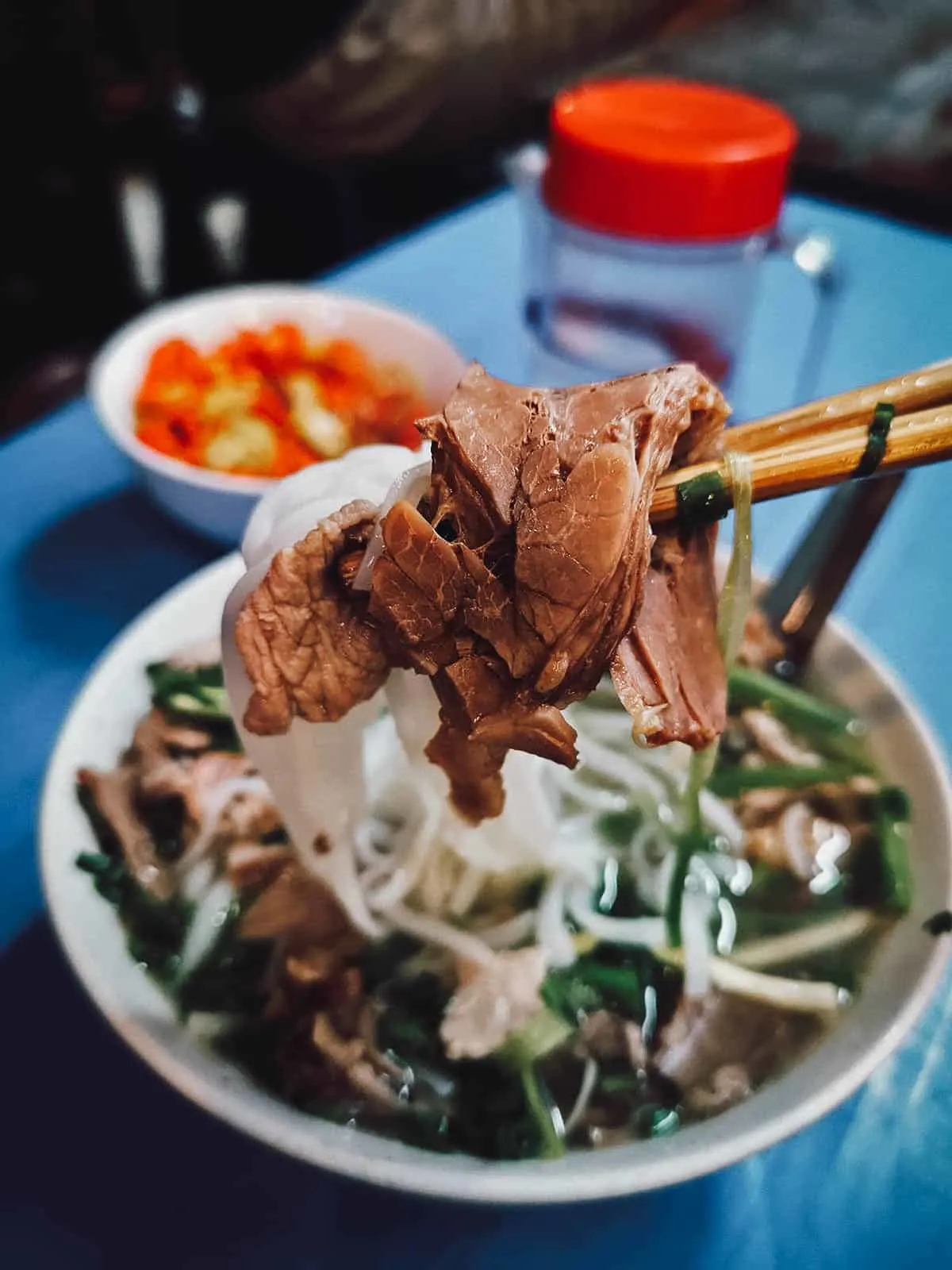
1. Pho
越南河粉是越南传统美食中最著名的代表之一。它和越南法棍面包、越南春卷一样,是越南最受欢迎的食物之一,被视为越南的国菜。
订阅 Will Fly for Food!
直接在您的收件箱中获取 Will Fly for Food 的最新文章及更多内容。
中所述,使用您的个人数据进行基于兴趣的广告投放。We use your personal data for interest-based advertising, as outlined in our 我们会按照我们的隐私声明Privacy Notice.
越南河粉是一种起源于越南北部的面条汤,但现在在越南各地都很受欢迎。无论产自哪里,它都由四种基本食材制成:清汤、米粉(称为河粉)、肉类(通常是牛肉或鸡肉)和香料。
越南河粉汤的起源可以追溯到20世纪初越南北部的南定省。由于法国的需求,牛肉供应量增加,导致牛骨过剩,这些牛骨便被用来作为现代越南河粉汤底的原料。
1954年越南分裂后,超过一百万人从北方逃往南方,并将他们对这种深受喜爱的面条汤的热爱带到了南方。这有助于越南其他地区推广越南河粉,进而促进了这道菜的进一步发展。
不受北方烹饪传统的束缚,越南河粉的肉类和汤底开始出现变化,配料也随之增加,例如青柠、豆芽、香菜、肉桂罗勒、海鲜酱和辣椒酱。如今,越南河粉有多种不同的种类,其中最著名的是北越河粉(pho bac)和西贡河粉(pho Sai Gon )。
北部河粉汤的做法通常使用较宽的米粉和大量的葱花。配料一般仅限于醋、鱼露和辣椒酱。而南部河粉汤则汤底更甜,上面会放豆芽和更多种类的新鲜香草。
食谱: 河内风味牛肉河粉
2. 越南法棍面包
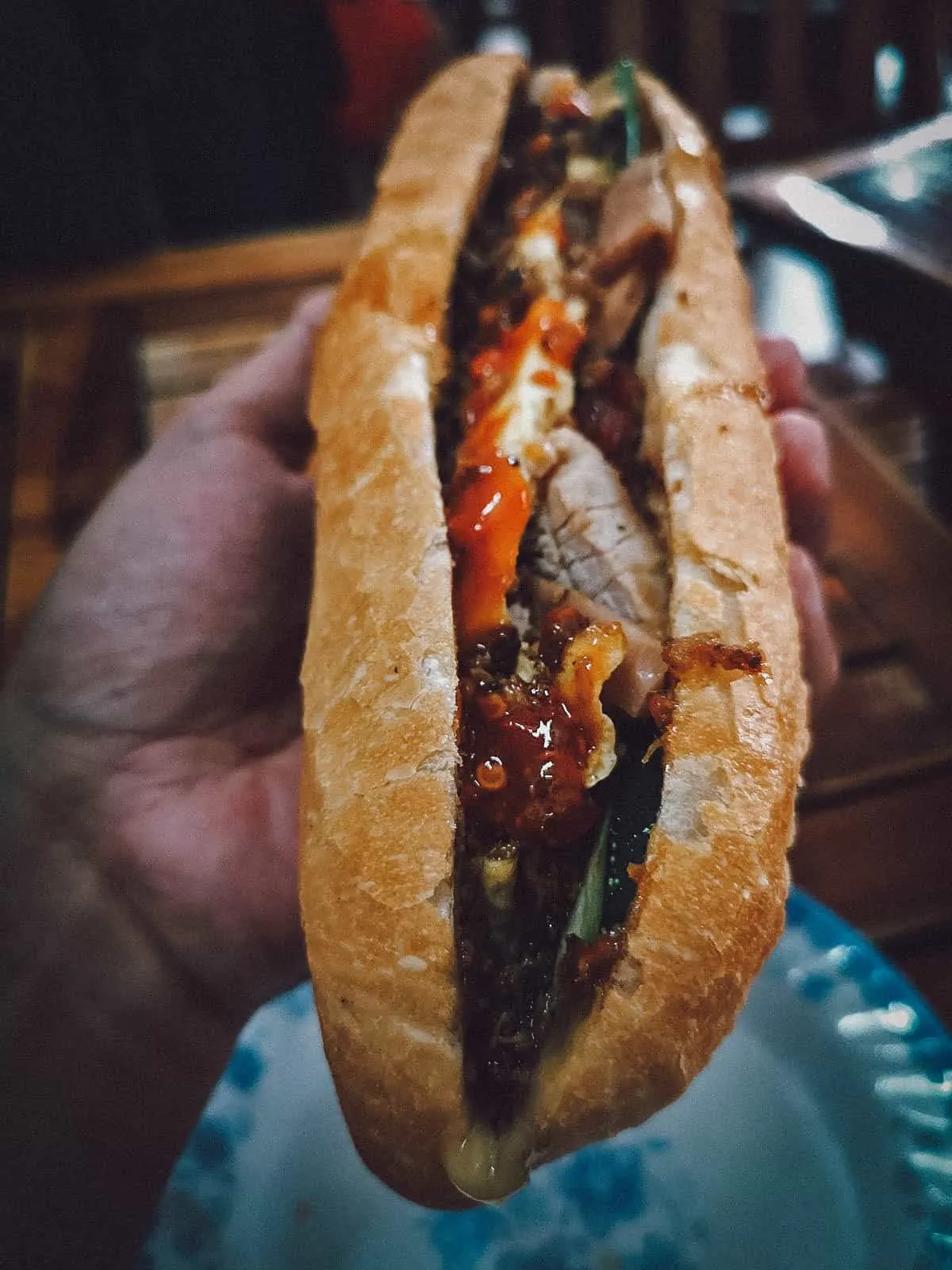
和越南河粉一样,法棍面包也是越南美食中最广为人知的代表之一。即使你对传统越南菜不太熟悉,或者从未去过越南,你也很有可能听说过法棍面包。它被认为是越南的国民美食,几乎在越南的任何地方都能找到。
严格来说,“banh mi”是越南语中法棍面包的意思,这种面包是法国殖民时期引入的。但大多数人说“banh mi”时,特指用不同种类的肉类、蔬菜和调味品制成的法棍三明治。
越南法棍三明治(Banh Mi)中经常使用猪肉,猪肉的制作方式多种多样,例如肉酱、烤肉饼、越南香肠、冷切肉、肉冻和肉松。常见的蔬菜包括黄瓜片、香菜、腌胡萝卜、香草和萝卜丝。但就像任何三明治一样,越南法棍三明治的馅料几乎可以随意添加,因此也有很多其他口味,例如鸭肉、鸡蛋、烤鸡肉、鱼饼等等。
无论你在越南法棍里放什么,真正让这款三明治与众不同的还是法棍面包。他们把面包外皮烤得酥脆,内里却柔软蓬松,咬一口,面包就会微微散开。越南法棍真的非常美味,是我在越南最爱的美食之一。
食谱: 五花肉越南法棍
3. 春卷 / 越南春卷
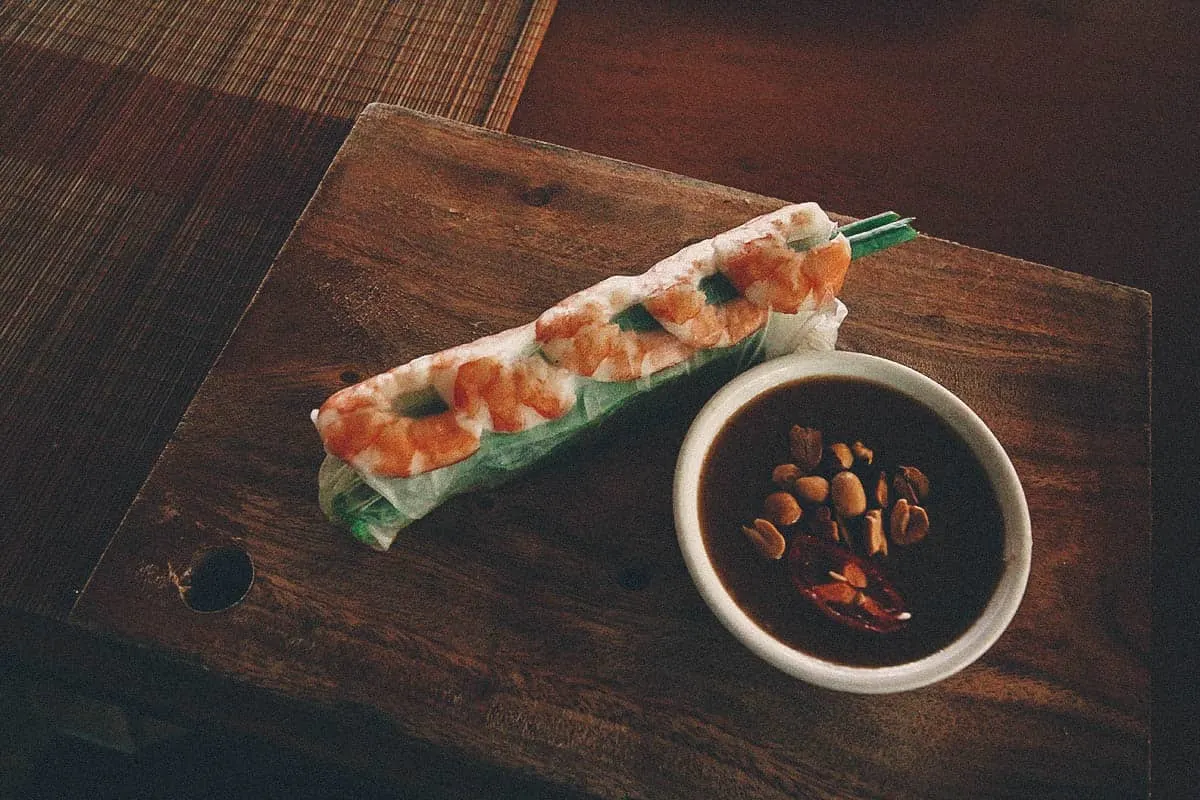
与越南河粉或越南法棍相比,越南鲜春卷(或夏卷)可能不太为许多外国人所熟知,但它们同样美味。
这种鲜虾春卷在越南北部被称为nem cuon,在南部被称为goi cuon,是越南的国民美食。传统的春卷馅料包括虾、猪肉、蔬菜、香草和米粉,用越南米纸(banh trang)包裹而成。
越南夏卷通常搭配花生海鲜酱,以及其他蘸酱,例如鱼露。口感软嫩、清爽,咸甜适中,是一道美味清爽的越南经典美食。
如果你喜欢油炸春卷,那么还有一种同样受欢迎的版本叫做炸春卷(在北方被称为春卷)。
食谱: 越南春卷
越南开胃菜/配菜
4. 越南春卷
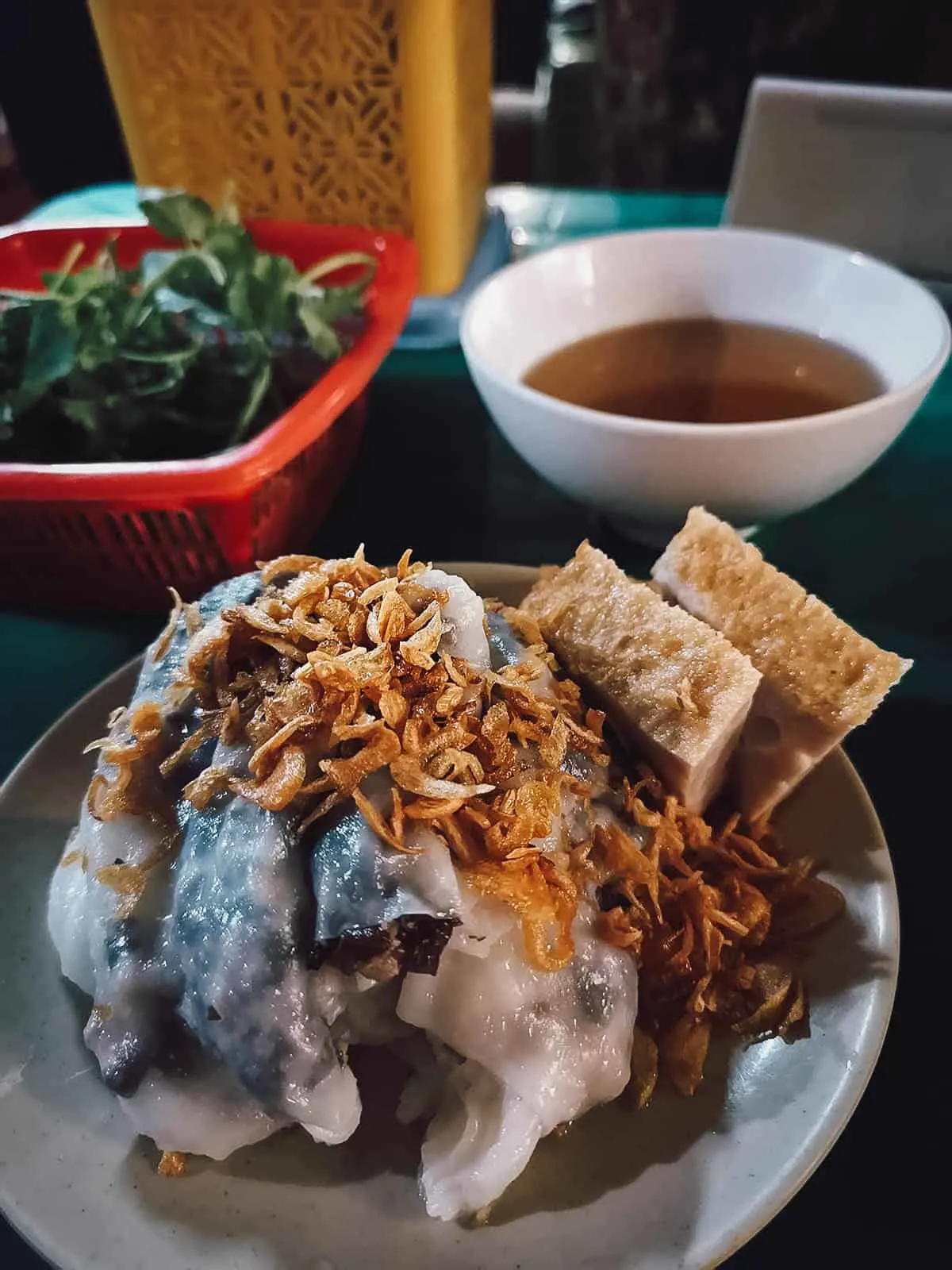
你吃过中国点心店里那种叫肠粉的滑溜溜的米粉卷吗?越南春卷(Banh cuon)和它很像。这是一种越南北部的面食,现在在越南各地都很受欢迎。
越南春卷(Banh cuon)是用蒸熟的发酵米粉薄皮包裹着调味猪肉末和木耳制成的米粉卷。上面撒上香草和炸红葱头,配上一碗越南鱼露(nuoc cham),通常还会搭配越南猪肉香肠(gio lua)、黄瓜片和豆芽等小菜。
我在河内亲眼目睹了她们制作的过程。一位妇女用勺子舀起一勺面糊,放在凸起的金属板上,面糊迅速凝固成薄薄的片状。另一位妇女则在面片上包入馅料,卷起来,然后用剪刀剪成一口大小的块状。整个过程快速流畅,令人目不暇接。
越南春卷(Banh Cuon)通常以猪肉为馅(Banh Cuon nhan thịt),但也可以加入其他馅料,例如虾仁(Banh Cuon nhan tom tuoi)。无论用什么馅料,它们都美味可口——口感软糯滑嫩,略带嚼劲,还夹杂着香脆的炸红葱头和新鲜香草。
食谱: 越南春卷
5. 白玫瑰饺子
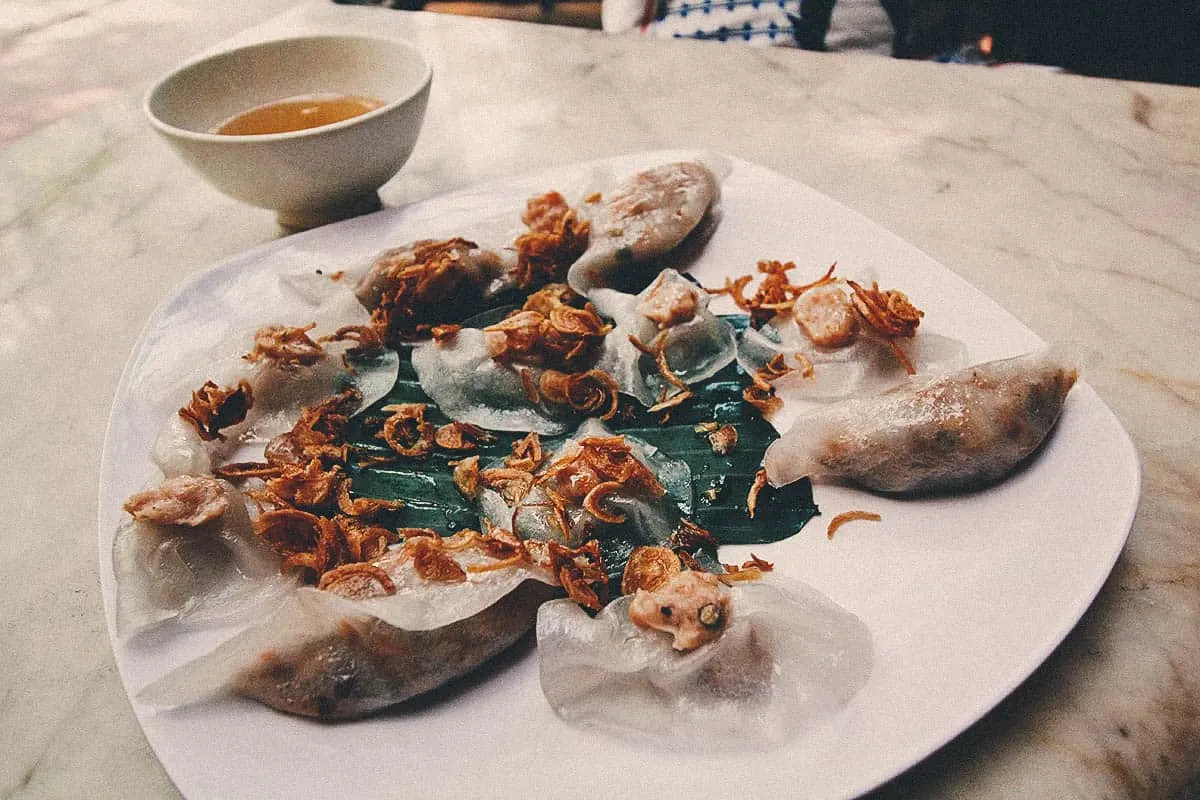
和高楼面一样,白玫瑰饺子(或称白玫瑰包)也是越南会安特有的特色菜。白玫瑰饺子的配方是家族三代以来秘不外传的。
由白玫瑰餐厅老板的祖父发明并推广的越南饺子(Bánh bao à vac)是用半透明的白色面皮包裹着香辣虾仁或猪肉馅制成的。面皮捏成花朵状,这也是其英文名称的由来。饺子顶部撒上酥脆的炸红葱头,并配以特制的蘸酱,蘸酱由虾汤、辣椒、柠檬和糖调制而成。
走进会安中央市场,我看到许多越南小吃摊都在卖“白玫瑰饺子”。我原以为它们是仿冒品,但后来发现,会安几乎所有的白玫瑰饺子都来自白玫瑰餐厅。
当你咬一口这些饺子时,你会发现它们的皮比传统的中国饺子(比如虾饺)更紧实、更有嚼劲。我了解到,这种饺子的面团是用巴乐井的水制成的,这或许可以解释它们更有嚼劲的口感。
It’s said that the water is filtered and purified 15-20 times before being mixed with the rice paste to form the airy dough. Whatever the secret is, these dumplings are delicious and a must-try in central Vietnam.
6. Banh Hue
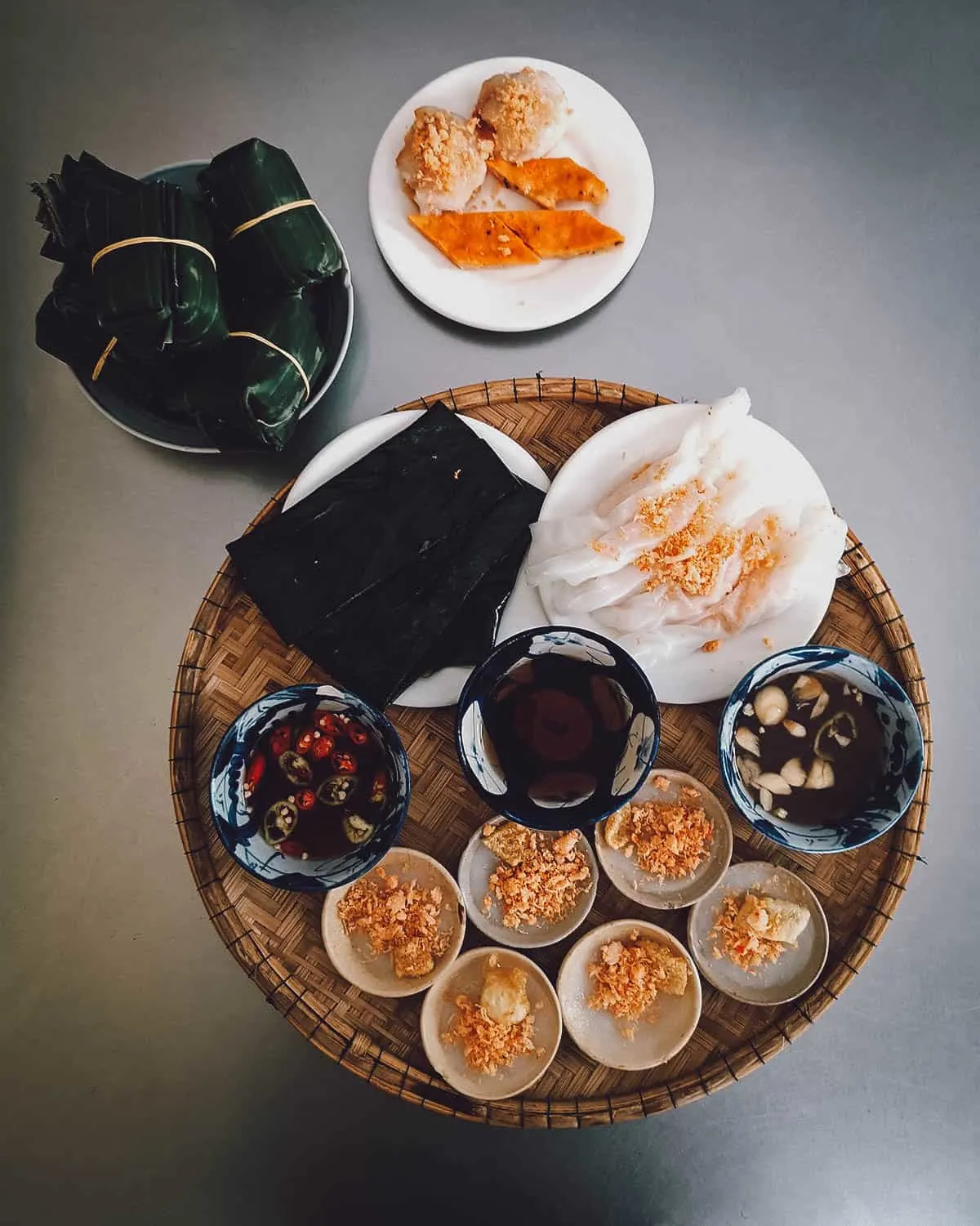
Banh hue refers to a family of rice flour cakes popular in Hue and central Vietnam. Types of banh hue include banh beo, banh nam, banh loc, banh ram it, banh uot, and cha tom.
Banh beo is perhaps the most well-known among Hue’s family of rice flour cakes. At its most basic, it consists of a steamed rice cake topped with dried shrimp and pork rinds, but it can be topped with other ingredients as well like scallions, roasted peanuts, mung bean paste, and fried shallots. It’s served with a side of nuoc cham (fish sauce).
The different types of banh hue vary in presentation, ingredients, and method but they all seem to be made with rice flour and shrimp in some form. Because the recipes share similar ingredients, they taste relatively similar – silky, soft, and loaded with umami.
RECIPE: Banh beo
7. Chao Tom
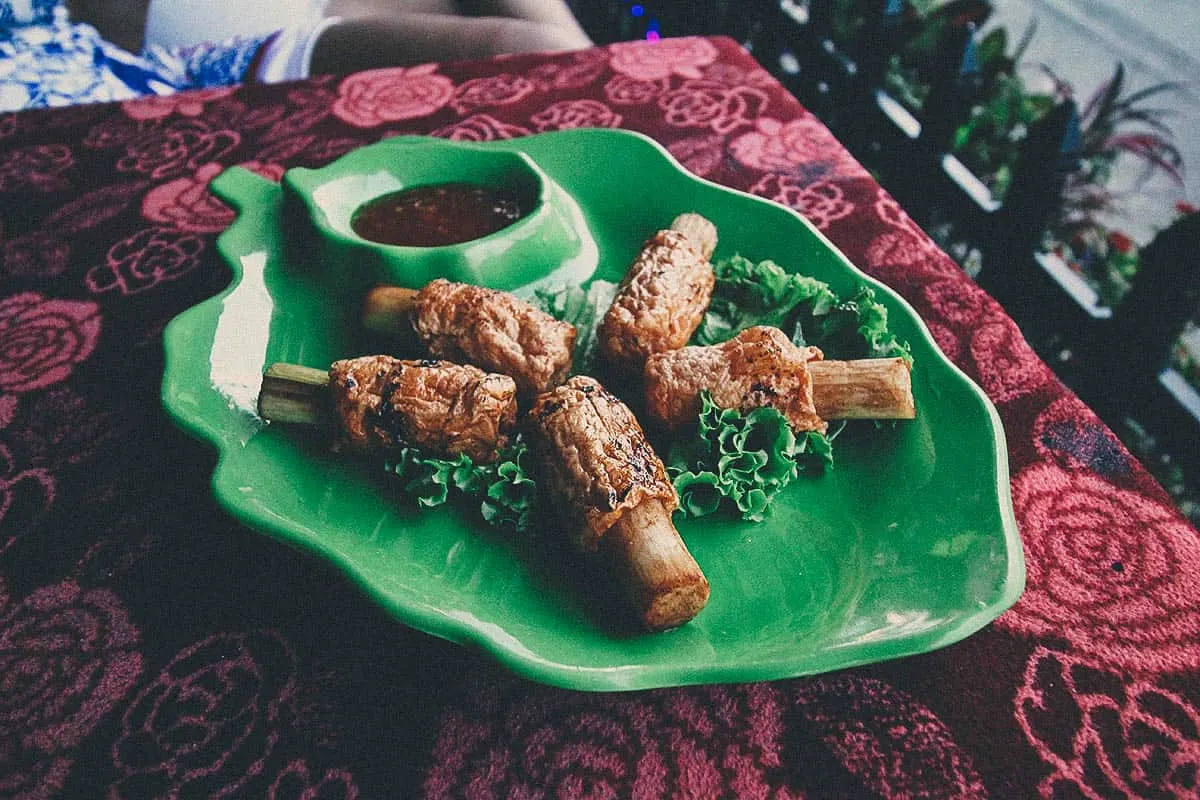
Chao tom is a specialty of Hue in central Vietnam. It consists of prawns that are seasoned and mashed into a paste before being wrapped around a stick of sugar cane. The chao tom is then steamed to set its shape before being grilled or deep-fried.
To eat, you cut the meat off the sugar cane and wrap it in lettuce with fresh herbs and some sweet chili sauce. Smokey, savory, and sweet, it’s a springy shrimp appetizer that’s always been one of my favorite traditional Vietnamese dishes.
RECIPE: Chao tom
8. Bo La Lot
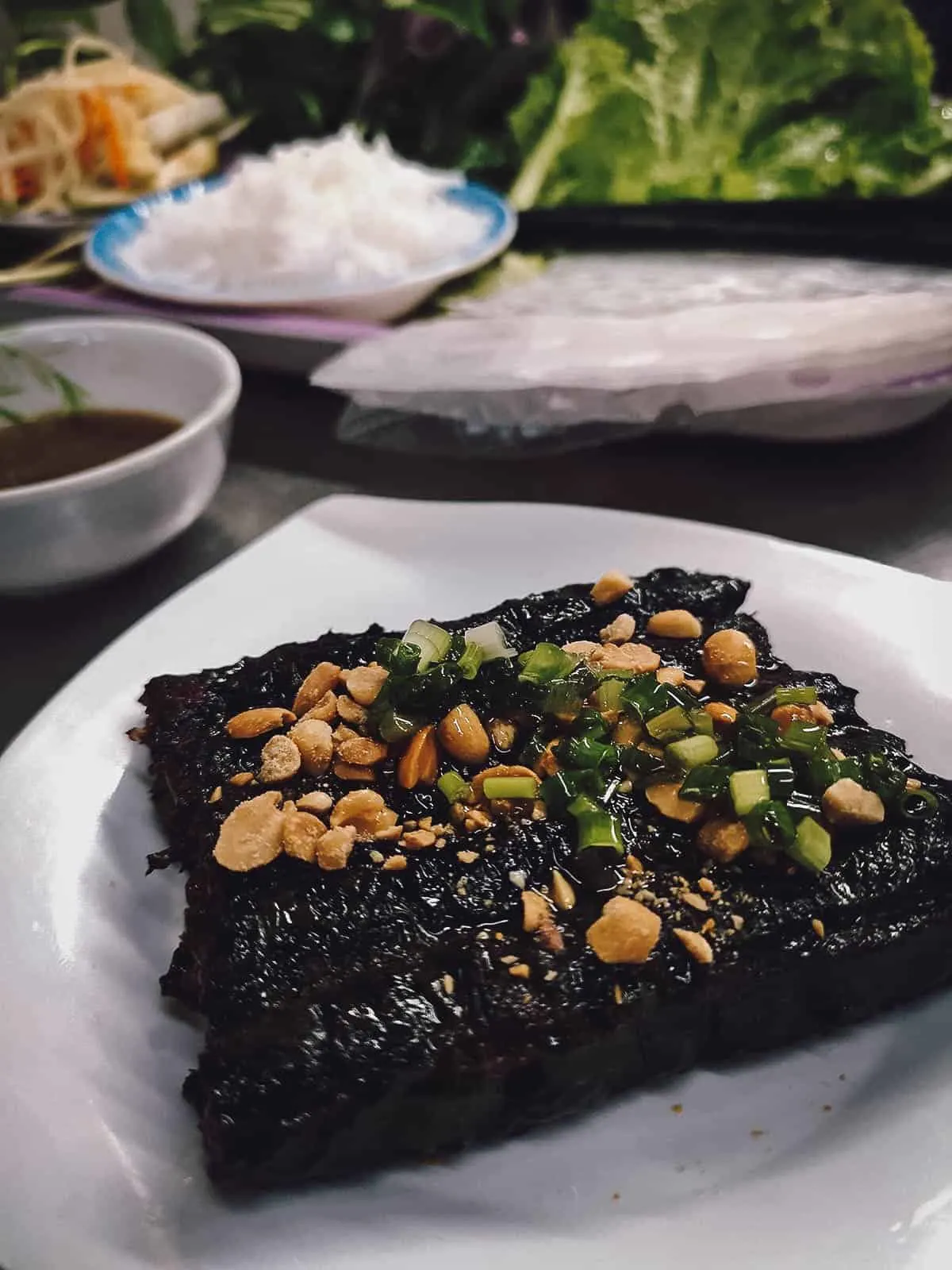
Thit bo nuong la lot, or bo la lot for short, is a traditional Vietnamese dish made with ground beef wrapped in wild betel leaves and grilled over charcoals. It’s one of the more unique and interesting dishes you’ll find in Vietnam.
What makes bo la lot special and unique are the betel leaves. Seasoned ground beef is wrapped in piper lolot leaves from the Piper sarmentosum plant, then placed over a charcoal grill to cook. Soon as the leaves are heated, they’re said to emit a unique, incense-like fragrance that’s both medicine-y and perfume-y.
I stood watching the lady grill our bo la lot and though the smell wasn’t as pungent as I expected it to be, I did get a whiff of its distinctive aroma. An aromatic food, it smelled pretty much how it looks – very green.
We tried bo la lot in Ho Chi Minh City but I believe it’s a food you can find throughout Vietnam. Recipes vary but if I understand correctly, the main regional differences lie in what spices are used to season the beef.
To me, bo la lot tasted like heavily spiced hamburger meat wrapped in a smokey, peppery, aromatic leaf. Served with rice paper, fresh greens, herbs, bean sprouts, rice vermicelli, pickled vegetables, and nuoc cham (fish sauce), it’s interesting and fun to eat and makes for great beer chow no matter where you are in Vietnam.
RECIPE: Bo la lot
9. Sup Bap Cua
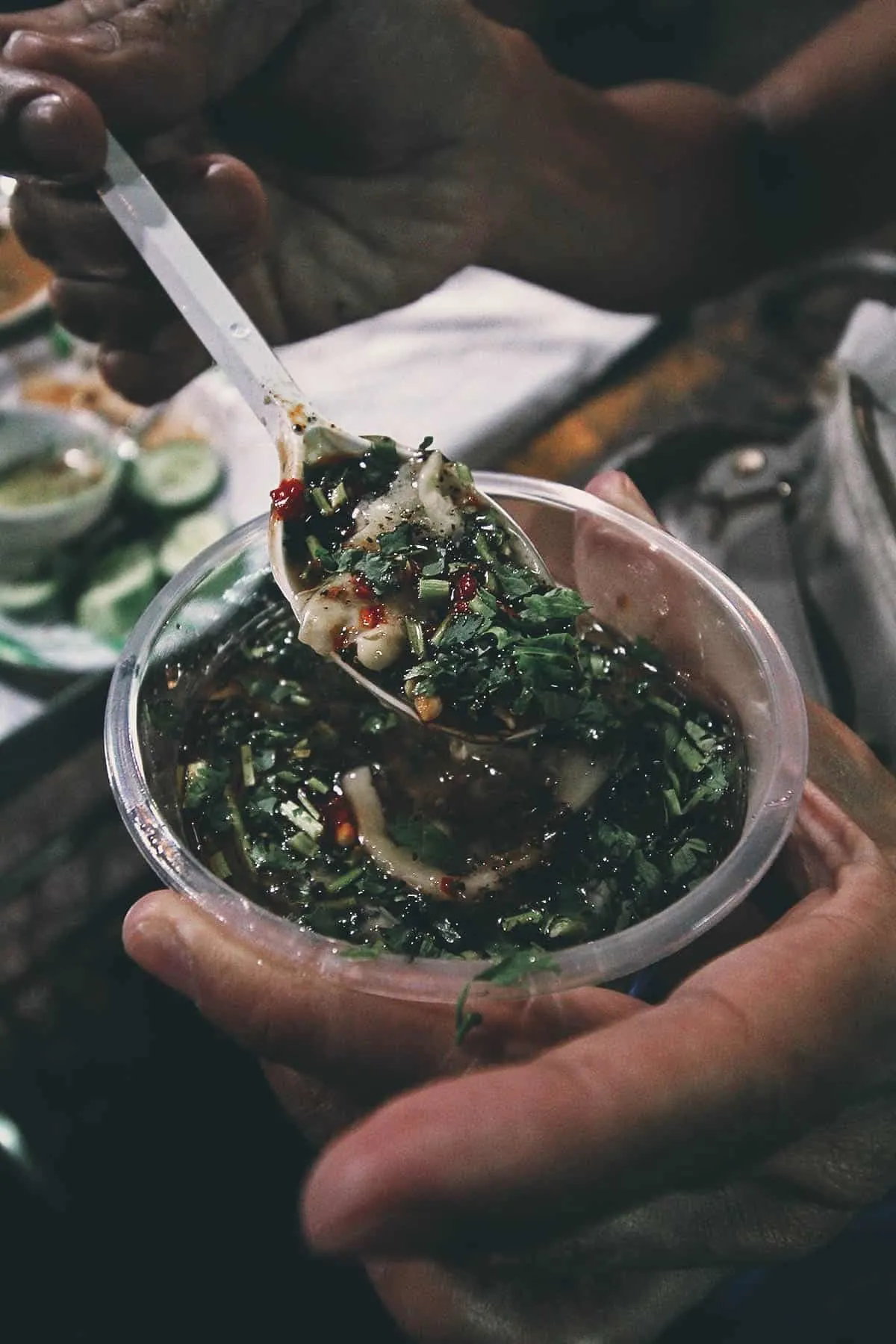
Sup bap cua is Vietnamese crab and corn egg drop soup. We first heard about this Vietnamese dish on the Saigon episode of Luke Nguyen’s Street Food Asia. I love crab and egg drop soup is one of my favorite comfort foods, so this was one of the traditional Vietnamese dishes I was most excited to try in Ho Chi Minh City.
The soup contains crab meat, shredded chicken, whole quail egg, corn, mushroom, loads of coriander, and ribbons of dropped egg in a broth thickened with tapioca starch. It’s typically served in a plastic cup and seasoned with sesame oil, pepper, and chili.
We were having a seafood feast along Vinh Khanh Street in Saigon when a motorbike carrying some type of street food rode by and parked a few meters down the road. I didn’t notice it at first because I had my face latched onto a crab claw, but when Ren told me a sign saying “sup bap cua” was pasted on the side of the man’s styrofoam box, I jumped up and practically flew to him.
RECIPE: Sup bap cua
10. Bun Dau Mam Tom
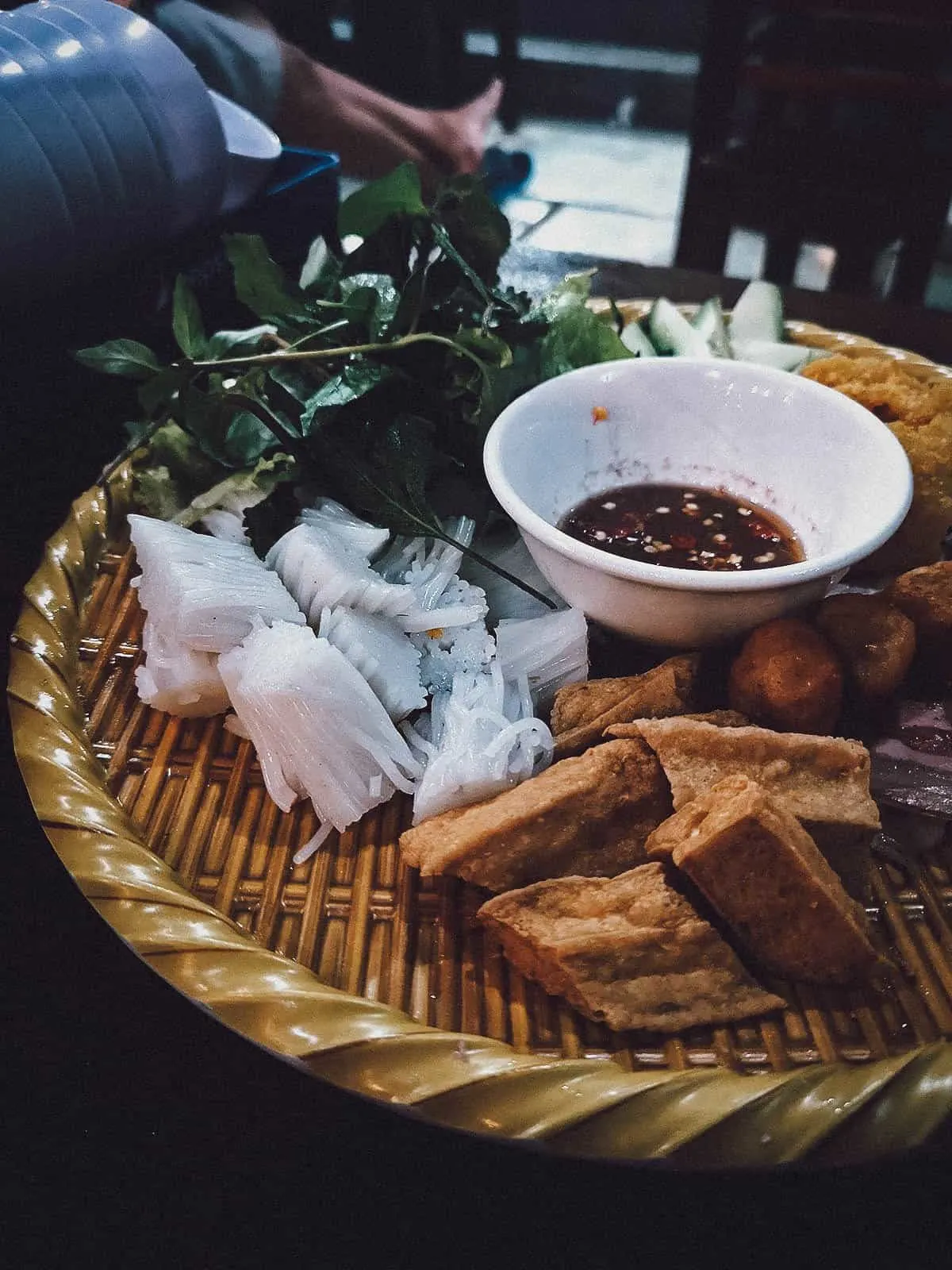
Bun dau mam tom may be the most polarizing dish in this Vietnamese food guide. I enjoyed it because I’m used to the taste of fermented shrimp paste, but it clearly isn’t for everyone.
Bun dau mam tom refers to a platter of bunched up rice noodles, deep-fried tofu, sliced cucumber, and fresh herbs. If you get the version with meat, then you can expect things like fish balls and steamed pork as well.
What makes it off-putting for many is the Vietnamese mam tom dipping sauce. It’s made with finely crushed shrimp or krill that’s been fermented for weeks so it’s extremely pungent. Only try this if you have a daring palate.
RECIPE: Bun dau mam tom
11. Banh Cong
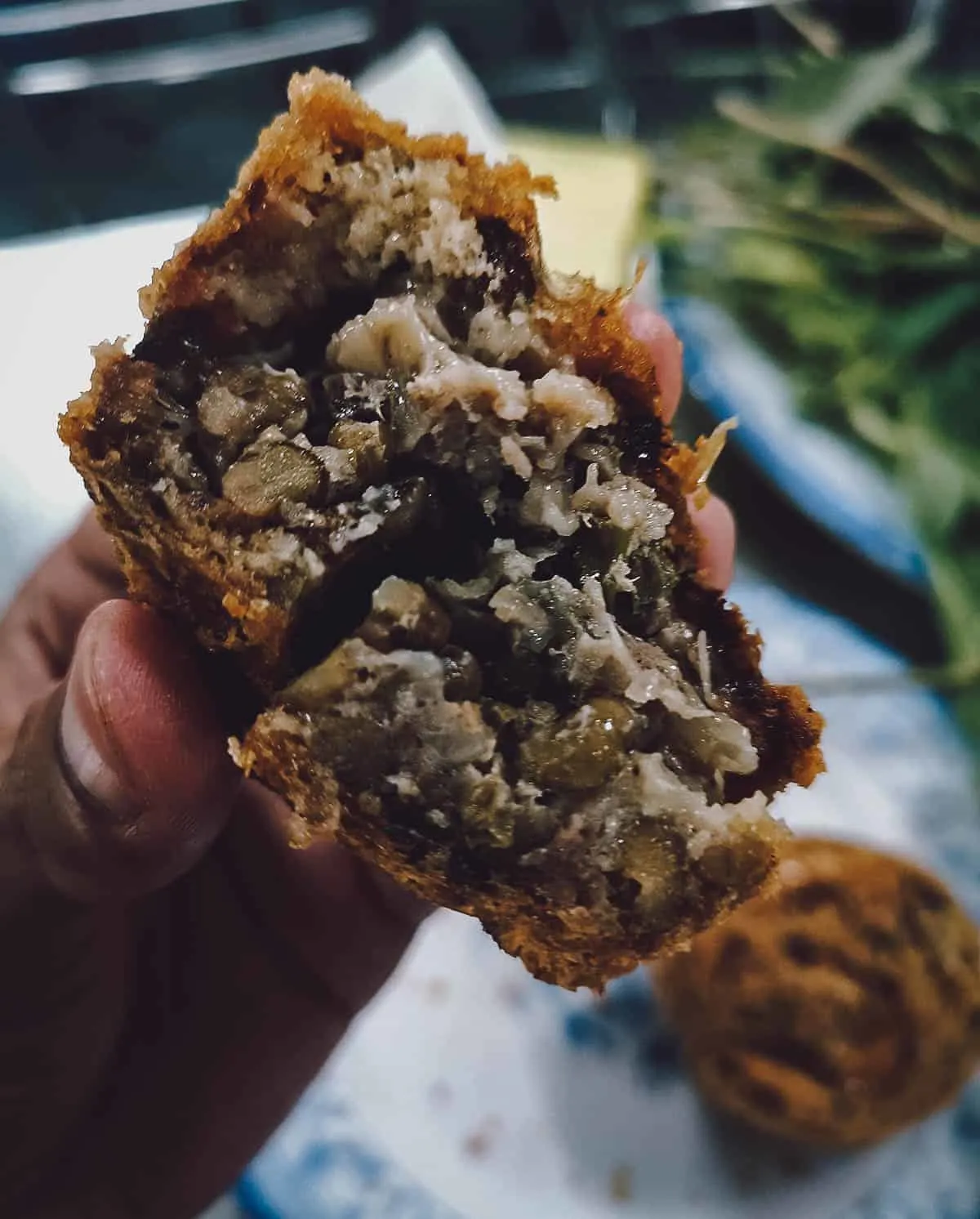
Banh cong is a popular dish in southern Vietnam. It’s a muffin-shaped snack made with mung beans, taro, and whole shrimp with their heads and shell still intact.
To make this Vietnamese dish, each ingredient is layered in the deep ladle-like tool used to cook it. Once layered, the ladle is filled with a wheat and rice flour mixture before being topped with shrimp and submerged in oil to deep-fry.
After a few minutes of frying, the banh cong is removed from the ladle and served with nuoc mam and the usual basket of Vietnamese fresh greens. As you can see below, the cake’s coating is crisp but the inside is soft and muffin-like in texture.
RECIPE: Banh cong
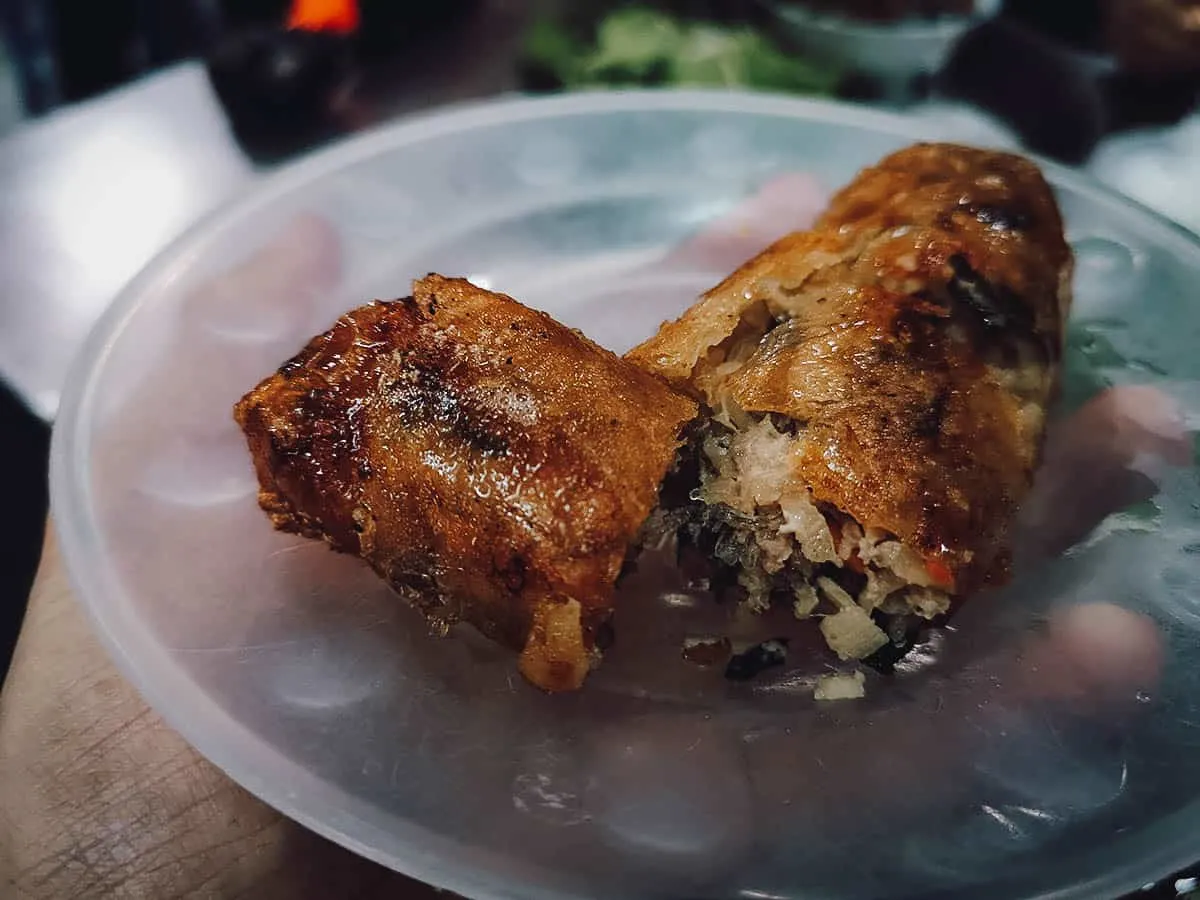
12. Nem Cua Be
Nem cua be is a type of cha gio or deep-fried spring rolls made with crab meat. It’s a specialty of Hai Phong, a coastal province east of Hanoi in northern Vietnam.
Aside from crab meat, the deep-fried spring rolls also contain pork, egg white, kohlrabi (cabbage), carrot, wood ear mushroom, bean sprouts, and vermicelli. As previously described, it’s commonly eaten as a side dish together with bun cha.
RECIPE: Nem cua be
13. Banh Bot Chien
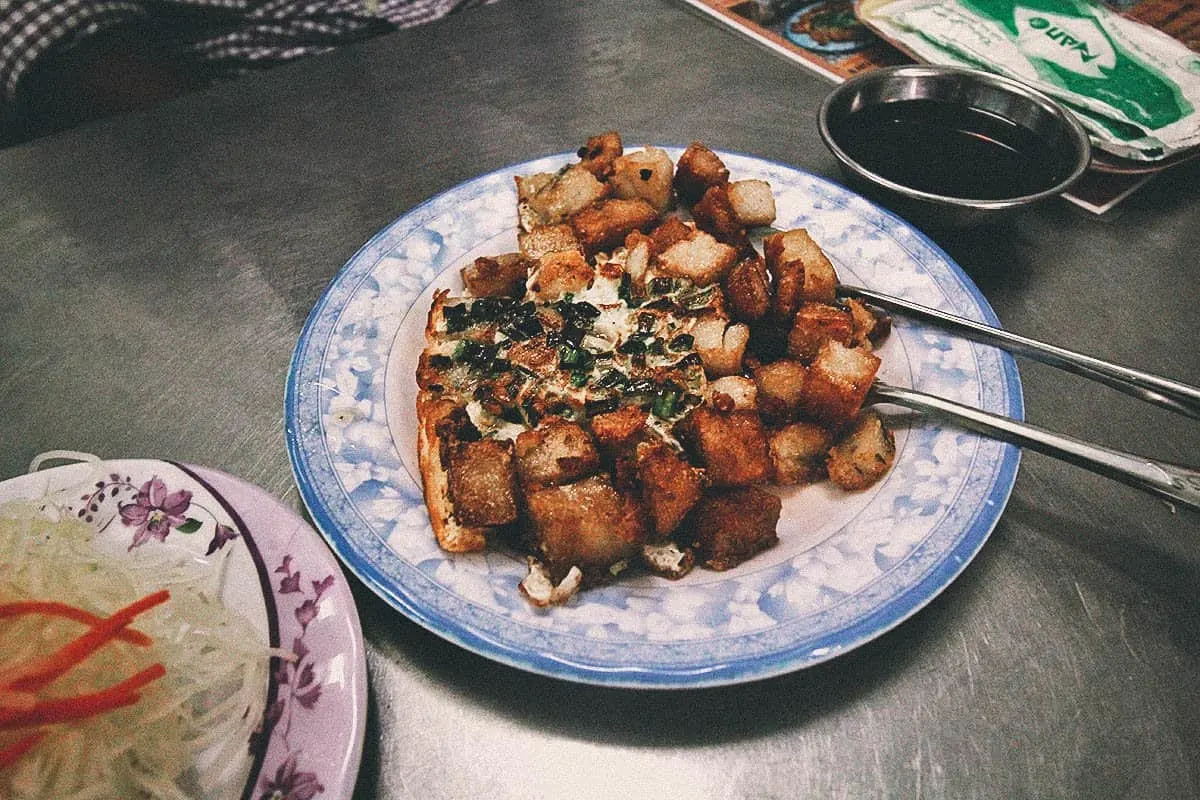
越南街头小吃“Banh bot chien”是胡志明市最受欢迎的越南街头小吃之一。电视名厨兼餐厅老板卢克·阮(Luke Nguyen)称其为他从小最喜欢的越南美食之一。
越南煎饼(Banh bot chien)基本上是用米粉和木薯淀粉混合蒸熟,冷却后切成扁平的方块,再用猪油煎至金黄酥脆,加入鸡蛋和葱花。如果您熟悉马来西亚或新加坡的食物,可能会觉得它有点像炒粿条(char koay kak)或萝卜糕(chai tow kueh),只是它不含白萝卜。
越南炸粿条比马来西亚炒粿条酥脆得多,但内里依然有嚼劲。它配以清爽的青木瓜沙拉和浓稠的甜酱,以中和油腻感。
食谱: 越南春卷
14. 烤长面包
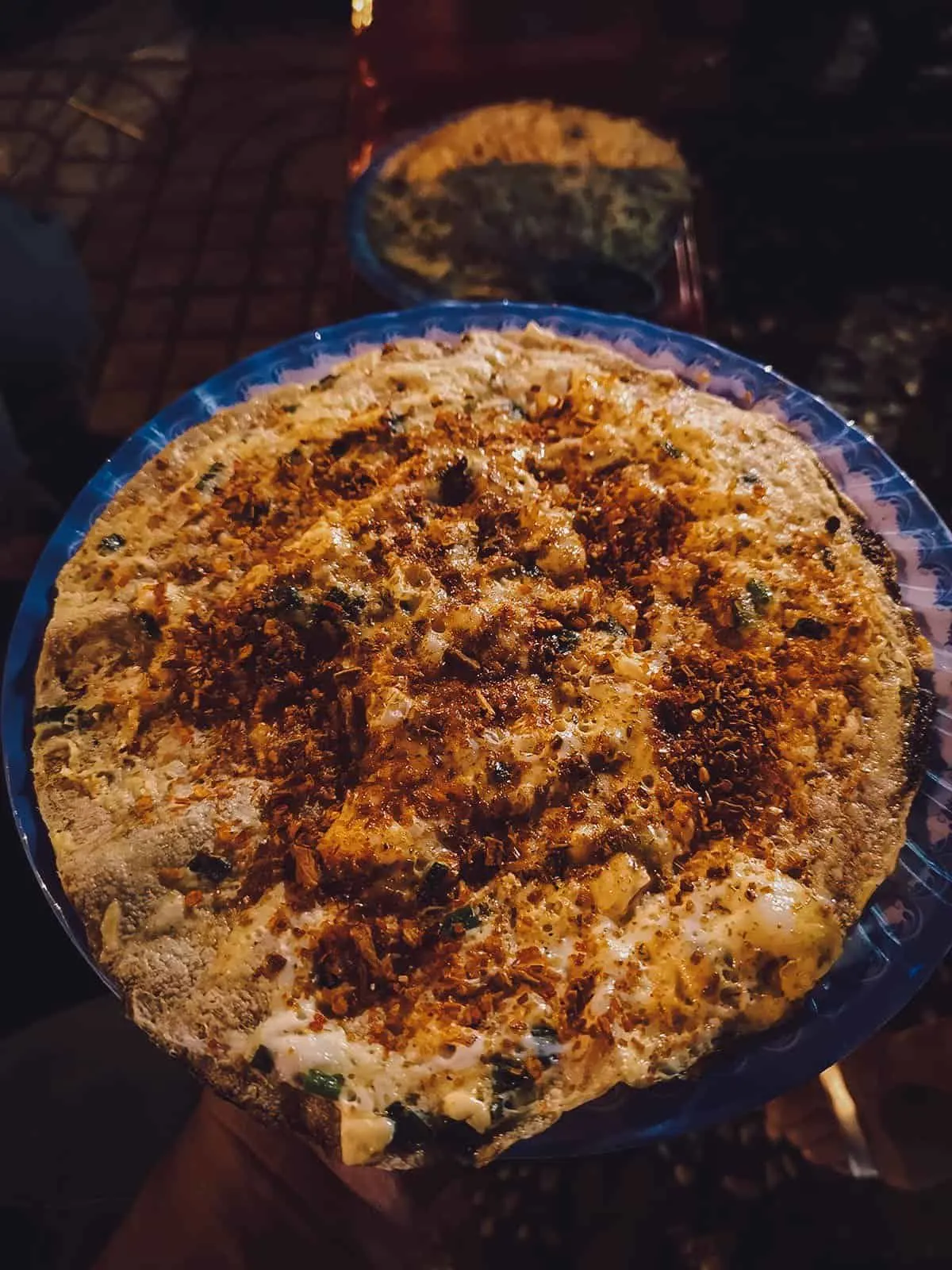
烤米饼(Banh trang nuong)指的是用炭火烤制的圆形酥脆米饼,上面可以放上各种各样的配料。它是一种很受欢迎的夜宵,常被称为“越南披萨”。
制作方法是将鹌鹑蛋或鸡蛋打散,与葱花混合,然后浇在越南米纸上。这样可以防止米纸烤焦,也能将所有馅料粘合在一起。
配料各不相同,我们在西贡的美食之旅中品尝过,一种上面铺着鸡丝,另一种上面铺着牛肉丝。这种薄脆饼非常酥脆,蛋香味浓郁,和啤酒很搭。
食谱: 烤面包
15. 越南米粉/越南春卷
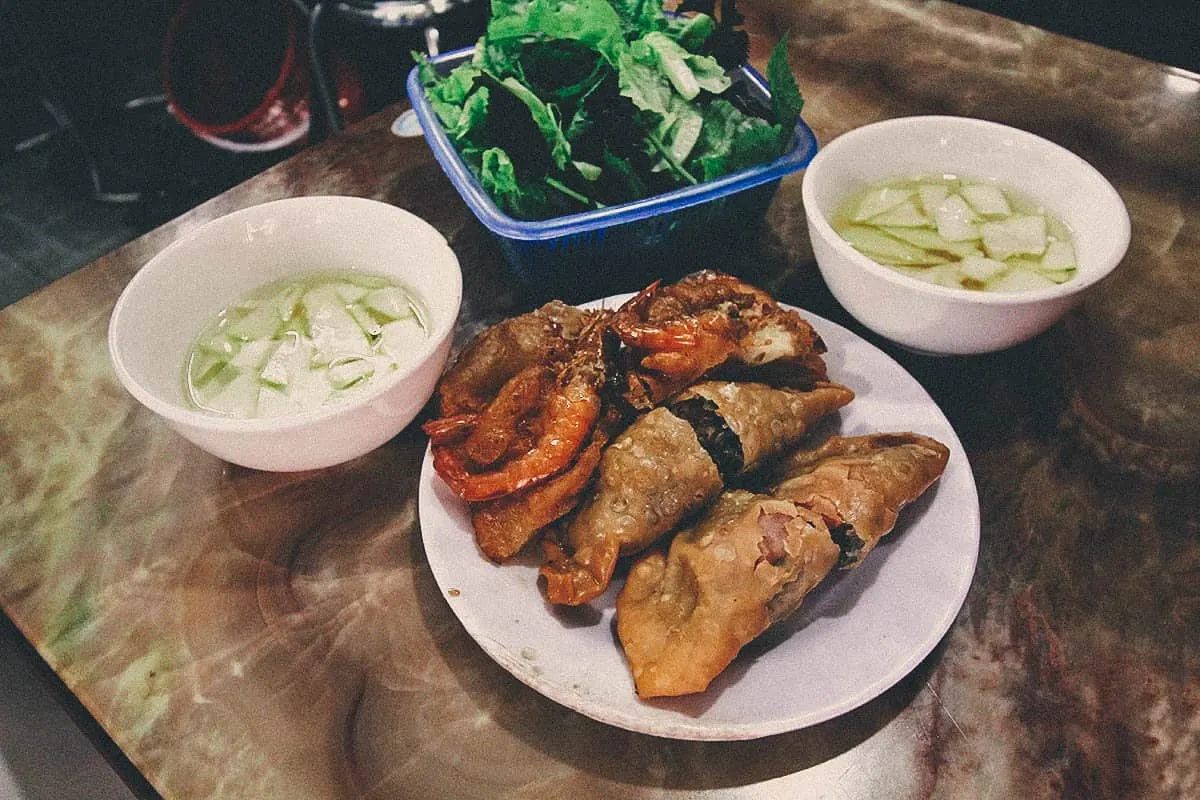
我不知道这些越南油炸小吃有没有一个统称。我们在河内去的那家有名的街头小吃摊,摆满了各种预先炸好的饺子。你指着想吃的,他们就会把它们扔进热油锅里重新炸一遍,直到酥脆为止。
越南油炸小吃中比较受欢迎的一种是越南煎饼(banh goi,图中下半部分),它类似于越南馅饼,馅料包括猪肉末、蘑菇、粉丝和鹌鹑蛋。馅料放在面皮中央,然后将面皮对折捏紧成半圆形,再放入油锅中炸至金黄酥脆。
越南甜点“ Banh goi ”因其形状酷似枕头而得名。旁边是越南甜薯虾饼“Banh tom”,它类似于越南的红薯虾饼。
无论你点哪种油炸小吃,都会配上一篮新鲜蔬菜、香草和一碗鱼露蘸料。把炸好的小吃蘸着这碗蔬菜吃,简直美味极了。
尽管是油炸的,但饺子里的蔬菜和蘸酱让我惊喜地发现它们非常清爽。几乎尝不出油腻味!这次体验让我对越南菜的阴阳平衡有了更深的理解。
食谱: 越南米粉
16. 煎饼/煎饼
Banh Xeo is another Vietnamese food favorite. It’s a crispy crepe made with fried rice flour batter filled with pork belly, shrimp, green onions, and bean sprouts.
To make banh xeo, the batter is poured into a hot skillet and then filled with the ingredients before being folded in half like an omelette. They actually look like omelettes because of their shape and color but they aren’t made with any eggs. They get their yellowish color from turmeric mixed into the batter. The name banh xeo literally means “sizzling cake” because of the sound it makes when the rice batter hits the hot skillet.
Banh Xeo is eaten by wrapping pieces of it in rice paper (banh trang) with fresh herbs like coriander, mint, and perilla before dipping into nuoc mam pha (or nuoc cham). Despite being fried, you don’t really notice the oiliness too much because of the fresh greens and fish sauce. Crisp on the outside but moist on the inside, banh xeo is delicious and a lot of fun to eat.
RECIPE: Banh xeo
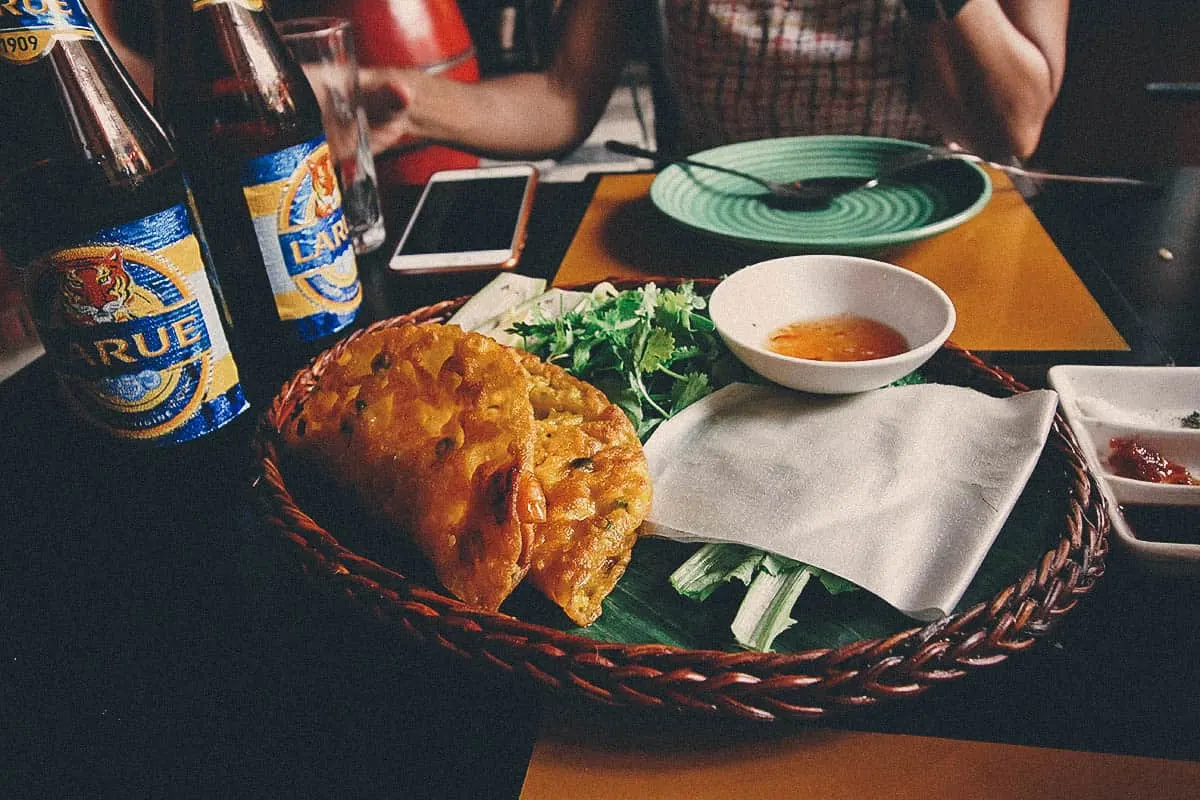
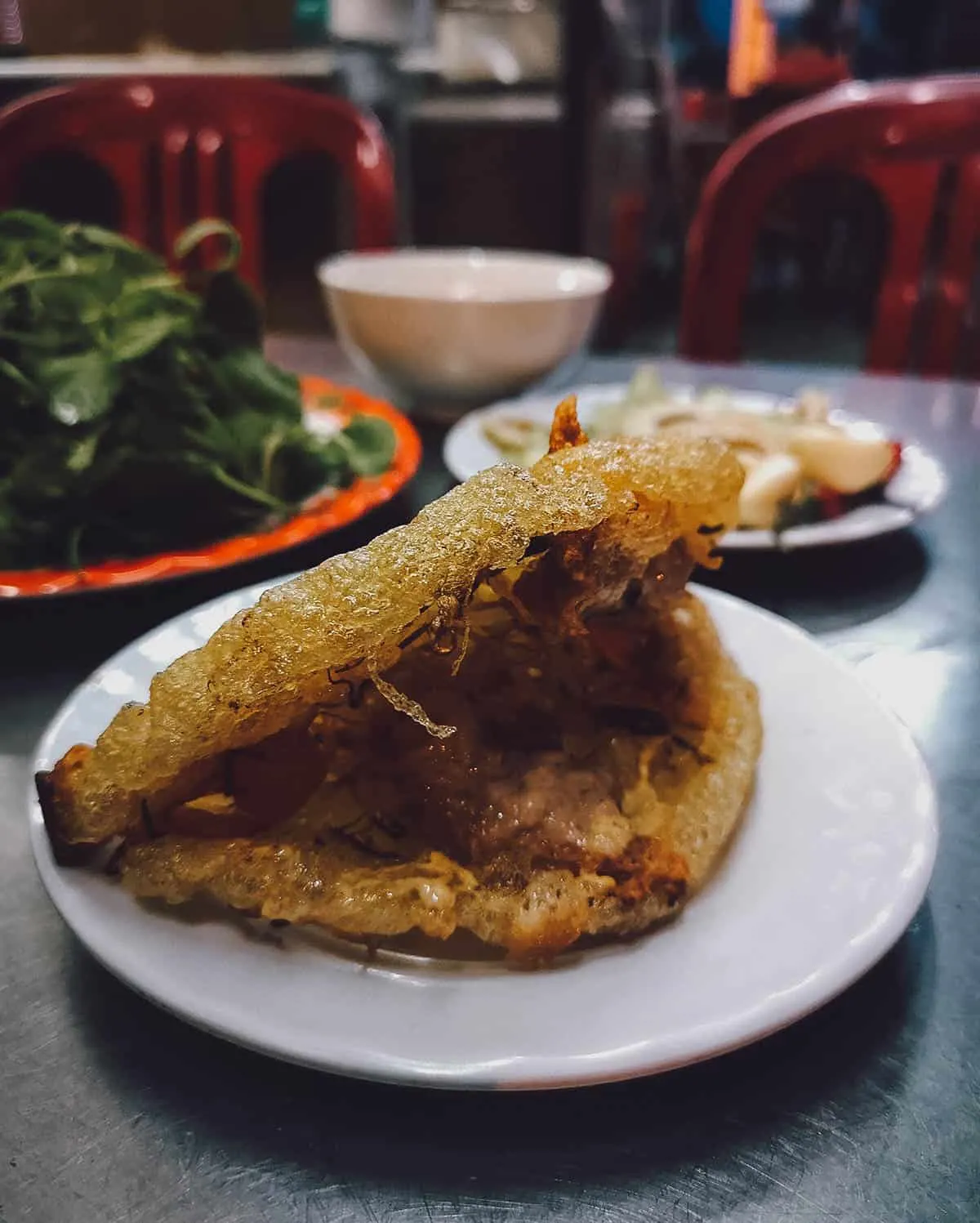
Banh khoai is a very similar dish that you can find in Hue. It’s basically a much crunchier version of banh xeo, perhaps due to the addition of soda water in the batter.
It’s also served with a side of fresh leafy greens, herbs, and a few slices of star fruit or young banana. But unlike banh xeo, banh khoai isn’t wrapped in rice paper and it’s served with a hoisin dipping sauce instead of nuoc cham (fish sauce).
17. Gio Lua / Cha Lua
Known as gio lua in northern Vietnam and cha lua in the south, this is a common type of Vietnamese pork sausage that’s often served in many Vietnamese dishes like bun thang and banh mi. It’s made by pounding pork until pasty, then seasoning it with spices and nuoc cham.
After being seasoned, the mixture is then tightly wrapped in banana leaves and boiled. The cylindrical banana leaf parcel is submerged vertically in boiling water and typically left to cook for about an hour. A common way to tell if the sausage is ready is to drop it onto a hard surface. If it bounces, then it’s good.
Aside from finding it in many Vietnamese dishes, we bought cha lua at Gio Cha Minh Chau in Saigon upon the recommendation of our homestay host. We were looking for interesting Vietnamese souvenir food items to bring back home and she suggested cha lua.
The sausage is already cooked so all you have to do is slice it and pan fry before eating. If you like SPAM, then you’ll probably enjoy this. It has a slightly gummy and chewy texture that’s reminiscent of fish cake.
RECIPE: Gio lua
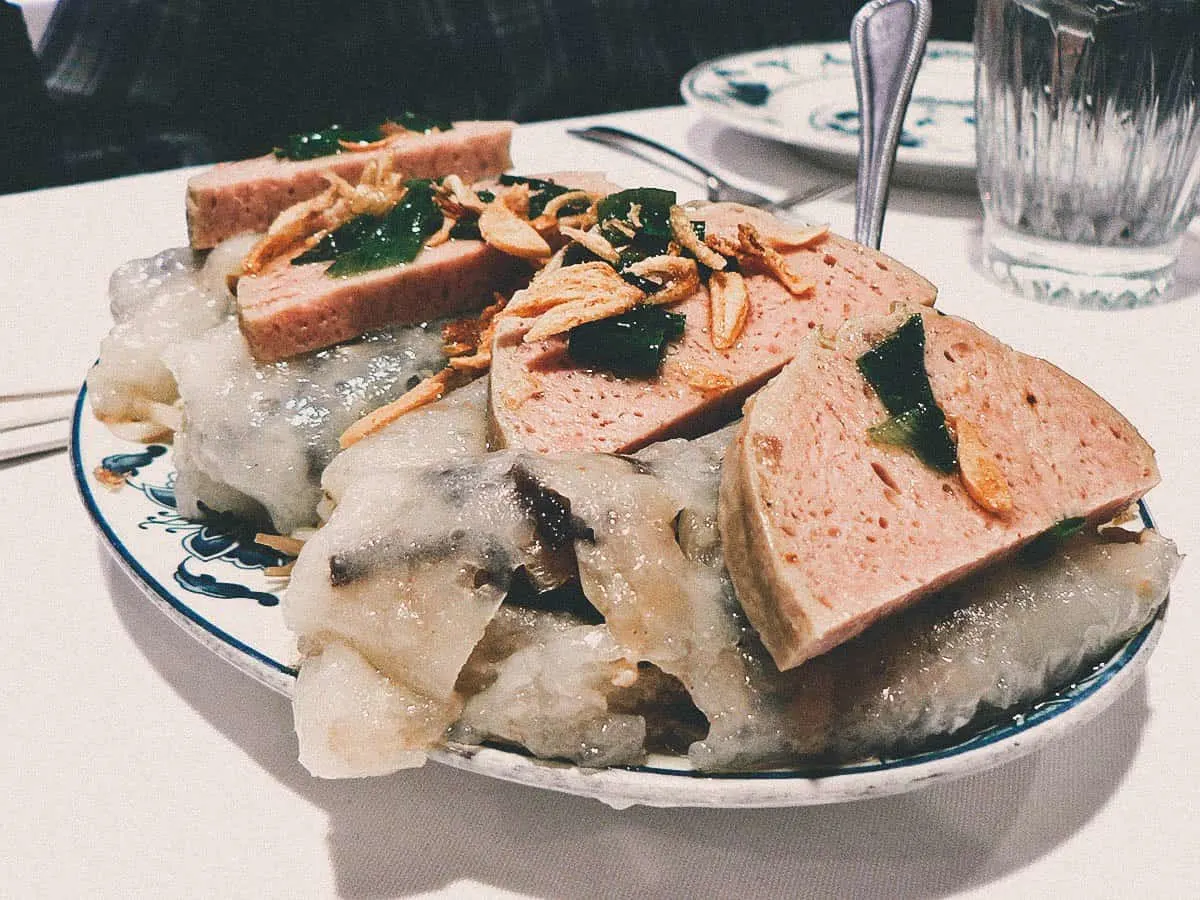
“cha lua banh cuon” by stu_spivack, used under CC BY-SA 2.0 / Processed in Photoshop and Lightroom
VIETNAMESE NOODLE DISHES
18. Bun Bo Hue
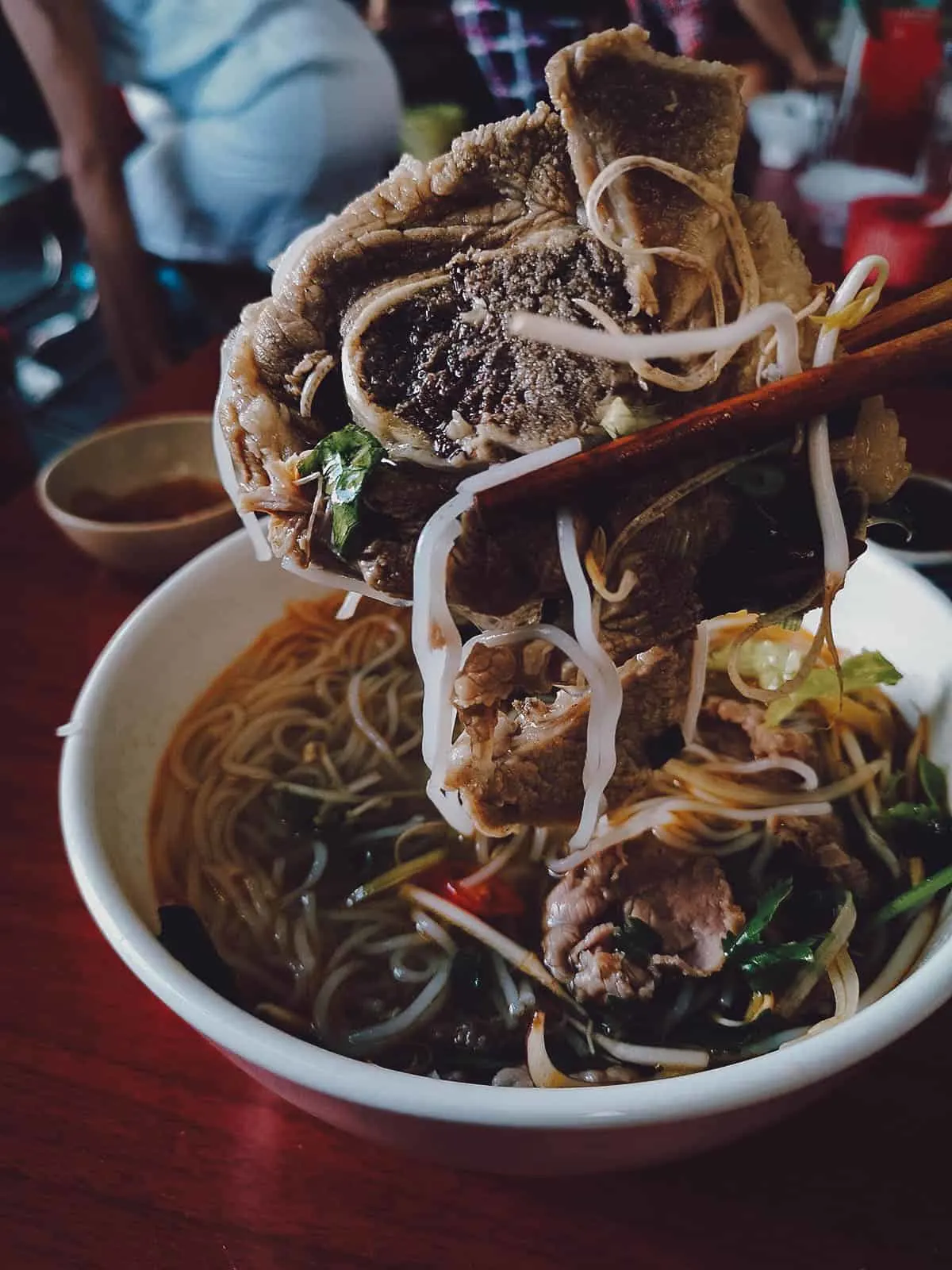
Bun bo is one of the most popular noodle soups in Hue. It’s made with thin rice noodles, thin slices of beef, and large chunks of beef shank.
熬制汤底时,先用猪骨和牛骨与香茅一起慢炖,然后用发酵虾酱、胭脂树橙、糖和辣椒油调味。最后撒上切碎的葱花、生洋葱丝和香菜即可。
顺化牛肉粉通常用牛腩和牛腱制作,但也可能包含其他配料,例如牛尾、猪蹄、蟹球和猪血。它通常配一篮新鲜蔬菜,例如薄荷、紫苏、鱼草、香蕉花和豆芽。
顺化牛肉粉(Bun bu hue)绝对是一道美味的汤面,也是我在越南最爱的美食之一。汤底鲜美无比,牛腱肉质软嫩,还带着嚼劲十足的牛筋。如果你在顺化只能吃一道菜,那一定是牛肉粉。
食谱: 顺化牛肉粉
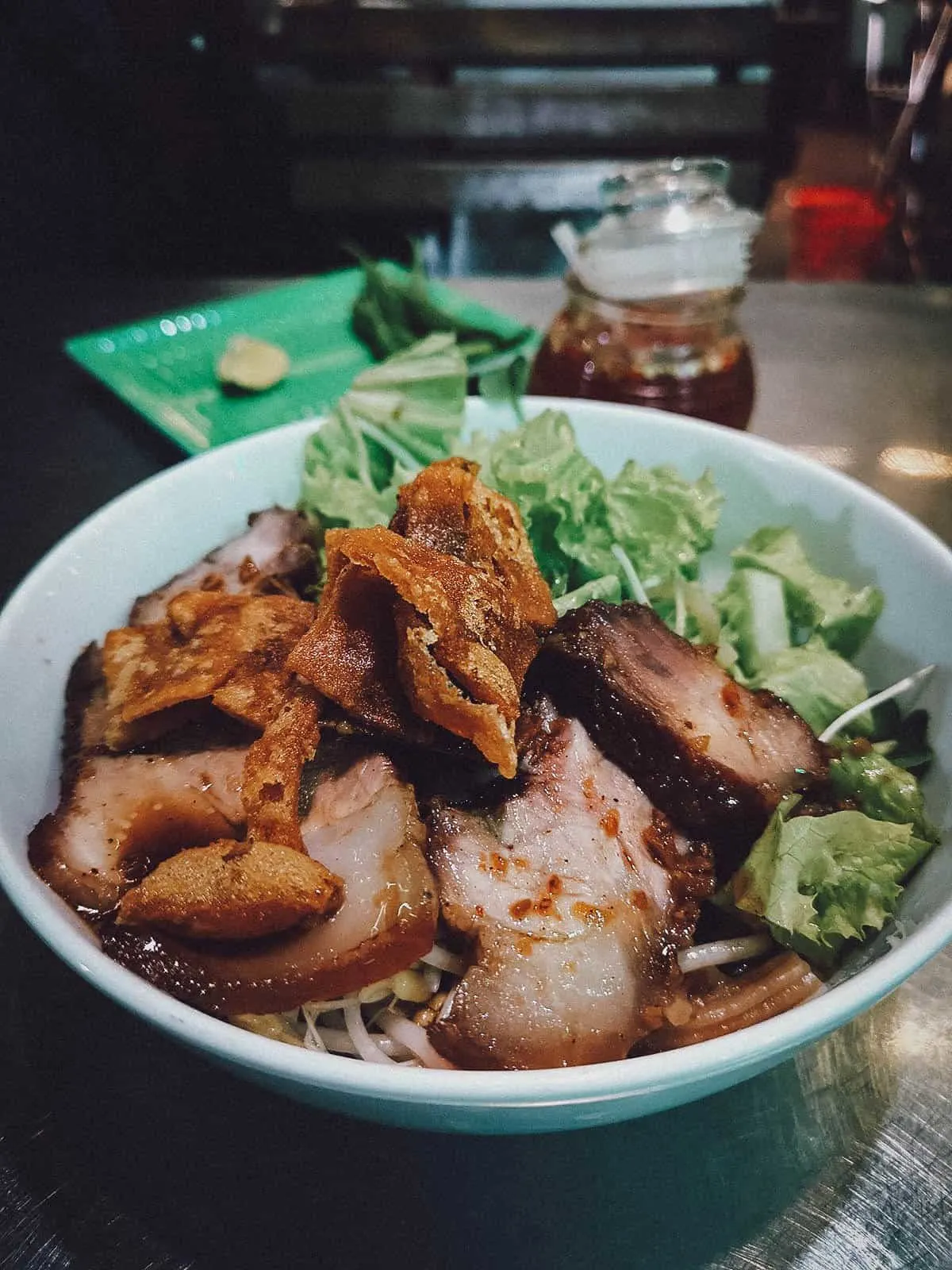
19. 高楼
高楼面或许是会安地区美食中最重要的一道越南菜。如果你在会安只能品尝一道菜,那非它莫属。
高楼面是一种干拌面,用米粉制成,上面铺有叉烧肉、新鲜蔬菜、豆芽、香草、米饼和炸猪皮。和越南面包(Bánh bao)和越南面包卷(Bánh vac)一样,这道菜之所以如此具有会安特色,是因为正宗的高楼面必须用当地特定水井的水来制作。
人们认为,制作高楼面所需的水必须取自当地一口名为巴乐井的占婆水井。据说,这口井的碱性水是高楼面口感劲道的秘诀所在。
生长在占婆岛的树木的木灰与井水中的碱性水混合,制成碱液,用来预先浸泡米粉。这使得米粉呈现出独特的黄色。浸泡在碱液中后,米粉还要在燃烧木灰的炉子上熏制,使其带有烟熏风味。
听起来做面条好像很费劲,但成品绝对值得一试。这道面条口感劲道,带有烟熏风味,美味可口,是越南中部地区绝对不容错过的美食。
关于巴利井的神话传说让一些人对其功效持怀疑态度,但我听说过类似的说法,比如旧金山的雾和费城的水在面包生产中起着至关重要的作用。抛开民间传说不谈,我认为这并非天方夜谭。
食谱: 高楼面
20. 米光
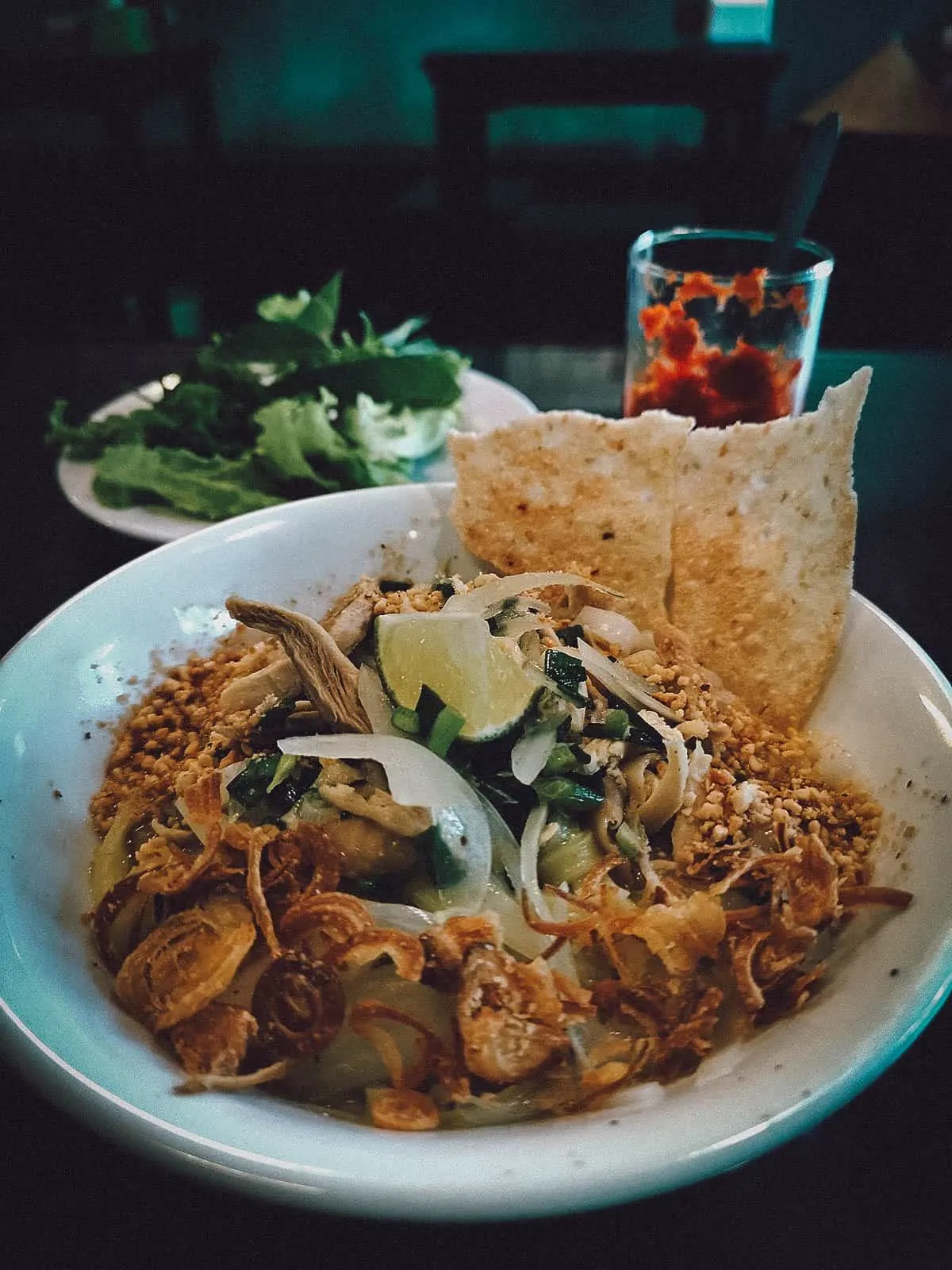
和高楼面一样,米光面也是广南省的特色菜。米光面是岘港的代表性美食,正如高楼面之于会安,米光面之于岘港。
米广是一道用鸡汤(或猪骨汤)熬制的米粉,上面会放上各种蛋白质,从鸡肉到虾再到黑鱼应有尽有。它通常配上一碗新鲜的蔬菜和香草,以及一些调味品。
与干拌高楼面不同,米广面是一道汤汁较多的菜肴,用的是较宽的米粉。它的汤底是用肉(通常是鸡肉或猪肉)在水或骨头汤中慢炖而成,然后用黑胡椒、鱼露、红葱头和蒜蓉(一种味道浓烈、类似大蒜的蔬菜)调味。
慢炖的过程能熬制出比传统面条汤更浓郁的浓汤。然后将汤舀入盛有米粉的碗中,汤面约1-2厘米深,米粉上放有猪肉、虾仁、鹌鹑蛋等各种蛋白质。通常还会撒上碎花生、葱花和辣椒,并配以新鲜香草、米饼、整根青辣椒和青柠。
越南有句关于米光的谚语是这样的:Thương nhau múc bát chè xanh, Làm tô mì Quảng anh xơi cho cùng。越南有句俗话,描述的是广南省的一个女孩邀请她的爱人喝一杯茶,吃一碗米广,以向他证明她的爱有多深。这就是广南省米广菜的特别之处。
米光面是岘港的特色面食,所以我猜想那里应该能吃到最正宗的米光面。可惜的是,我们没在岘港尝过,不过在会安到处都能找到米光面。
食谱: 米广
21. 胡蒂厄
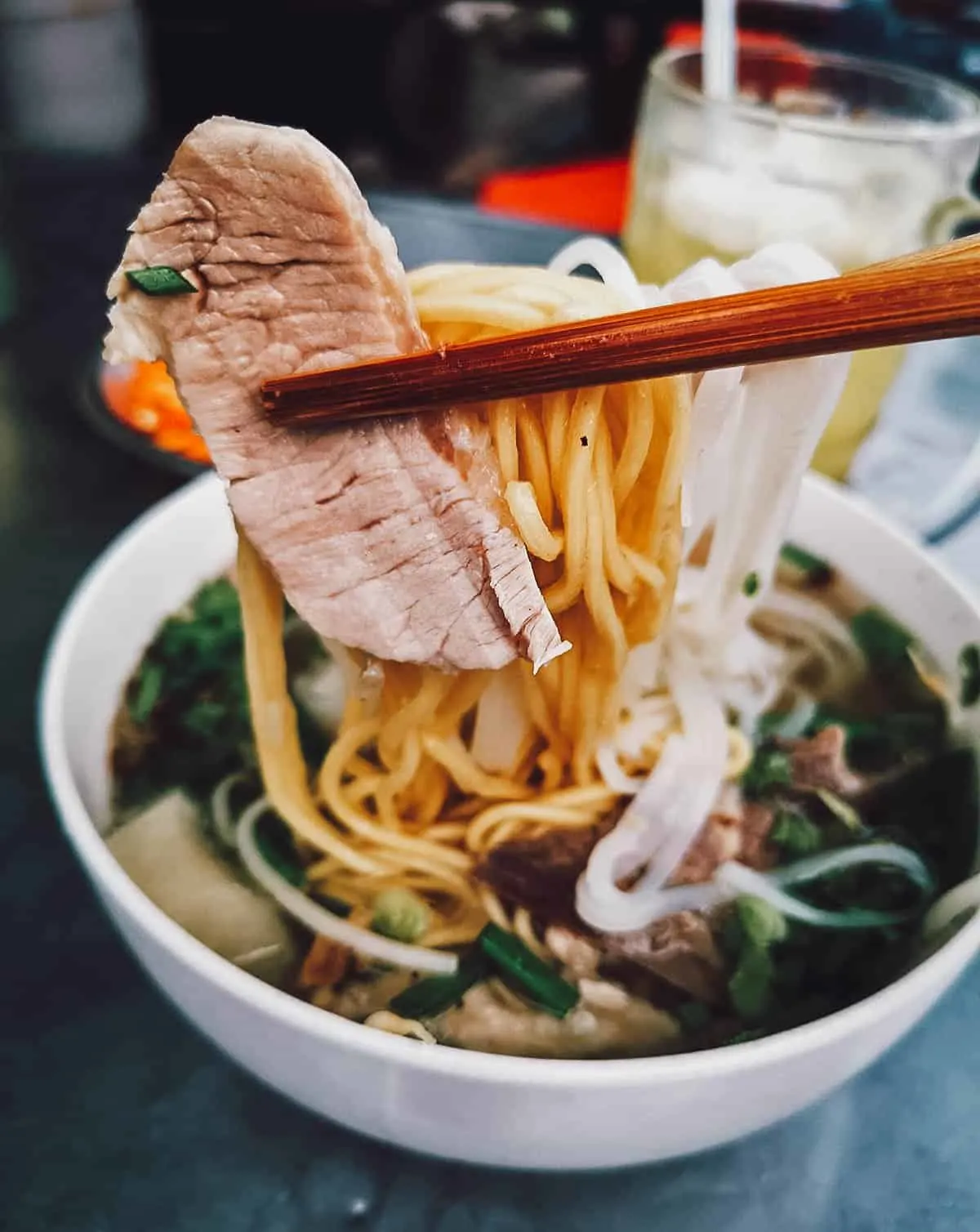
越南河粉是我在越南最喜欢的食物之一。它起源于柬埔寨,是一种很受欢迎的早餐食品,可以做成汤面,也可以不加汤直接吃。
粿条汤的做法是先用蒜油浸润粿条,再淋上用蚝油、酱油和糖调制的浓稠棕色酱汁。接着,碗里盛满用猪骨、鱿鱼干和糖熬制的清汤,最后用鱼露调味,并撒上各种肉类,如猪肉、鸭肉、海鲜或内脏。
我在湄公河三角洲地区品尝了好几种不同口味的汤面和干煸面,都非常喜欢。下图是沙沥的一种煸面,里面用了两种面条。真是太美味了。
食谱: 粿条面
22. 南宝面包
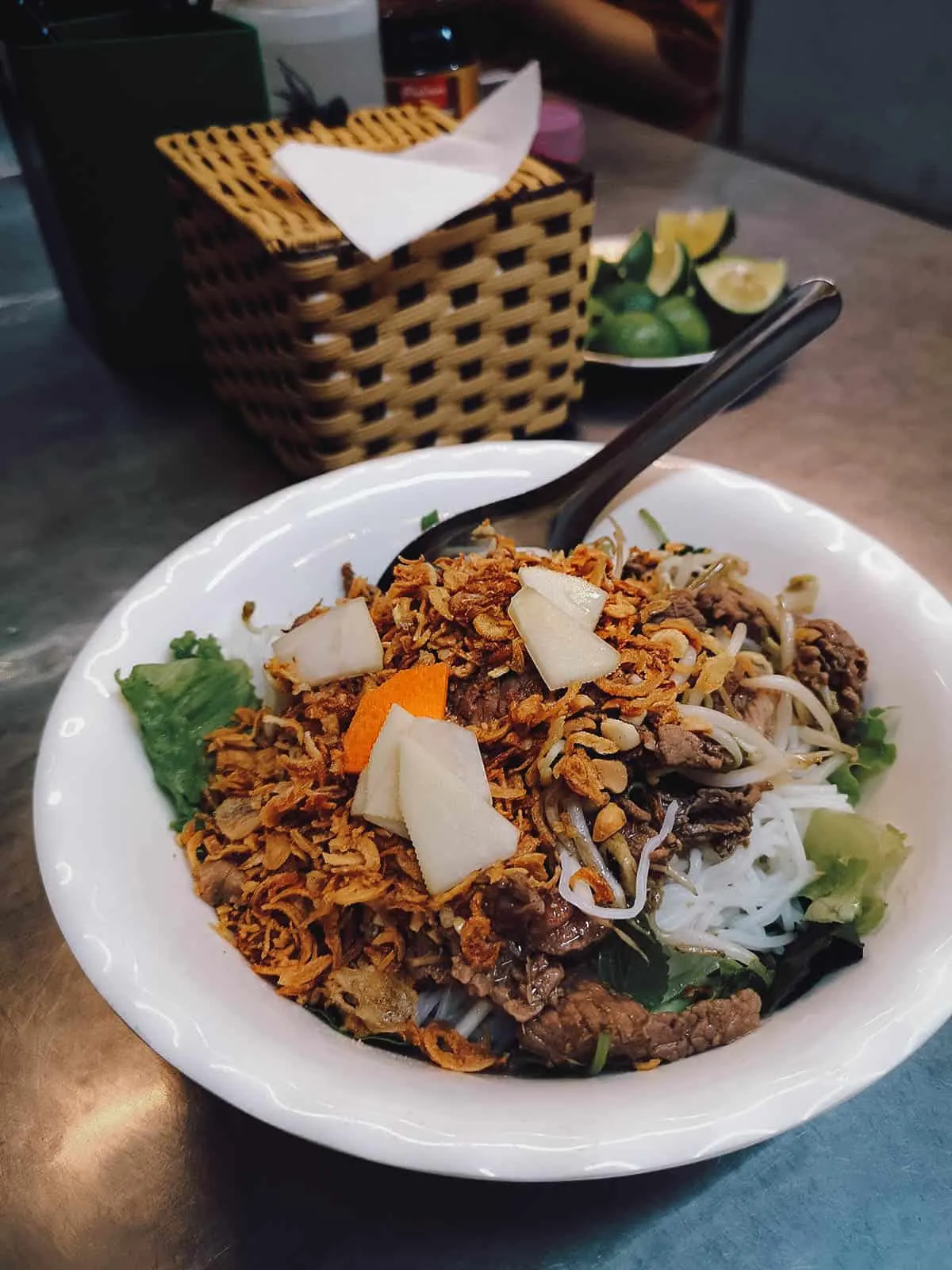
越南牛肉米粉(Bun bo nam bo)字面意思是“南方风味牛肉米粉”,但据我了解,它实际上并非源自越南南部。有人认为它起源于河内,名字中的“nam bo”只是表明这道菜是按照南方做法烹制的——也就是用干米粉代替汤汁。
无论起源如何,越南牛肉粉(Bun Bo Nam Bo)都是一道美味的传统越南菜,我想大多数人都会喜欢。它由凉拌米粉、腌制炒牛肉、豆芽、炸红葱头、新鲜蔬菜、香草、烤花生和越南鱼露(Nuoc Cham)组成。这道菜味道鲜美——咸香酥脆,略带甜味,温热的牛肉与冰凉的米粉形成鲜明对比。
食谱: 越南面包
23. 邦瑞欧
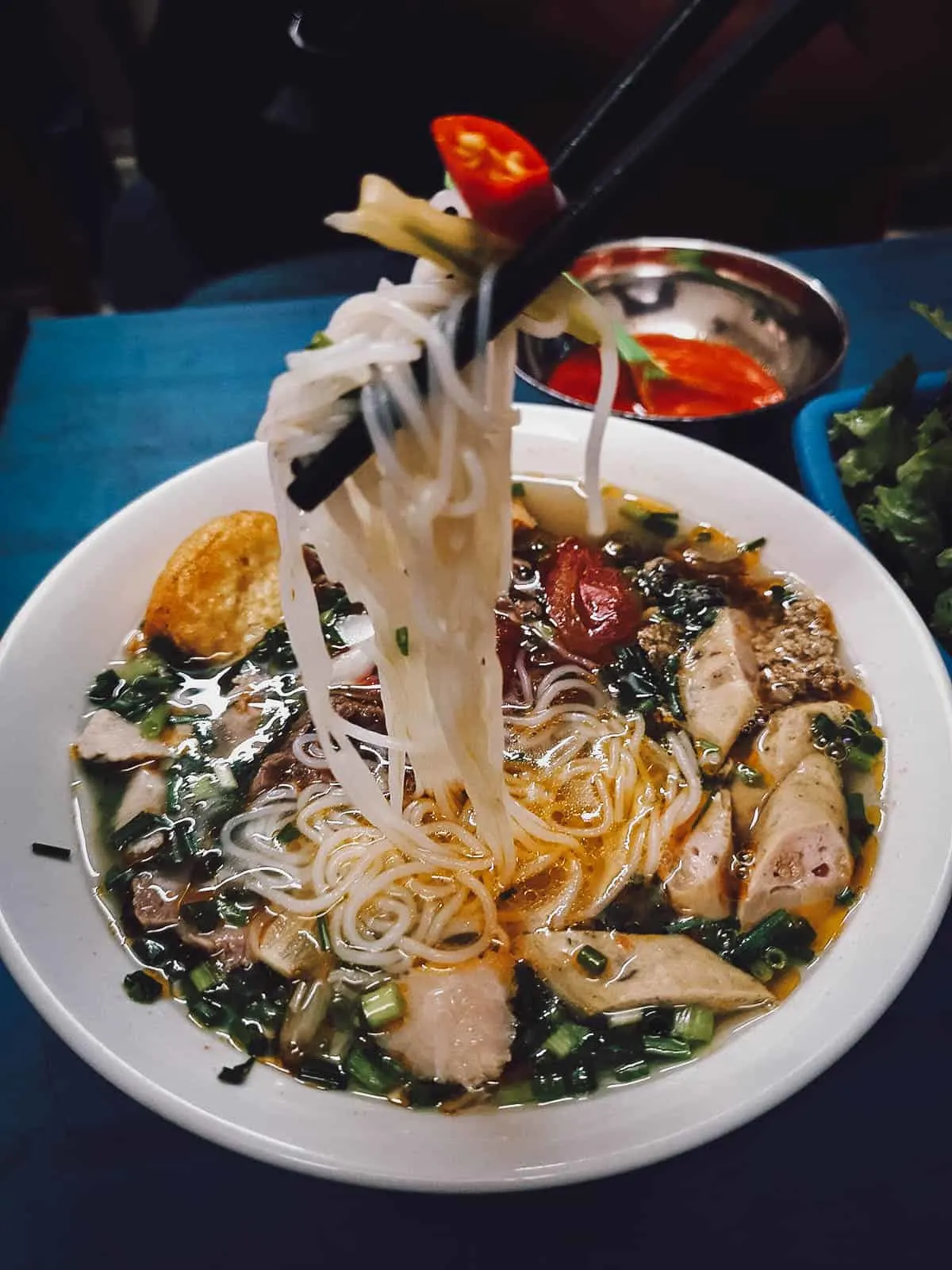
Bun rieu is a breakfast noodle soup dish that’s originally from northern Vietnam but is now enjoyed throughout the country. You’ll find different versions of this tasty noodle soup though one of the most popular is bun rieu cua which is made with crab.
To make bun rieu cua, freshwater rice paddy crabs are pounded with the shell into a fine paste before being strained. The crab liquid is then used as a base for the soup along with stewed tomatoes and annatto seeds, giving the broth a wonderful tangy flavor.
Whatever’s left of the crab is used to make crab cakes which are served with the soup along with rice vermicelli, green onions, fried tofu, and cubes of congealed pig’s blood. Like many traditional Vietnamese dishes, it’s served with a basket of fresh greens and herbs like perilla, mint, lettuce, and water spinach.
RECIPE: Bun rieu
24. Banh Canh
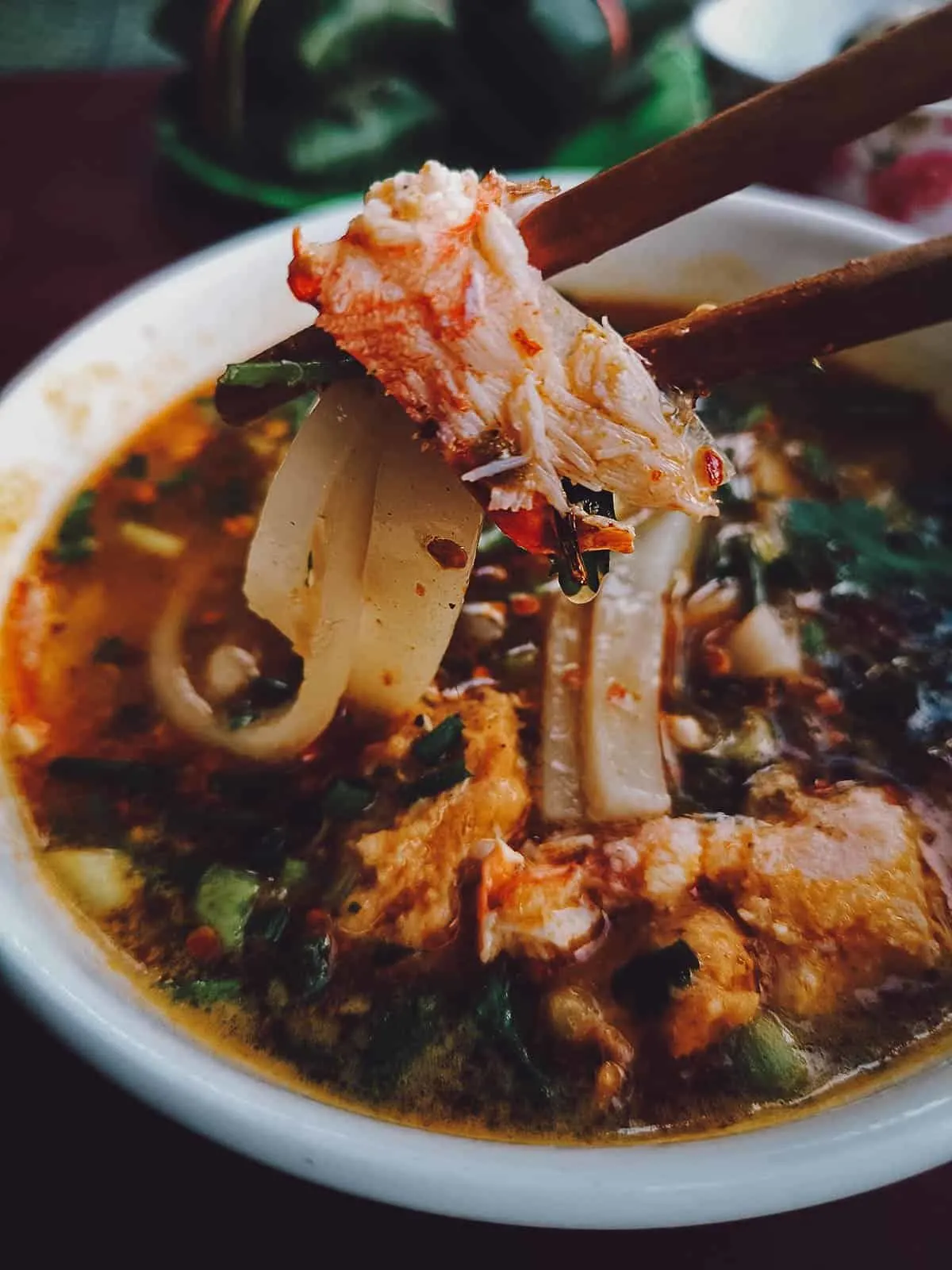
Banh canh means “soup cake” and refers to a thick Vietnamese noodle soup that can be made either from tapioca flour or a mixture of tapioca and rice flour. The “cake” in its name refers to the thick sheet of uncooked dough from which the noodles are cut.
There are several types of banh canh noodle soup made with different ingredients. Banh canh cua is made with sumptuous chunks of crab (pictured below) while banh canh cha ca, a version popular in central Vietnam, is made with pork and fish cake. I’ve had both and enjoyed them both.
We went on a private tour of My Son Sanctuary in Hoi An and our guide Turtle took us to his favorite banh canh place in the Ancient Town. It was a spur of the moment thing that turned out to be one of my favorite food experiences in Vietnam.
I prefer thick, chewier noodles like Japanese udon and that’s exactly what banh canh noodles are like. The broth was flavorful with sinewy chunks of pork bone, fish cakes, and lots of green onions. I think it may have had slivers of cha lua as well.
RECIPE: Banh canh
25. Bun Thang
This was one of the most interesting food experiences we had in Vietnam, partly because of the unusual restaurant and the unique ingredients needed to make this noodle soup dish.
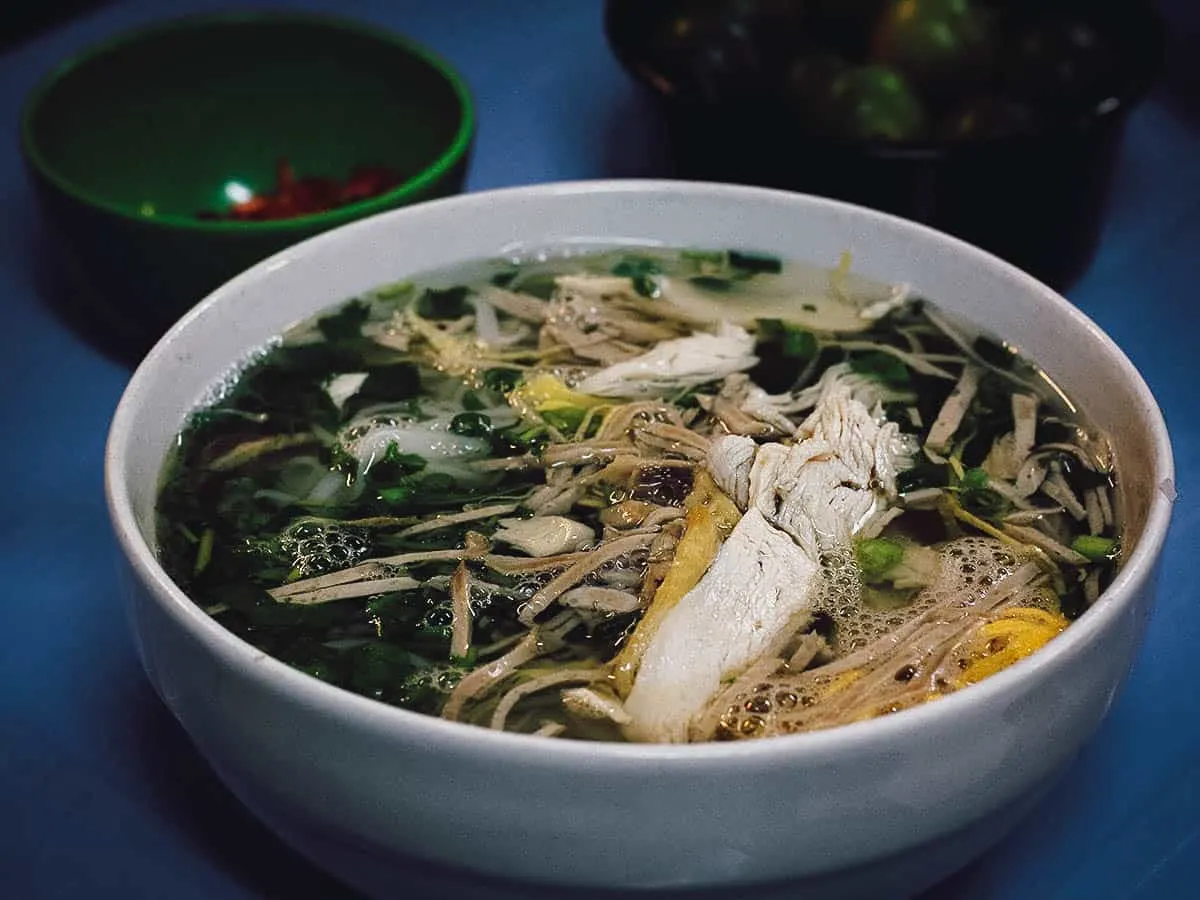
Originally from Hanoi, bun thang is a fussy bowl of rice noodle soup that’s often reserved for special occasions in Vietnam. Toppings vary but it’s typically made with shredded chicken, pork, shrimp floss, thinly sliced egg shreds, gio lua, and fresh herbs like mint and coriander.
The two ingredients that make bun thang special are ga mai dau, which are Vietnamese hens of a very specific age, and ca cuong, which is a pheromone extracted from male belostomatid beetles. Yes, actual beetle juice.
The ideal hens used to make this dish must only be old enough to lay eggs for about a week. Any older or younger and the chicken meat isn’t ideal. As for the beetle extract, a minute amount is added to the broth via the tip of a toothpick to give it a unique fragrance.
Real ca cuong is expensive and difficult to come by these days so I’m not sure how often it’s still used. I didn’t notice any strange aromas in our bun thang but then again, I didn’t know to look for it at the time.
Another thing that makes proper bun thang so fussy to prepare is that the toppings need to be cut into thin, matchstick-like threads, as you see below.
RECIPE: Bun thang
VIETNAMESE RICE DISHES
26. Com Ga
Com ga is another specialty of Hoi An. It’s basically the Vietnamese version of Hainanese chicken rice. It’s originally from China but it found its way to central Vietnam via Chinese traders who settled in Quang Nam Province.
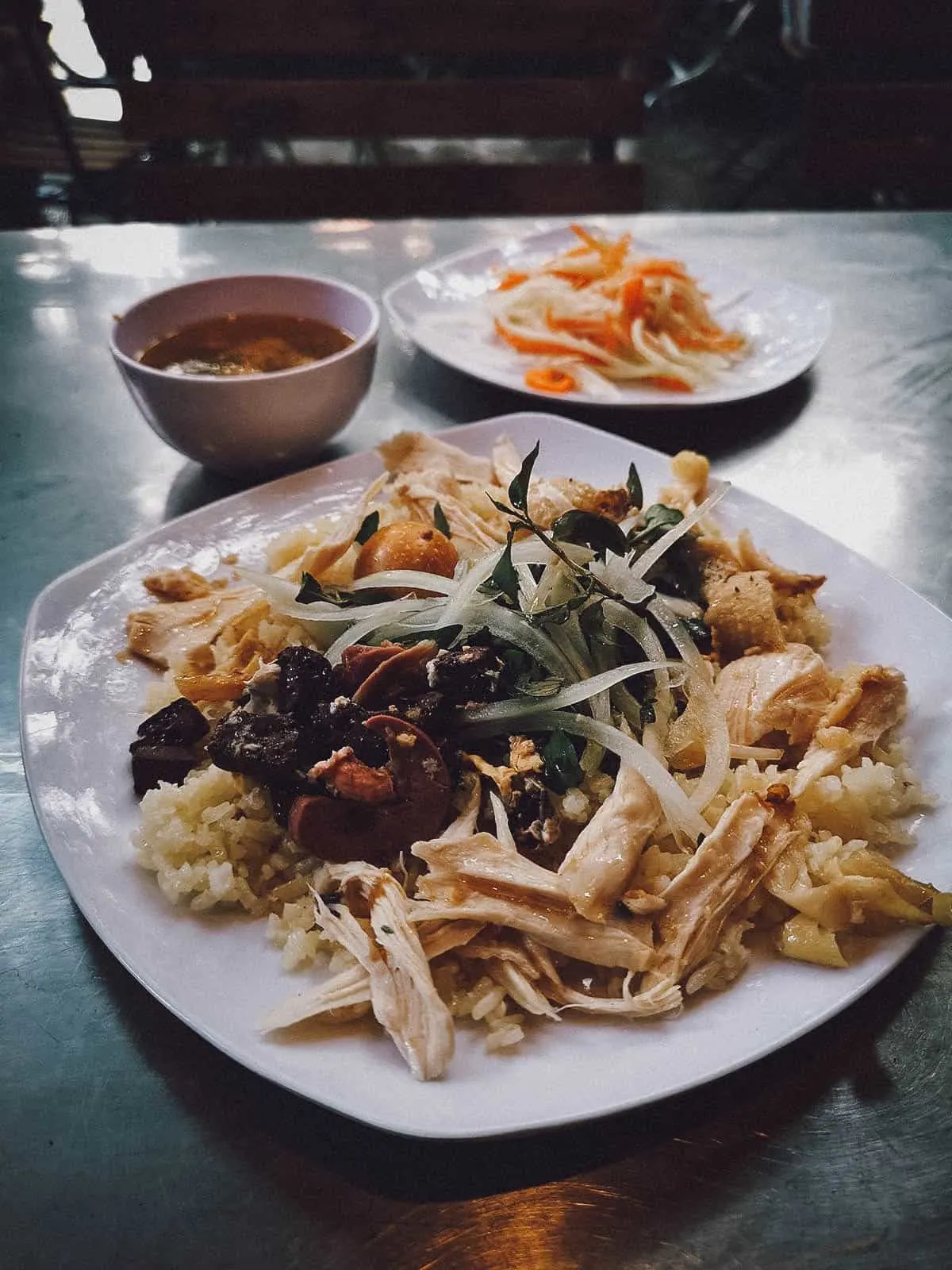
Com ga consists of shredded poached chicken served with seasoned pilaf rice, shredded green papaya and carrot, fresh herbs, and a bowl of chicken broth that may or may not contain offal and cubes of congealed blood.
Like Hainanese chicken rice, it’s lack of color makes it look deceptively bland but nothing could be further from the truth. It’s absolutely delicious and something you need to have in central Vietnam.
RECIPE: Com ga
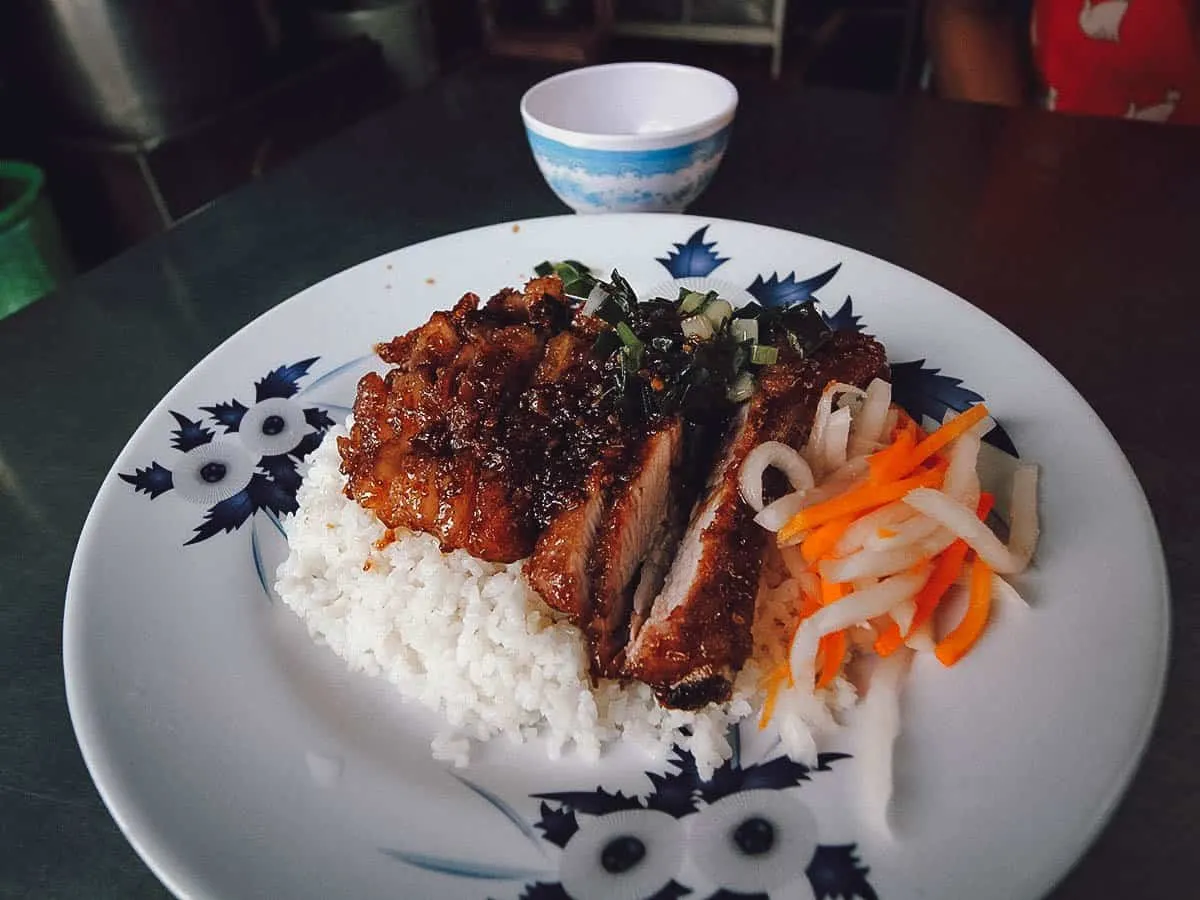
27. Com Tam Suon Nuong
Com tam means “broken rice” and refers to one of Saigon’s most famous Vietnamese dishes. It’s called “broken rice” because it’s made with rice grain fragments that were broken either in the field, during drying, during transport, or by milling. Because it was damaged, com tam was a traditionally cheaper grade of rice but it’s since become more expensive as a sought after food item.
Broken rice is often eaten with a grilled pork chop in a traditional Vietnamese dish called com tam suon nuong. To be honest, I haven’t eaten com tam enough to really notice the difference but it’s said to be nuttier than regular rice, almost like risotto.
What I do notice however, is how delicious Vietnamese pork chop is. Marinated and grilled over charcoal, it’s savory, sweet, very tender, and perfect to eat with the broken rice.
RECIPE: Com tam suon nuong
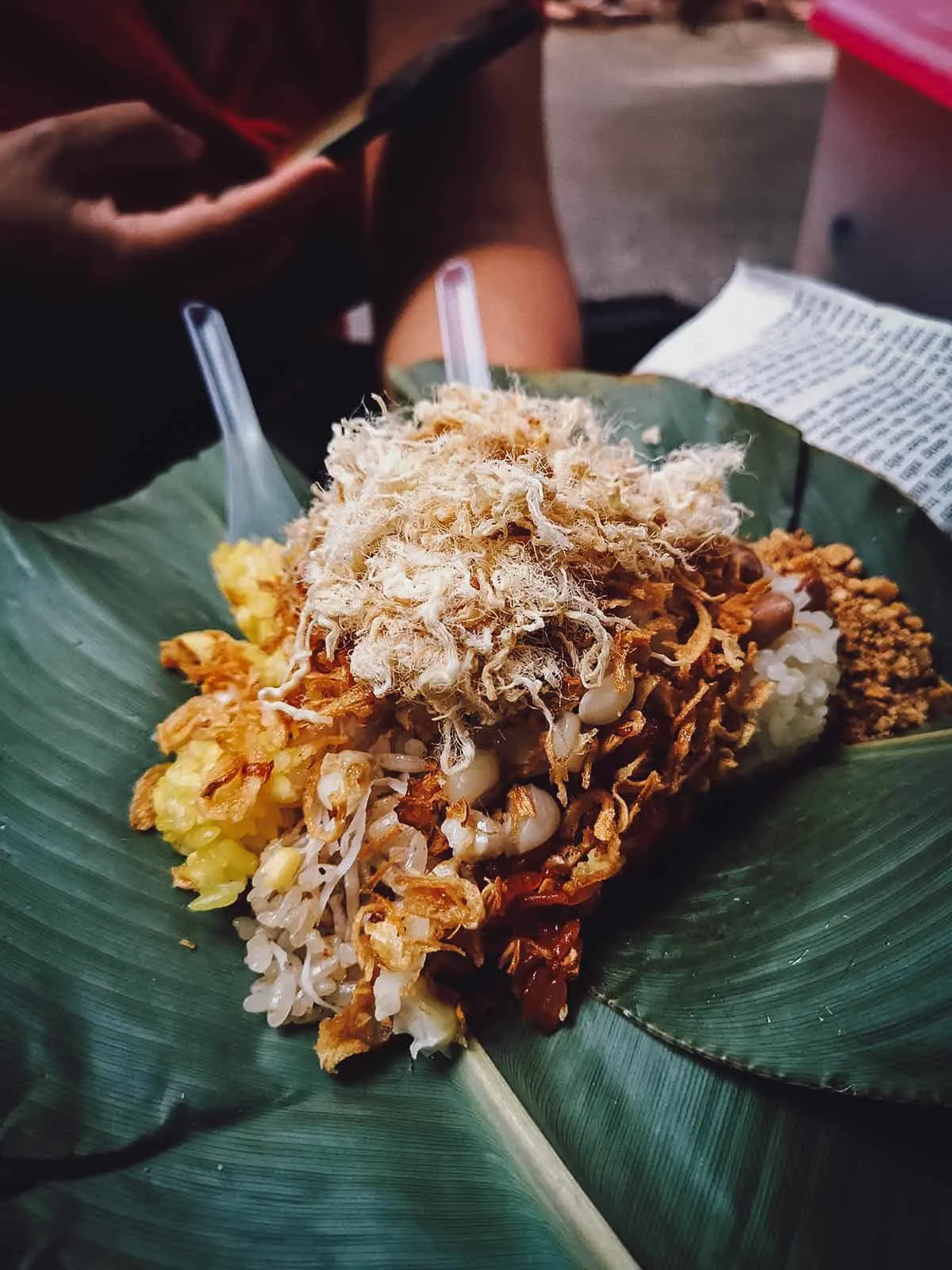
28. Xoi
Xoi refers to a family of traditional Vietnamese dishes made with glutinous or sticky rice that’s been soaked for several hours then drained and steamed dry. Like che, there are hundreds of varieties of xoi sticky rice made with any number of different ingredients, both savory (xoi man) and sweet (xoi ngọt).
Pictured below is an overflowing banana leaf of xoi bap in Hanoi. It consists of two types of sticky rice loaded with different ingredients like corn, fried shallots, crushed peanuts, and pork floss.
It’s a tasty combination of chewy, sticky, sweet, savory, nutty, and crunchy. If you’re starving but running low on cash, then xoi sticky rice is a great dish to have. It’s delicious and will fill you right up.
RECIPE: Xoi
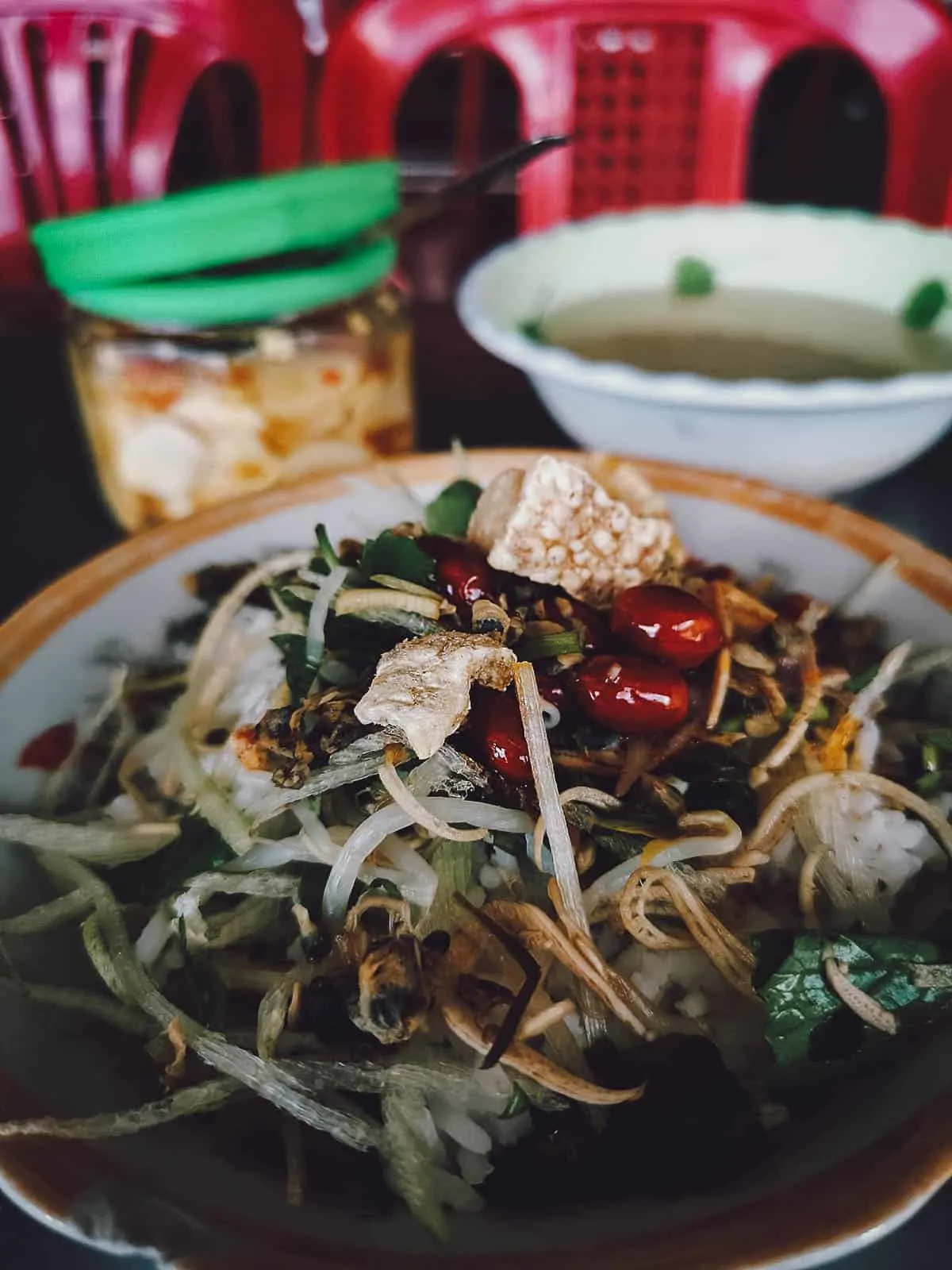
29. Com Hen / Bun Hen
Com hen or bun hen is another specialty of Hue. It’s made with either rice (com) or noodles (bun) topped with stir-fried baby basket clams, vegetables, and a host of other ingredients like fish sauce, fermented shrimp paste, herbs, pork crackling, banana flower shreds, and peanuts.
Com hen is traditionally made with leftover rice which is why the dish is served at room temperature. Between com hen and bun hen, I preferred the latter. I thought the rice noodles paired better texturally with the clams than rice.
Com hen or bun hen is a tasty and cheap snack that I had many times in central Vietnam. Served with a side dish of warm clam broth, it’s an interesting medley of flavors and textures that gives you salty, sweet, spicy, and sour to go with the crunchiness of the cracklings.
RECIPE: Com hen
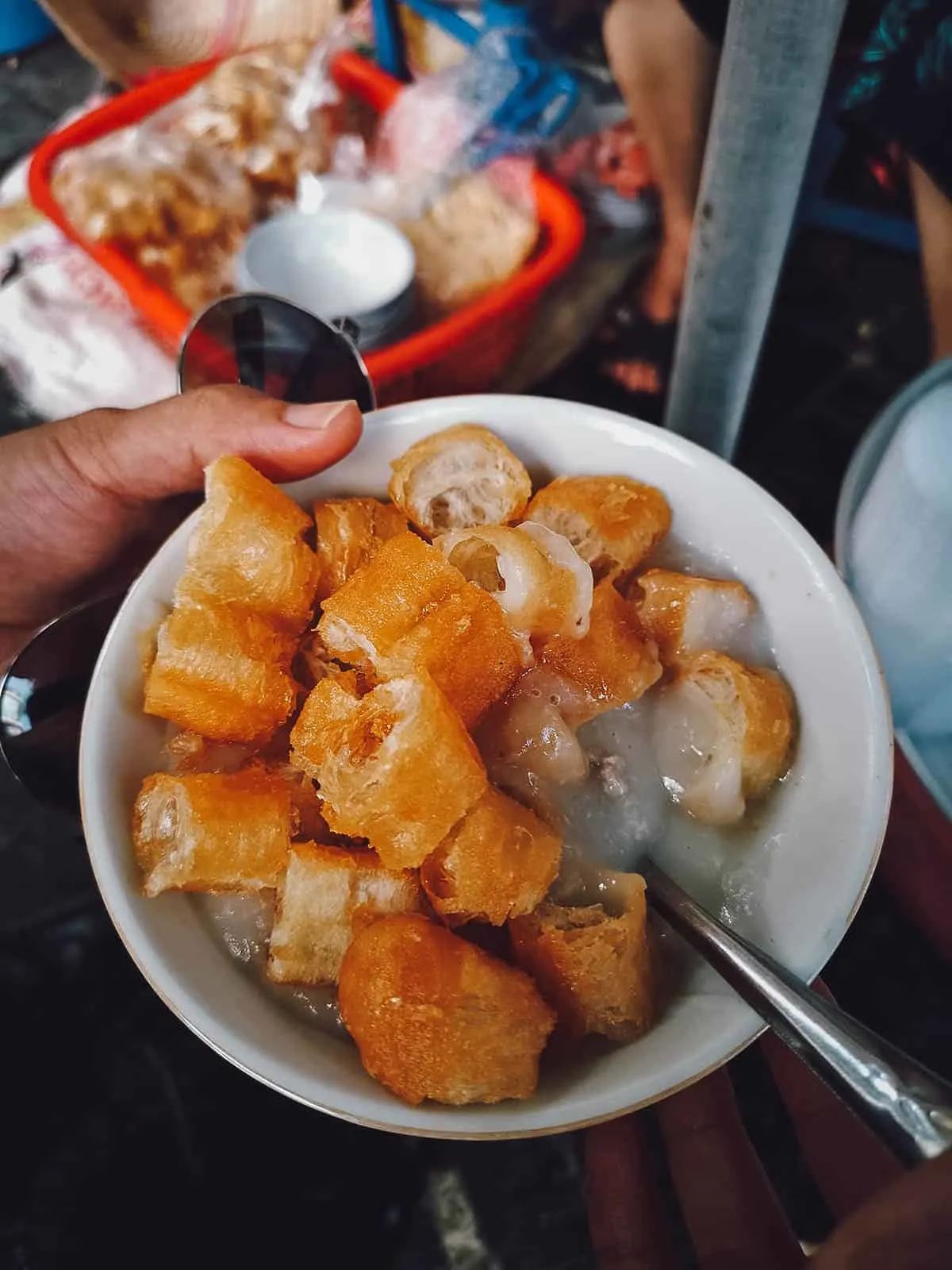
30. Chao Ga
Chao ga refers to Vietnamese chicken porridge or congee. A thick and satisfying dish, it’s comforting food that tastes even better when eaten with quay or Chinese crullers.
The crullers are crunchy on the outside but airy in the middle so they practically melt in your mouth with the congee.
RECIPE: Chao ga
VIETNAMESE MEAT DISHES
31. Bun Cha
Like banh mi, bun cha is one of my favorite traditional Vietnamese dishes. It’s one of northern Vietnam’s most beloved foods and the reason why bun thịt nuong is popular everywhere in Vietnam except Hanoi. It’s also the dish famously shared by Anthony Bourdain and Barack Obama in the Vietnam episode of Parts Unknown.
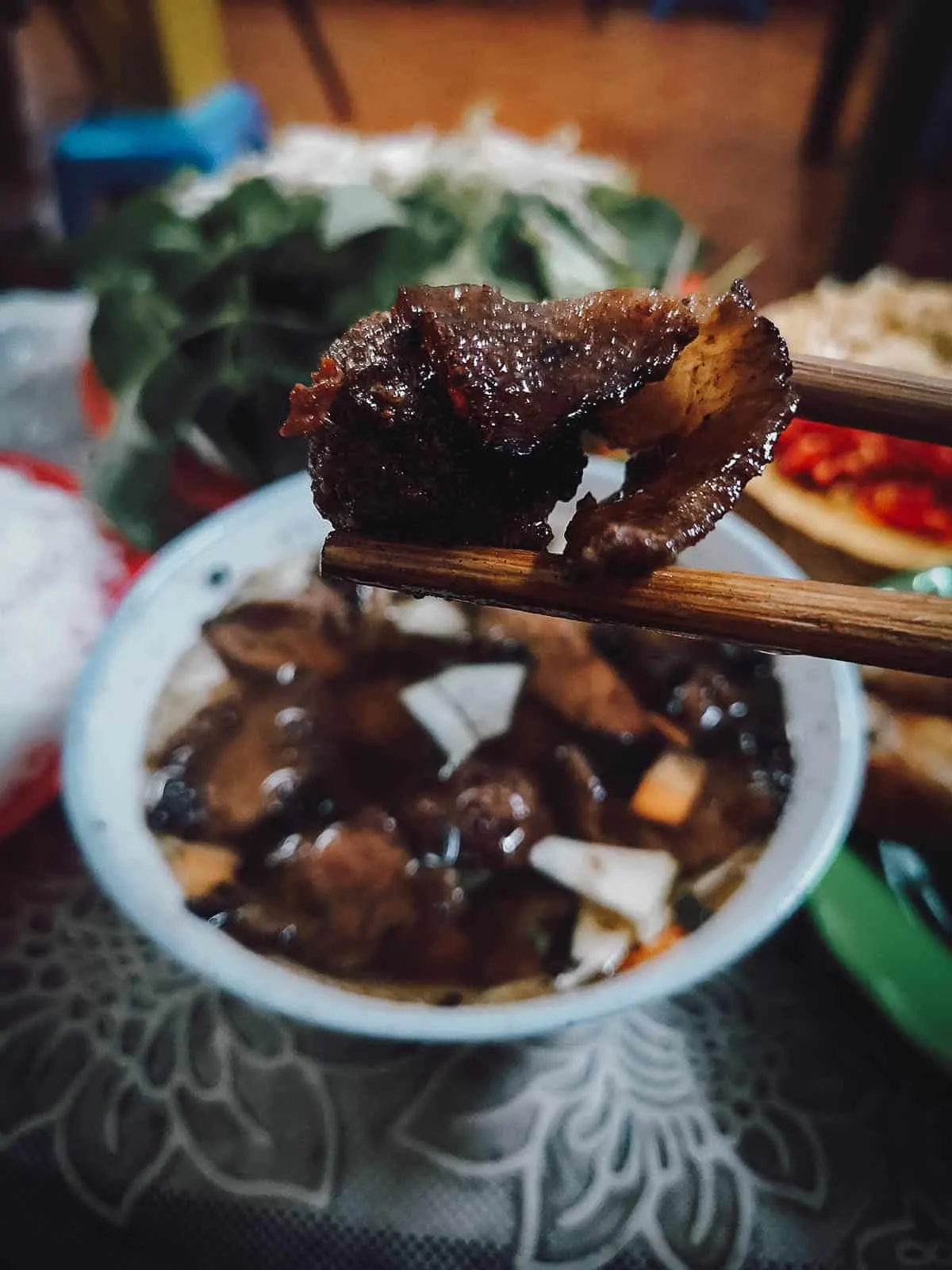
Like bun thịt nuong, bun cha is a charcoal-grilled pork dish served with cold rice noodles (bun) and fresh greens like lettuce, perilla, coriander, and mint. The main difference between bun cha and bun thit nuong, as far as I can tell, is in the preparation of the meat.
In bun cha, the pork comes in meatball patty form, along with some grilled pork belly, and served in a soupy bowl of pickled vegetables that impart acidity to the dish. Unlike the ingredients of bun thịt nuong which are served together in one bowl, the components of bun cha – pork, rice noodles, greens, and nuoc cham – are presented separately.
As good as bun thịt nuong is, bun cha may even be better. They’re closely related Vietnamese dishes but for me, there’s more going on with bun cha in terms of flavor and texture. Like pho and banh mi, it’s one of the tastiest examples of Vietnamese food and a must-try when in Hanoi.
Bun cha is often eaten with a side dish of nem cua be or deep-fried crab spring rolls. The combination is fantastic so be sure to order a side of nem with your bun cha.
RECIPE: Bun cha
32. Bun Thit Nuong
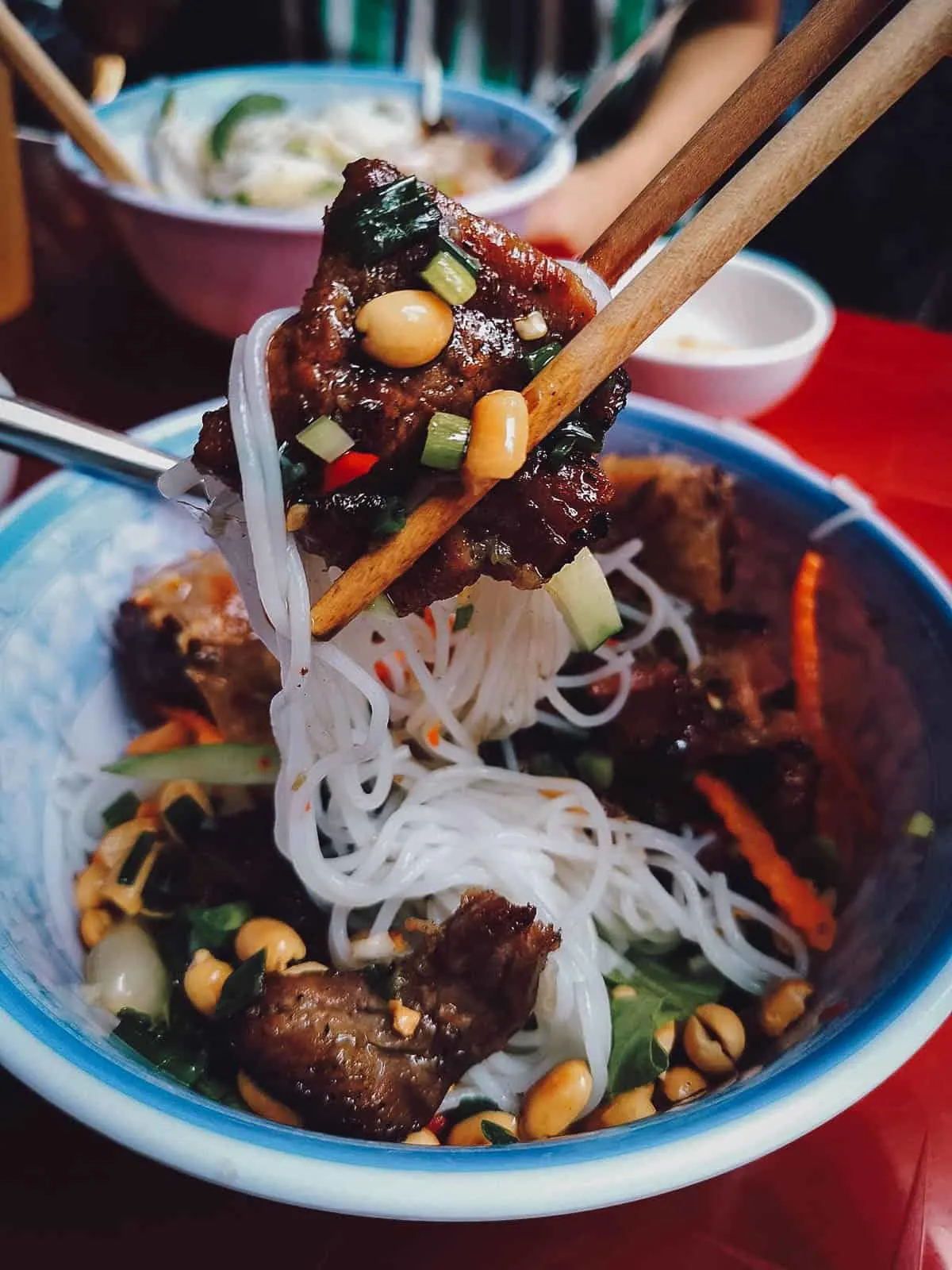
As described, bun thịt nuong is a popular traditional Vietnamese dish similar to bun cha. It consists of cold rice vermicelli noodles topped with charcoal-grilled pork, fresh greens, and herbs like basil, perilla, and mint. It’s garnished with pickled daikon and carrots, roasted peanuts, and chopped green onions before being drizzled with nuoc mam pha (Vietnamese fish sauce).
Like bun cha, there’s a good balance of flavor and texture in bun thit nuong that’s easy on the palate. You have smokey pork, sour and crunchy pickled vegetables, fresh greens, peanuts, and a sweet-savory fish sauce dressing over a bed of cold sticky rice noodles. Unless you don’t eat meat, it’s hard to imagine anyone not liking bun thit nuong or bun cha.
RECIPE: Bun thit nuong
33. Nem Nuong / Nem Lui
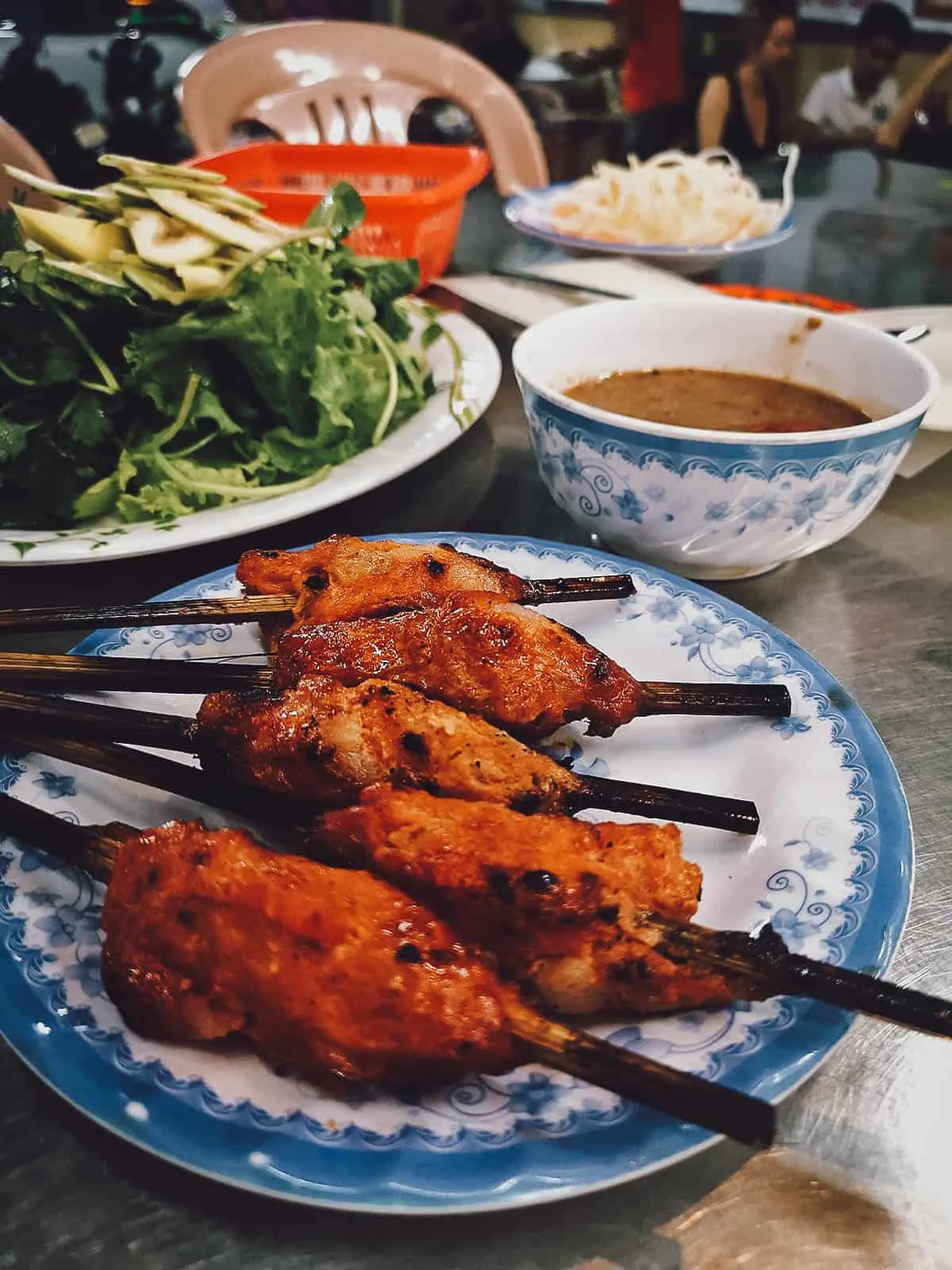
Nem nuong is a dish of skewered and grilled pork meatballs or sausages. They’re made with fatty pork seasoned with shallots, garlic, fish sauce, sugar, and black pepper.
From what I understand, nem lui is the version of nem nuong found in Hue. I don’t know if the spices or preparation is different, but nem lui is typically served on lemongrass skewers with Vietnamese rice paper, rice vermicelli, lettuce, cucumber slices, fresh herbs, and peanut sauce.
To eat, you wrap the grilled meat in the rice paper with some lettuce, vermicelli, and other ingredients before dipping into the peanut sauce. It’s delicious – smokey, sweet, savory, and nutty from the peanut sauce. It’s something I believe many tourists will enjoy in central Vietnam.
RECIPE: Nem nuong
34. Thang Co
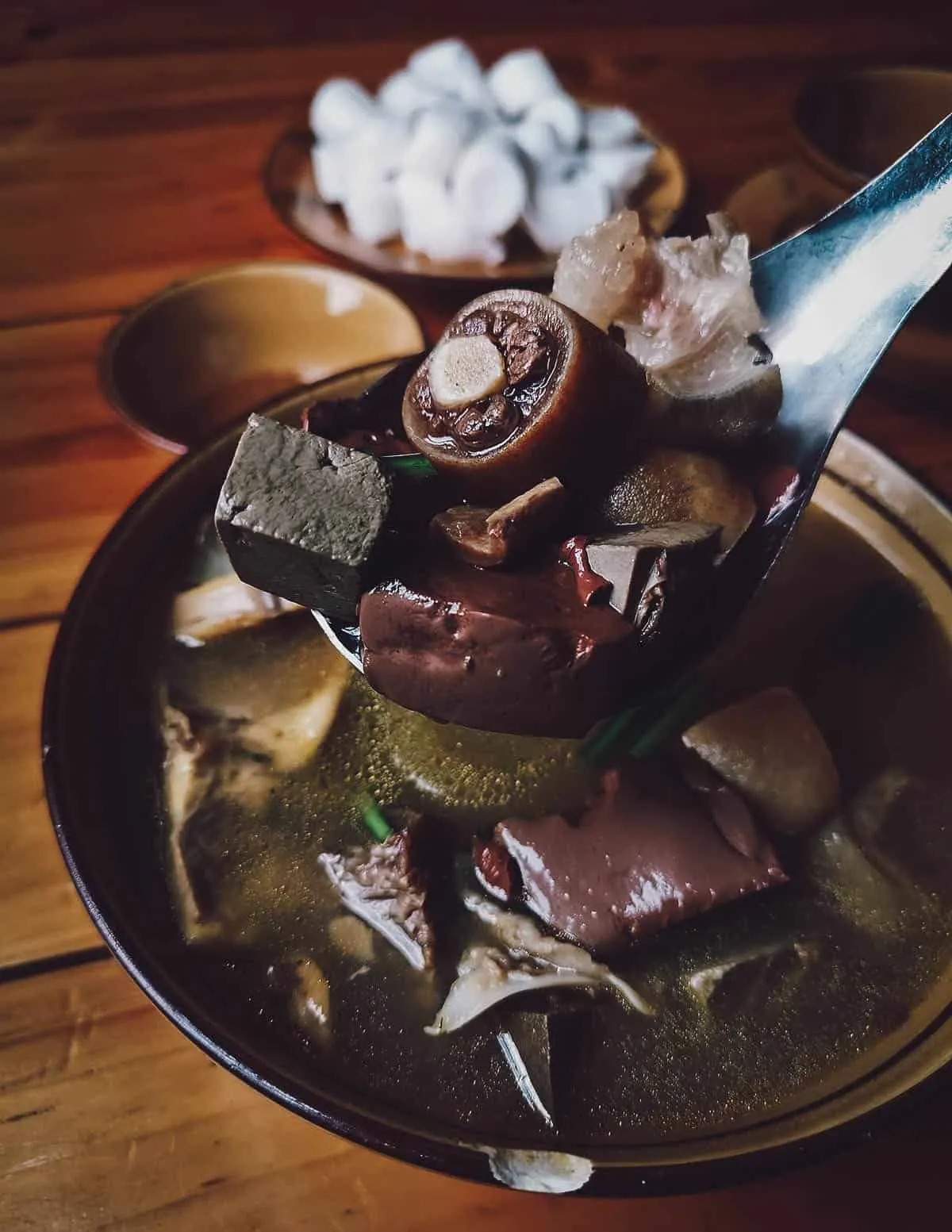
Thang co is a specialty of Sapa in the mountainous region of northern Vietnam. It’s a traditional H’mong stew made with horse meat.
The H’mong people have been using horses for transport for generations. When the horse becomes sick or too old to work, they butcher it for its meat. Though horse meat is the main ingredient in thang co, other types of meat like beef, pork, buffalo, and goat are often used as well.
To prepare, the meat is simmered for hours in a large pot or pan with a host of up to twelve different spices. I read that the spices help to remove the pungent smell of the meat while giving the stew its distinctive aroma.
As you can see in this picture, they use every part of the horse so little goes to waste. I’m not sure which parts are horse but I see congealed blood, cubes of liver, tendon, and tail. It was served with rolled up rice noodles which I’d dunk into the stew to eat.
VIETNAMESE SEAFOOD DISHES
35. Cha Ca
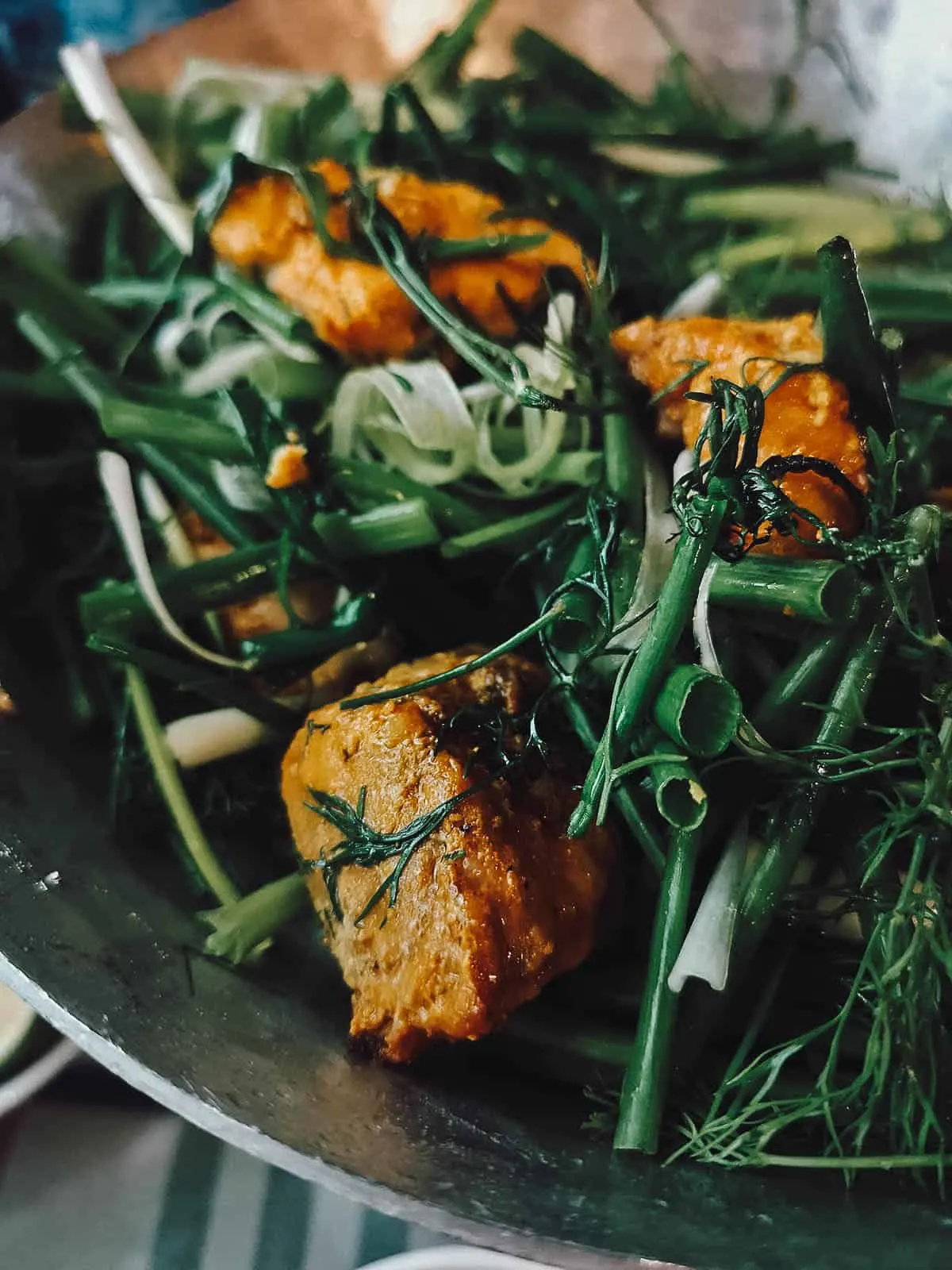
Like bun cha, this is one of the most beloved foods in northern Vietnam. Named after the restaurant that popularized it over a hundred years ago, cha ca la vọng is a classic Hanoi specialty of grilled turmeric-marinated catfish served with a forest of fresh dill.
制作烤鲶鱼时,选用越南北部河流捕捞的鲶鱼,切成火柴盒大小的块状,用高良姜、姜黄和其他香料腌制。先用炭火烤制,然后端上桌,用平底锅煎熟,配上大量的鲜莳萝和葱花。
做好后,烤鱼配上米粉、烤花生和香菜,以及用鱼露、醋和大蒜调制的蘸酱。如果喜欢,还可以加一点越南虾酱(mam tom)和青柠汁混合而成的酱汁。
这道鱼肉烟熏味浓郁,外皮酥脆,呈焦糖色,口感鲜嫩多汁。味道真是绝了,是我们越南之行吃过的最美味的菜肴之一。事实上,这道菜如此受欢迎,以至于发明它的餐厅被列入了畅销书《一生必去的1000个地方》的推荐名单。
烤肉串(Cha Ca)是由河内的La Vong餐厅发明并推广的。虽然它至今仍在营业,但根据其差评来看,它的辉煌时期可能已经过去。在河内,还有更好的烤肉串餐厅可供选择。
食谱: Cha ca
36. 十月
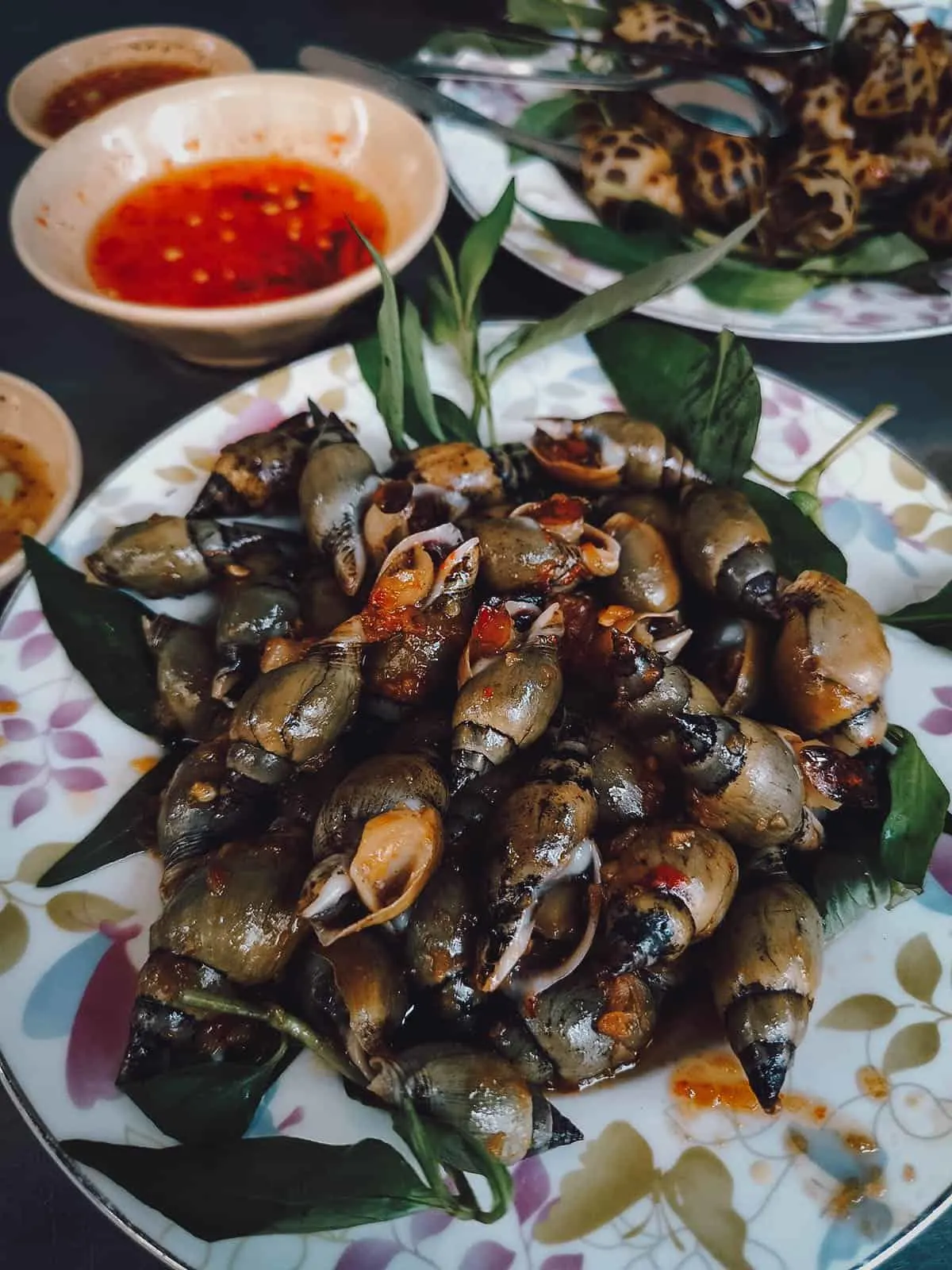
Oc是越南语中蜗牛的意思,蜗牛是越南的一种流行美食。蜗牛种类繁多,在越南各地,人们从海洋以及稻田、湖泊等淡水水源中捕捞蜗牛。
我原以为越南人喜爱蜗牛是法国殖民影响的遗留,但事实证明,早在法国人到来之前,越南人就已经开始享用蜗牛了。 “吃蜗牛” (oc )是越南“nhau”文化的一部分,“nhau”在越南语中意为“外出、吃喝、社交”。吃蜗牛在越南非常流行,甚至被视为一项全民娱乐活动。
蜗牛美味可口,食用方便,而且烹饪方法多种多样,与啤酒非常相配,所以我能理解为什么它是越南最受欢迎的街头小吃之一。
食谱: Oc len xao dua
37. 卢昂
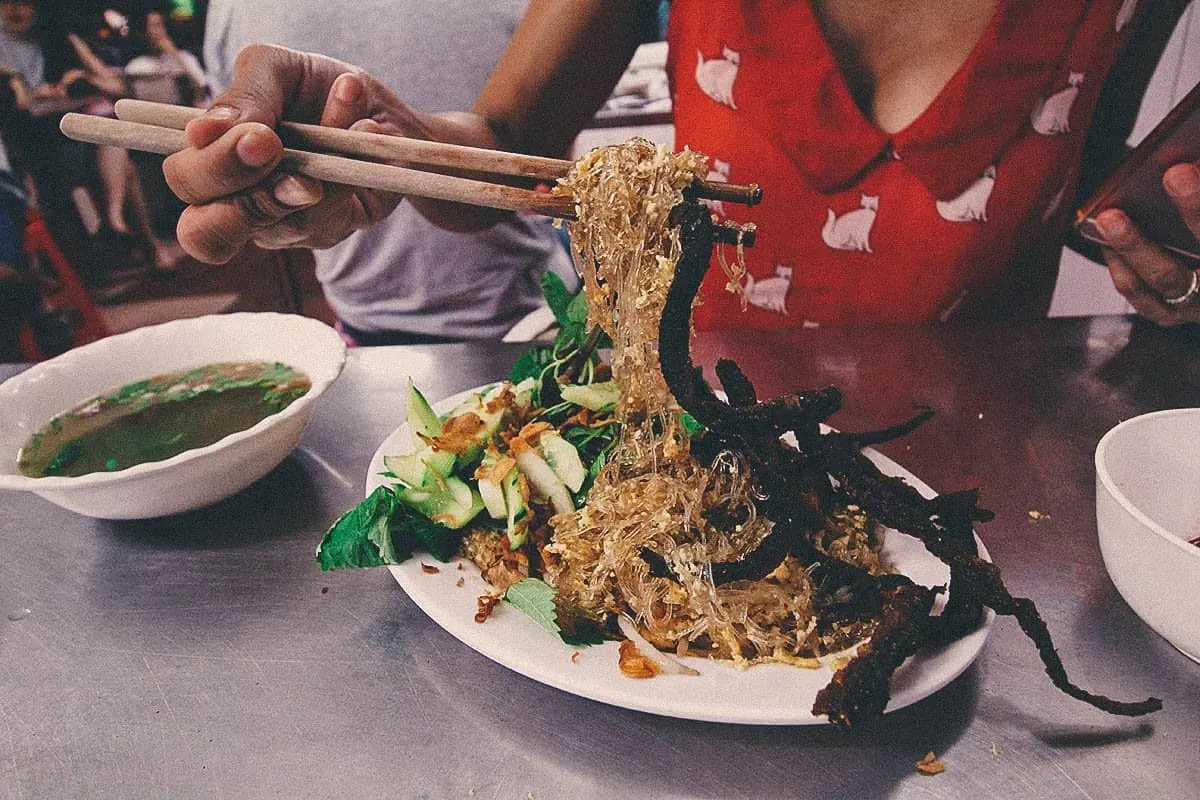
Luon指的是任何用鳗鱼制作的菜肴。与日式鳗鱼饭(unagi)将鳗鱼烤制不同,越南菜中的鳗鱼是先晒干再油炸,使其口感酥脆,类似干凤尾鱼。
越南北部有很多地方供应鳗鱼饭(luon),但我们是在河内一家备受好评的餐厅——东盛鳗鱼饭(Mien Luon Dong Thinh)品尝的。他们每天从距离首都河内以南约300公里的义安省(Nghe An)空运鳗鱼。据说义安省出产越南最好的鳗鱼(以及最好的鳗鱼料理)。
鳗鱼的做法有很多种。我们点了小笼面和凉拌鳗鱼。这两道菜很相似,用的食材几乎一样——粉丝(面)、炸蒜和炸红葱头、黄瓜片、花生碎,以及新鲜的香草和蔬菜。
主要区别在于,小笼面(如下图所示)是干拌的,面条是炒制的。而鳗鱼汤面则是淋上一层用鳗鱼骨和姜熬制的浅汤。鳗鱼入口脆嫩,咀嚼片刻后便会软化,这时你才能真正感受到鳗鱼的鲜甜。
食谱: Mien luon
38. Bach Tuoc Nuong Sa Te
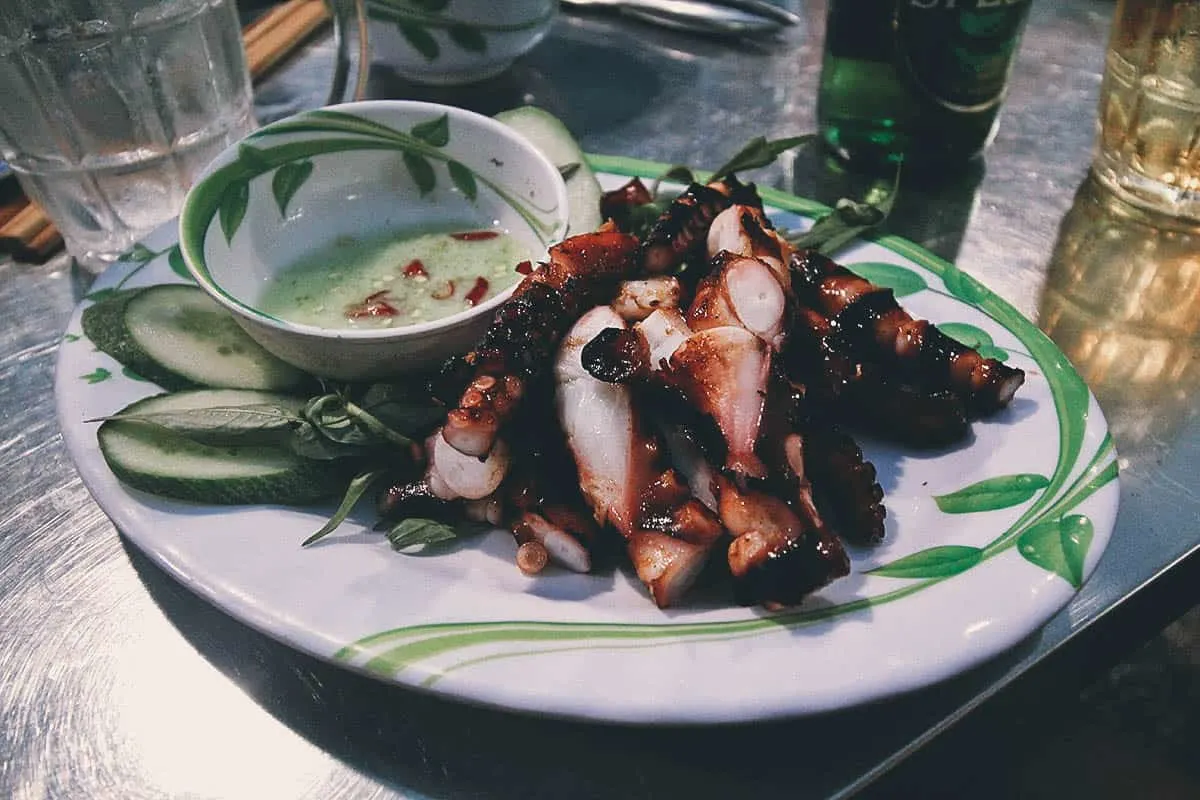
我们在胡志明市永庆街吃到了这道烤章鱼,但我相信章鱼在越南各地都是很受欢迎的街头小吃,不仅仅在南部。当时我们并不知道这道菜叫什么,因为我们只是随便指着看起来好吃的就点了,但我相信它叫“bach tuoc nuong sa te”,也就是烤章鱼配沙爹。
新鲜章鱼先用蒜蓉、沙爹酱、蜂蜜、油和盐的混合物腌制,然后烤制。食用时配以越南薄荷、黄瓜片和用沙爹酱、柠檬汁、辣椒、胡椒和盐制成的蘸酱。
烤鱼柳是越南最受欢迎的街头小吃之一,尤其受年轻人喜爱。永庆街以海鲜闻名,因此是胡志明市品尝这道美食的绝佳地点。
我看着他们烤章鱼,章鱼在炭火上两面各烤几分钟,这样就能保持鲜嫩多汁。它有烟熏味,略带甜味,而且出乎意料地辣。
越南甜点/饮品
39. 切
“Che”是用来统称越南传统甜汤、甜饮料或布丁的术语。这是一种非常受欢迎的甜点,几乎在越南的任何地方都能找到。
无论是热食还是冷食,che 的种类都数不胜数,其原料也五花八门,例如椰奶、豆类、西米、果冻、水果、种子、块茎、谷物、麦片和糯米等等。有些品种甚至还加入了饺子。基本上,只要是甜的,并且是汤或布丁状的,都可以归类为 che。
越南天气炎热,所以喝上一碗冰镇的越南奶茶是消暑的好方法。我们在越南期间多次享用过。
食谱: Che bap
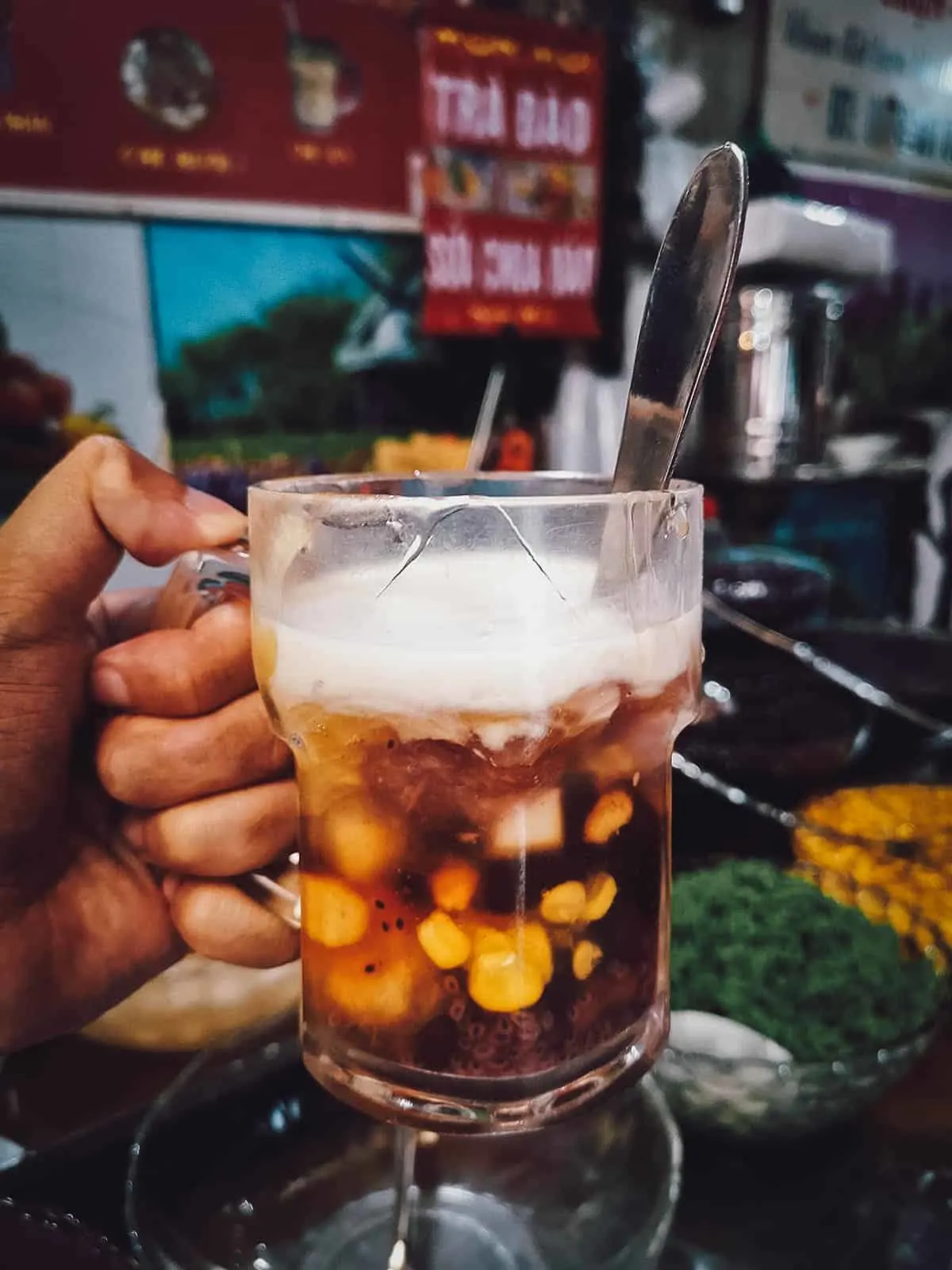
这款用甜玉米做的玉米粥(che bap或 che)是我最喜欢的越南传统甜点之一。它浓稠香滑,在顺化很受欢迎,是吃完一碗鸡肉饭(com hen)后的绝佳甜点。
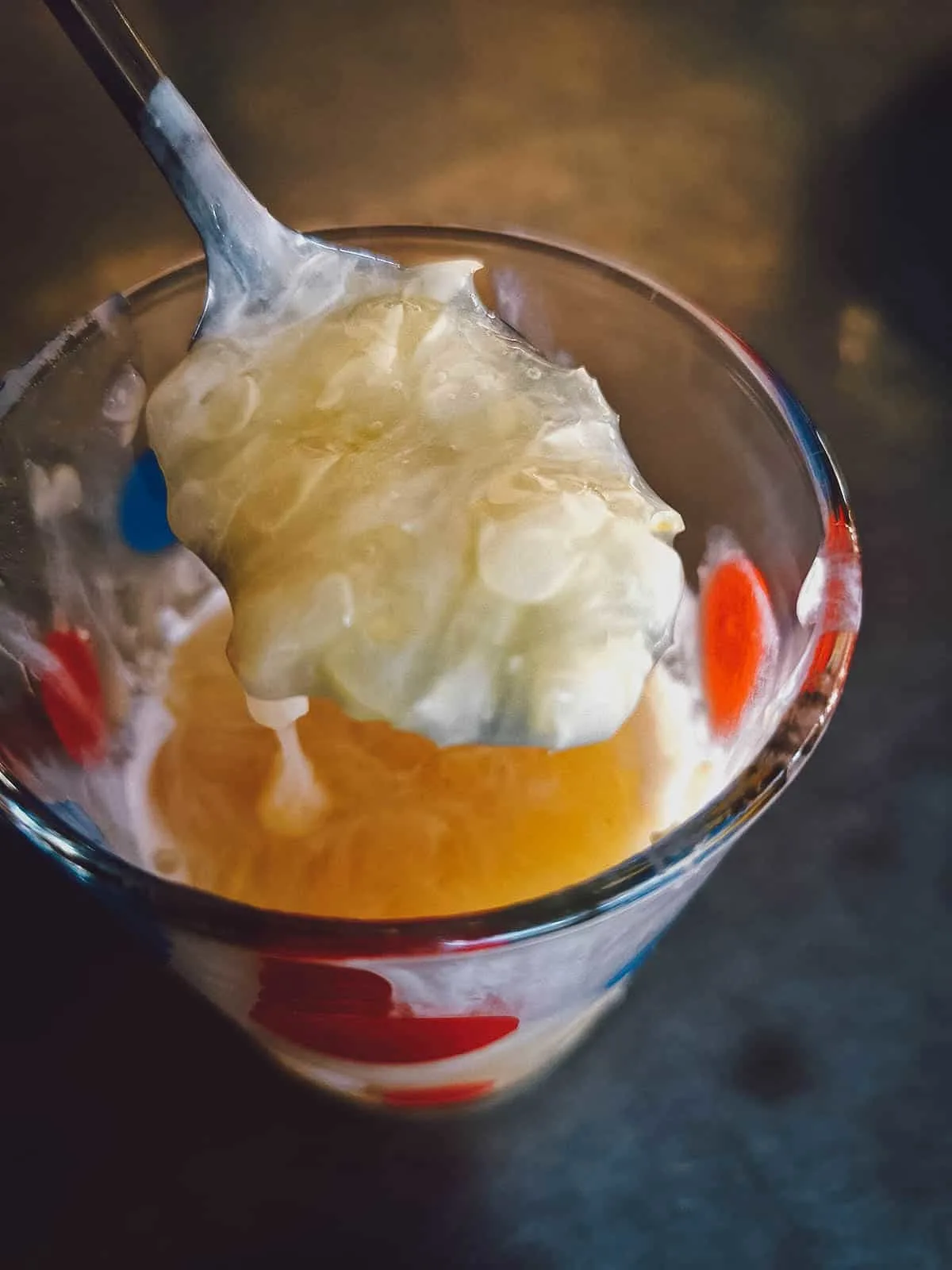
40. 烤面包
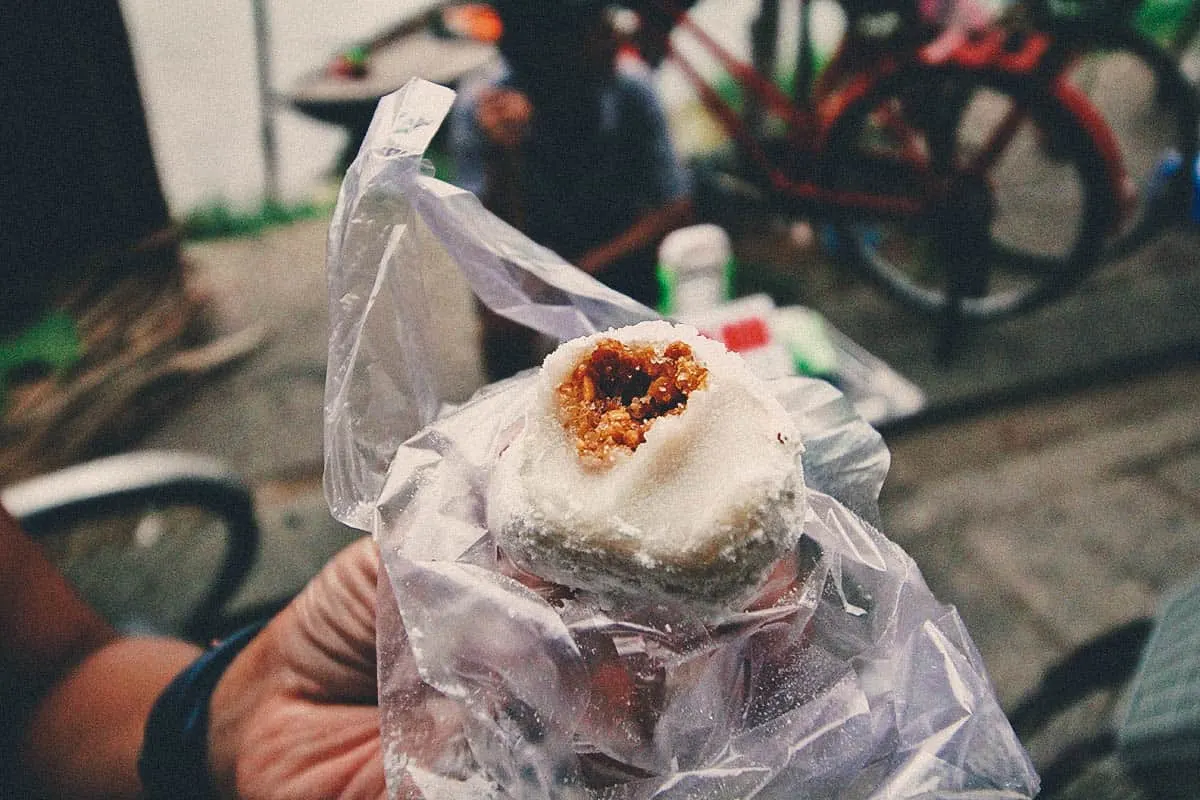
这是一种名字很奇怪的小吃。它叫作“芒果糕”(banh xoai),但实际上它既不含芒果,也根本不是糕!
糯米球(Banh xoai)是一种用糯米制成的粉状小球,内馅是花生和糖。我读到过,它之所以得名,是因为它的形状酷似芒果核。
这是一种美味又便宜的小吃,在河内秋盆河沿岸的许多小贩那里都能买到。
41. 马曦
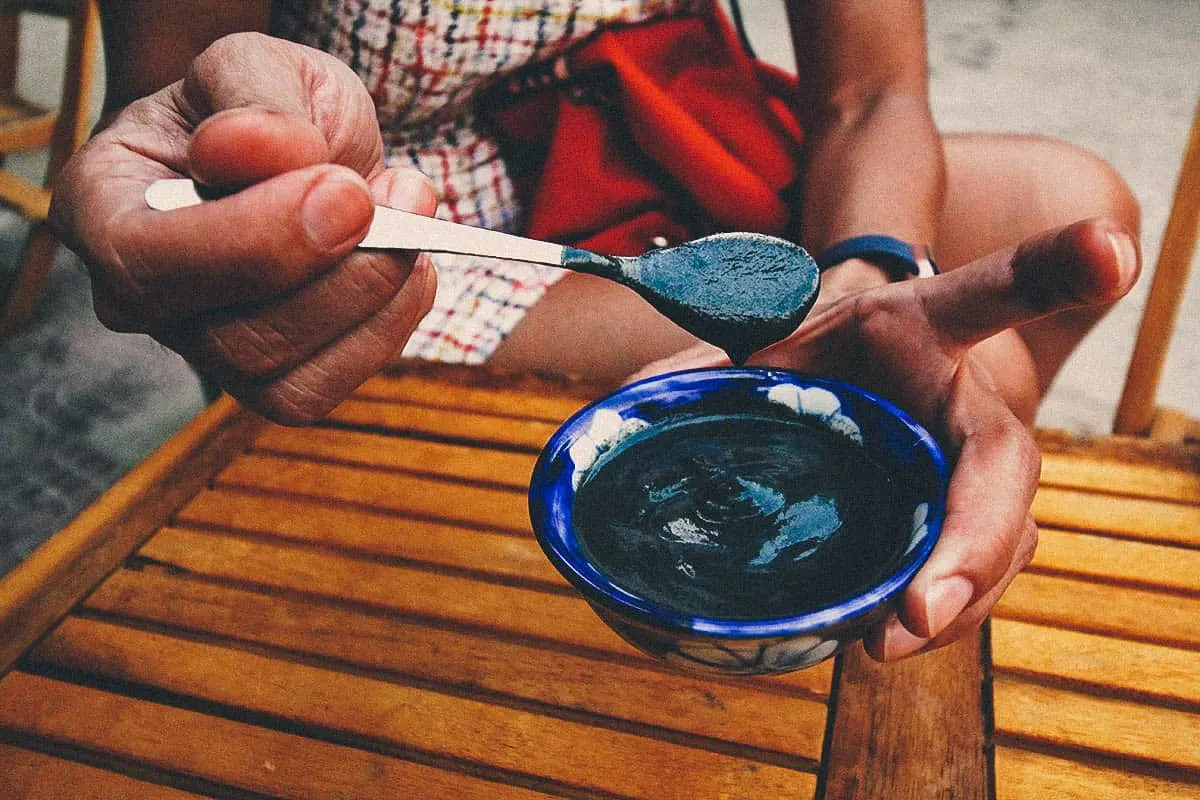
黑芝麻甜汤是会安市一种很受欢迎的甜点。它起源于中国福建省,由黑芝麻、椰子、米粉、糖和积雪草(一种中药材)制成。
西玛(Xi ma)是一种温热食用的小吃,分量不多,口感香脆,甜度适中,据说对身体有益。在越南中部秋盆河沿岸,街头小贩经常售卖这种小吃。
食谱: 西马
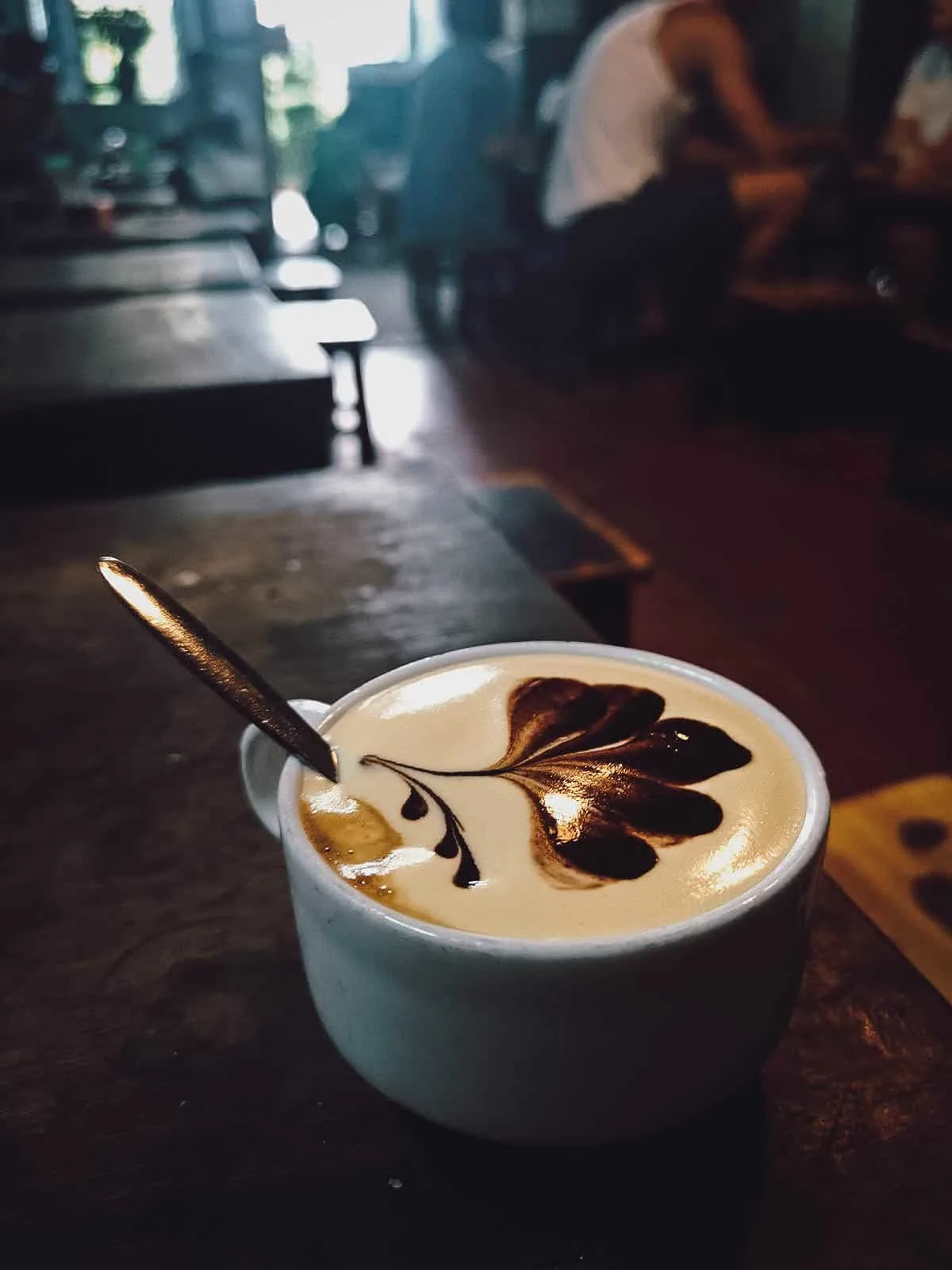
42. Ca Phe Trung(越南鸡蛋咖啡)
就像烤肉米粉一样,鸡蛋咖啡(越南语:ca phe trung)也是河内体验中不可或缺的一部分。虽然听起来很奇怪,但它指的是一种加入了蛋黄、糖和炼乳的越南咖啡,因此得名“鸡蛋咖啡”。
鸡蛋咖啡诞生于20世纪40年代的越南首都河内,当时正值牛奶短缺时期。它的制作方法是将蛋黄、炼乳和咖啡充分搅拌至起泡。将半杯新鲜冲泡的越南咖啡倒入杯中,再淋上这蓬松的蛋液,一杯香甜浓郁、蛋香四溢的鸡蛋咖啡就此诞生。
越南是世界第二大咖啡出口国,仅次于巴西,所以来到越南,咖啡是您应该经常品尝的饮品。越南的咖啡种类繁多,其中鸡蛋咖啡最为著名且独具特色,绝对值得一试。
食谱: Ca phe trung
43. Ca Phe Muoi
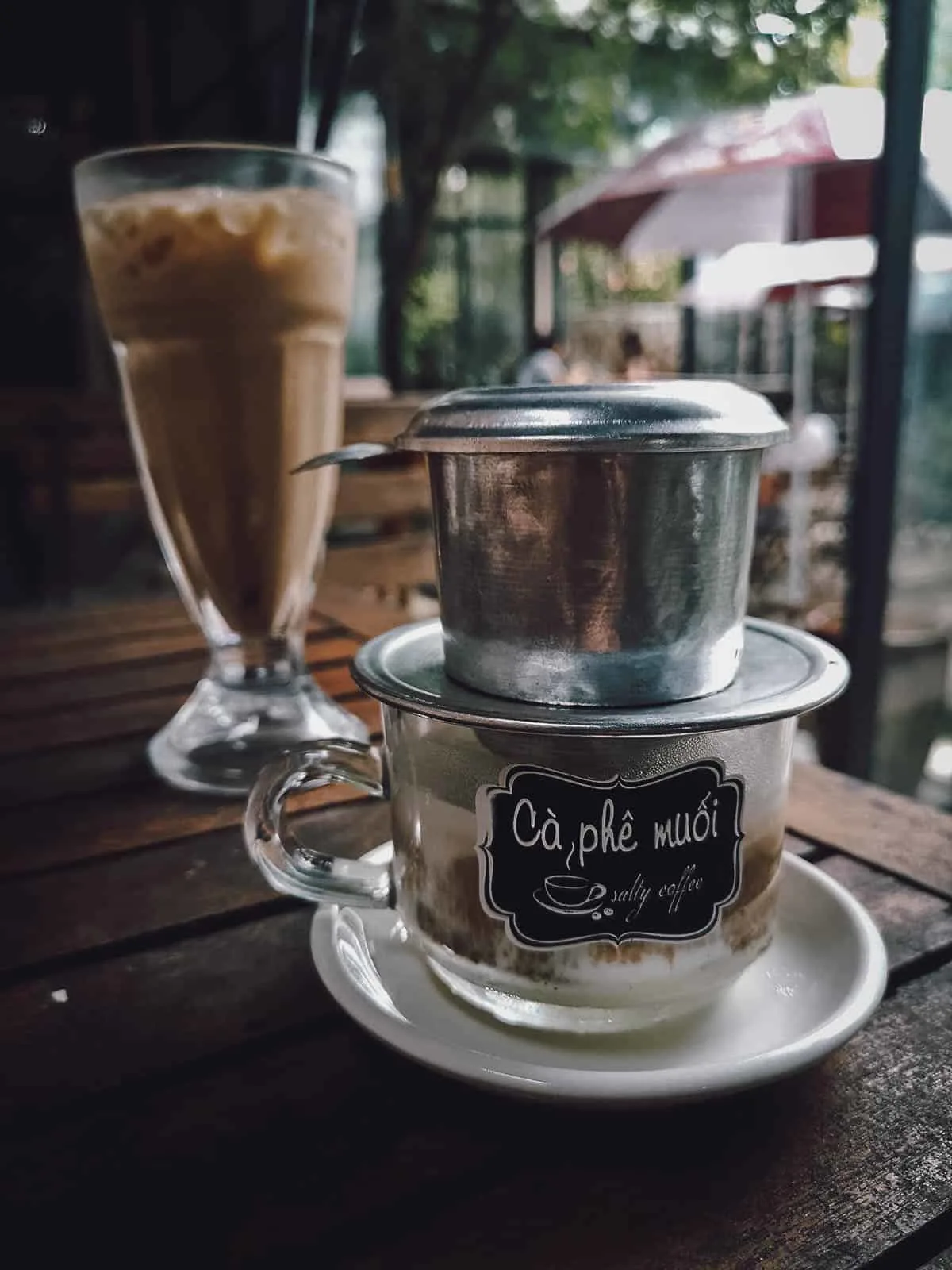
如果说河内有鸡蛋咖啡(ca phe trung),那么顺化就有盐咖啡(ca phe muoi)。盐咖啡顾名思义,是一种用盐制作的咖啡饮品。
首先,将盐、发酵乳和可可粉混合,充分搅拌均匀后倒入杯中。然后,将装有越南滴滤咖啡的传统滴滤壶(phin)放在杯口。待咖啡完全过滤后,加入几块冰块即可饮用。
咸咖啡听起来有点奇怪,但其实很好喝。它的咸度恰到好处,既能衬托出可可和牛奶的甜味,又能中和咖啡的苦涩。有人说它有点像巧克力布朗尼,某种程度上来说,确实有点像。
如果说鸡蛋咖啡是河内必尝的饮品,那么盐咖啡就是顺化必尝的饮品。
食谱: Ca phe muoi
44. 努克米亚
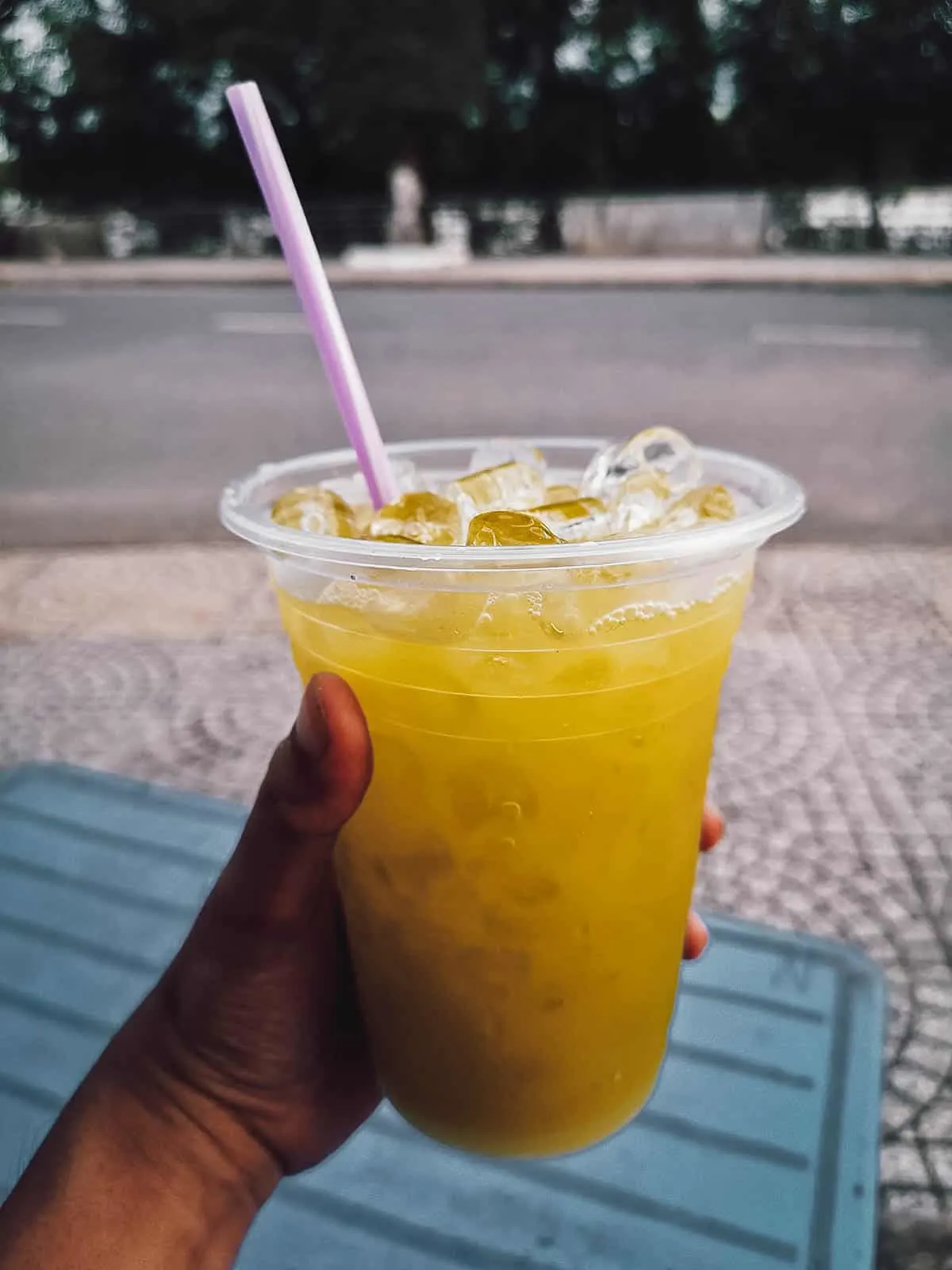
在越南,如果我没喝咖啡,那我肯定是在喝鱼露。鱼露指的是鲜榨甘蔗汁。
越南鱼露有时会搭配金桔或腌青柠(咸青柠)来平衡甜味,但我认为它本身就非常完美。在越南各地的街头小吃摊都能买到,它是炎炎夏日里补充能量的绝佳选择。它美味可口,而且无比清爽。
食谱: 鱼露
45. 比亚霍伊
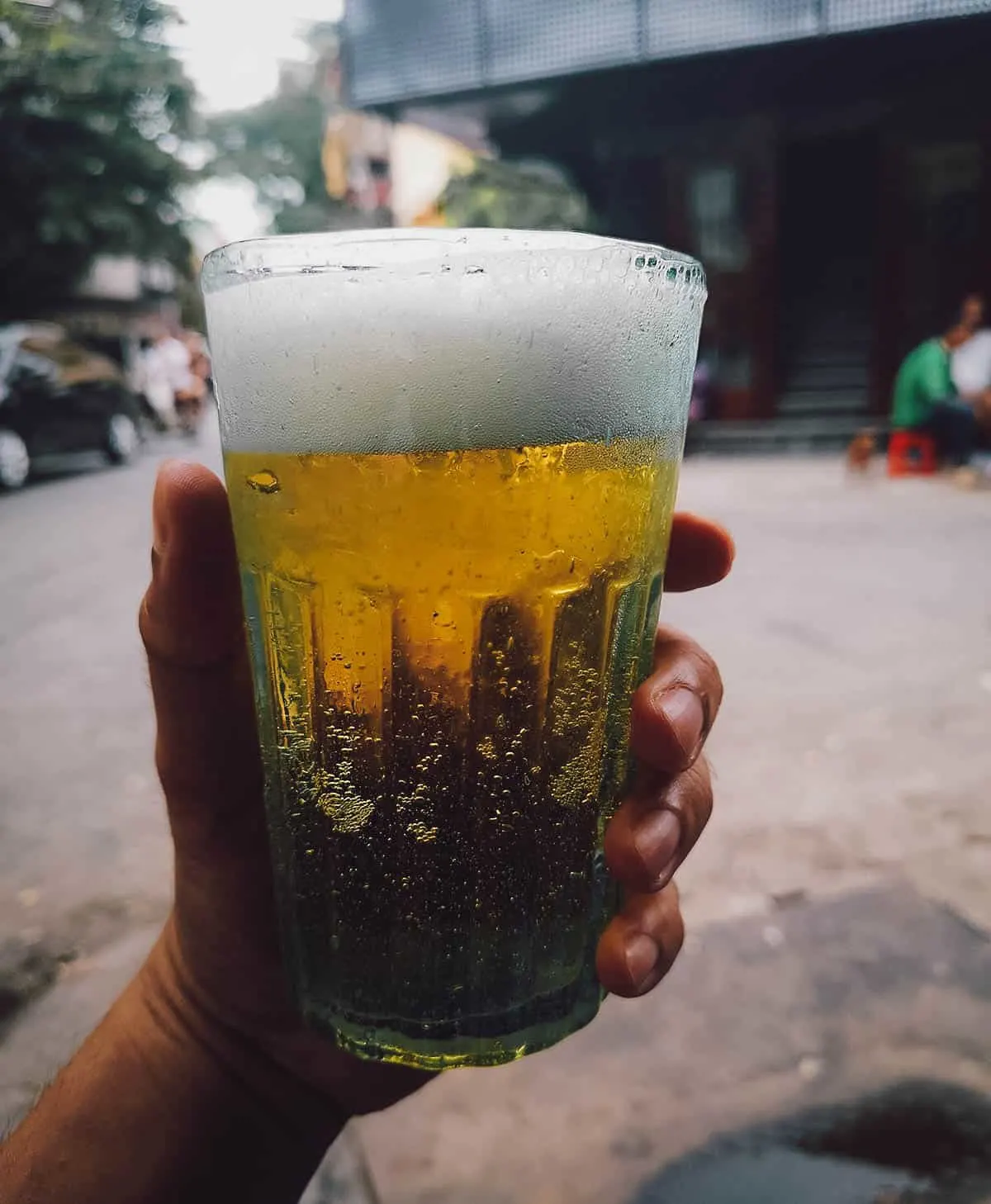
Bia hoi意为“新鲜(或气泡)啤酒”,指的是一种越南生啤,通常被宣传为“世界上最便宜的啤酒”。它的酒精度数相对较低,约为3%,价格不到1美元。
每日新鲜酿造,不添加防腐剂,新鲜酿造的啤酒装在钢桶中(没有任何品牌标识)运送,通常在当晚饮用。
虽然在越南其他地区也能找到啤酒,但它与河内和北部地区的联系最为紧密。河内很多酒吧都供应啤酒,但品尝啤酒的最佳地点还是啤酒街角。
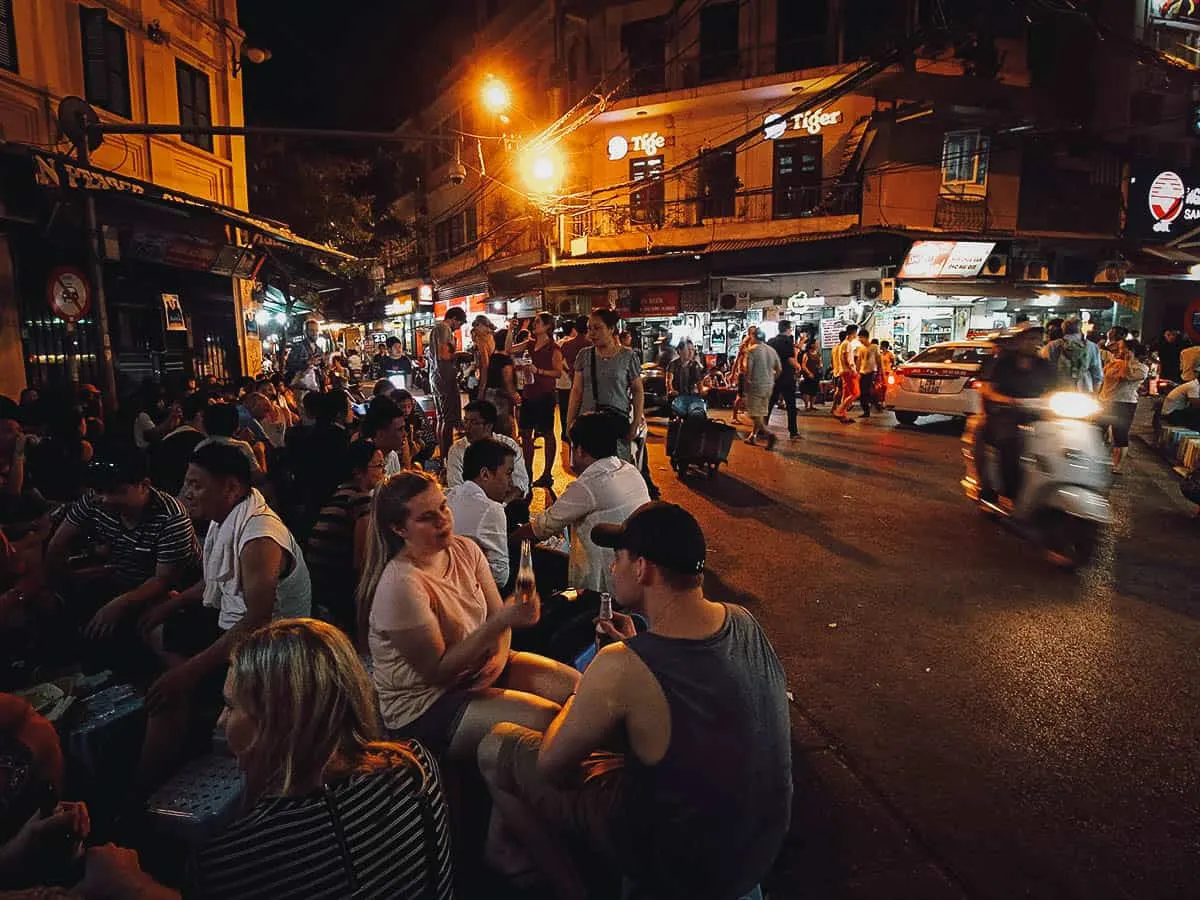
位于Ta Hien街和Luong Ngoc Quyen街交汇处的这家小店,白天看起来毫不起眼,但到了晚上,就变成了热闹非凡的景象:当地人和外国游客挤在路边的矮塑料凳上,畅饮啤酒。这种充满活力、趣味十足的氛围,是每一位啤酒爱好者和街头美食爱好者在越南都应该体验一番的。
至于这种啤酒本身,它是一种清淡如水的啤酒,让我想起了库尔斯淡啤或基斯通啤酒。就我个人而言,我不太喜欢它,因为我觉得它有点酸,甚至有点化学味。喝完第一杯后,我就改喝本地瓶装啤酒了。
这绝对是你应该尝试的,因为它是河内体验的重要组成部分。很多人都很喜欢。不过要知道,越南没有任何卫生机构监管啤酒花(bia hoi)的生产,所以你最好不要过量饮用。
这就是夜市街角的景象,而庆祝活动才刚刚开始。晚上这里会比这热闹得多。
越南美食之旅
毋庸置疑,没有人比当地人更了解越南美食,所以体验越南佳肴的最佳方式莫过于参加美食之旅。一位知识渊博的导游将带您前往城里最好的越南餐厅和街头小吃摊,并详细讲解每道菜肴。
如果您正在越南旅游,那么请查看Get Your Guide 网站,上面列出了河内、胡志明市和越南其他城市的美食之旅。
越南烹饪课程
除了美食之旅,我们也喜欢在旅行时参加烹饪课程。事实上,我们的第一堂烹饪课就是在会安上的。我们非常喜欢,所以之后就一直坚持学习。对我来说,这是了解当地美食的最佳途径之一。你可以访问Cookly 网站,查看越南各地不同城市的烹饪课程列表。
关于越南传统美食的最后感想
我们尝试过的越南菜远不止这份指南所列,但我将数量限制在45道,即使以后再去越南也不会改变。我的目标不是制作一本越南美食大全,而是出一份指南,展示越南最棒的菜肴。
越南菜是我们最爱的美食之一,所以我们计划经常去。我们打算探索这个美味又迷人的国度的每一个角落。每次旅行之后,我们都会更新、完善和改进这份指南,力求为您提供互联网上最全面的越南美食资源。
感谢大家的阅读,祝大家在越南尽情享用美食,玩得开心!

评论(0)