
在我看来,西班牙是世界上美食最好的国家之一。它拥有极具影响力的美食,孕育了像西班牙海鲜饭、塔帕斯和吉事果这样风靡全球的菜肴。
我们在菲律宾长大,所以对西班牙菜非常熟悉。许多菲律宾菜肴要么是由西班牙引进的,要么是从西班牙菜演变而来,例如 arroz caldo(鸡肉饭)、pochero(炖肉)、afritada(炖肉)和 ensaymadas(甜面包)。
在我们最近一次欧洲之旅中,我们把一半以上的时间都花在了西班牙,这样我们就可以真正深入体验西班牙美食,并尽可能多地品尝传统的西班牙菜肴。
我们走访了巴塞罗那、马德里、格拉纳达和圣塞巴斯蒂安等著名的西班牙美食城市,以及洛格罗尼奥和奥维耶多等鲜为人知但同样美味的目的地,最终整理出这份西班牙美食指南,其中包含了 45 道西班牙必尝菜肴。
如果您正计划前往伊比利亚半岛旅行,并想寻找西班牙最好的美食,那么这本西班牙美食指南将让您充满期待。
西班牙美食快捷链接
如果你计划去西班牙旅行,并且想真正了解当地美食,那么你可能会对参加美食之旅或烹饪课程感兴趣。
旅游及其他服务
什么是传统西班牙食物?
西班牙是世界上最大的橄榄油生产国。橄榄油在西班牙菜肴中备受青睐,是许多索夫里托斯(sofritos,一种西班牙风味酱汁)或蔬菜酱汁的主要原料。
大蒜是西班牙烹饪中不可或缺的食材,而一些最重要的香草和香料包括藏红花、红椒粉、牛至、迷迭香和欧芹。鸡肉和猪肉最为常见,但西班牙人也经常食用各种家禽、肉类和海鲜。
More than Spanish food itself, what I found most fascinating were the people’s eating habits. Spanish people eat dinner late, around 9-10PM, because they have lengthy lunches that take anywhere between 2-3 hours.
Lunches in Spain typically start at around 2PM so it’s customary for businesses to close for several hours during the day. Lunches only take about an hour but Spanish people like to partake in sobremesas. This refers to the practice of staying at the table and socializing after a heavy meal.
From sobremesas to pintxos bar hopping to aperitivo time, this social component is what largely defines Spanish food culture. It’s a trait that many former Spanish colonies understand very well.
We got it after all, from Spain.
MUST-TRY TRADITIONAL SPANISH FOOD
To help organize this Spanish food guide, I’ve divided the 45 dishes by category. Click on a link to jump to any section.
TAPAS / PINTXOS
Tapas refers to a family of appetizers or snacks popular in Spanish cuisine. They’re one of the most well-known Spanish foods so over half this guide consists of these small dishes that you can enjoy all throughout Spain.
Subscribe to Will Fly for Food!
Get updates on the latest posts and more from Will Fly for Food straight to your inbox.
We use your personal data for interest-based advertising, as outlined in our Privacy Notice.
Pintxos refers to a type of tapas popular in northern Spanish regions like the Basque Country, La Rioja, Cantabria, Asturias, and Navarra. They’re typically skewered onto a piece of white bread with a toothpick to hold the ingredients in place.
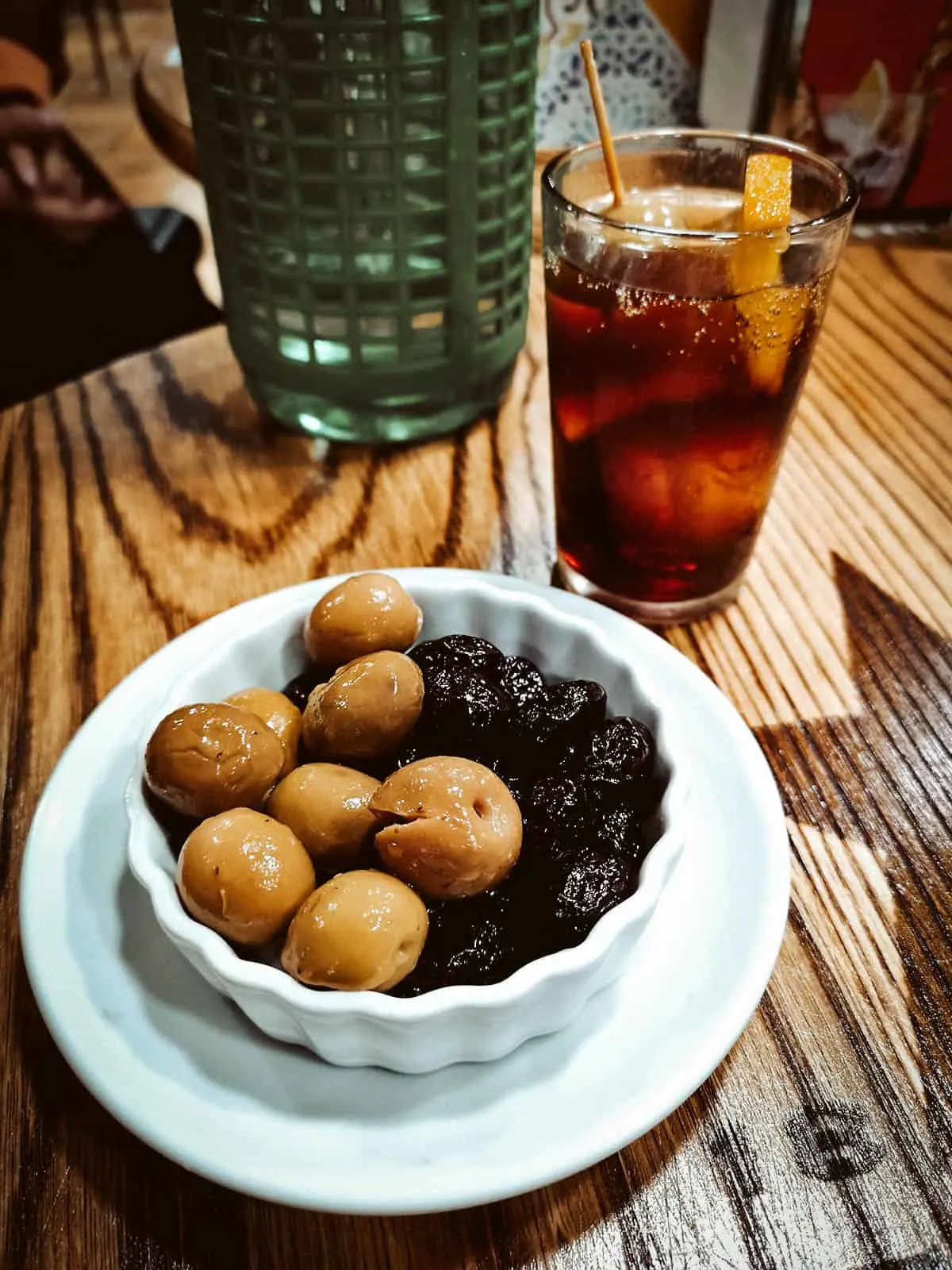
1. Aceitunas
As described, Spain is the biggest producer of olive oil in the world so it only follows that aceitunas or olives are one of the most common tapas. They’re typically served pickled and can be stuffed with a filling of anchovies or red bell peppers.
RECIPE: Aceitunas a la Madrileña
2. Tortilla Española
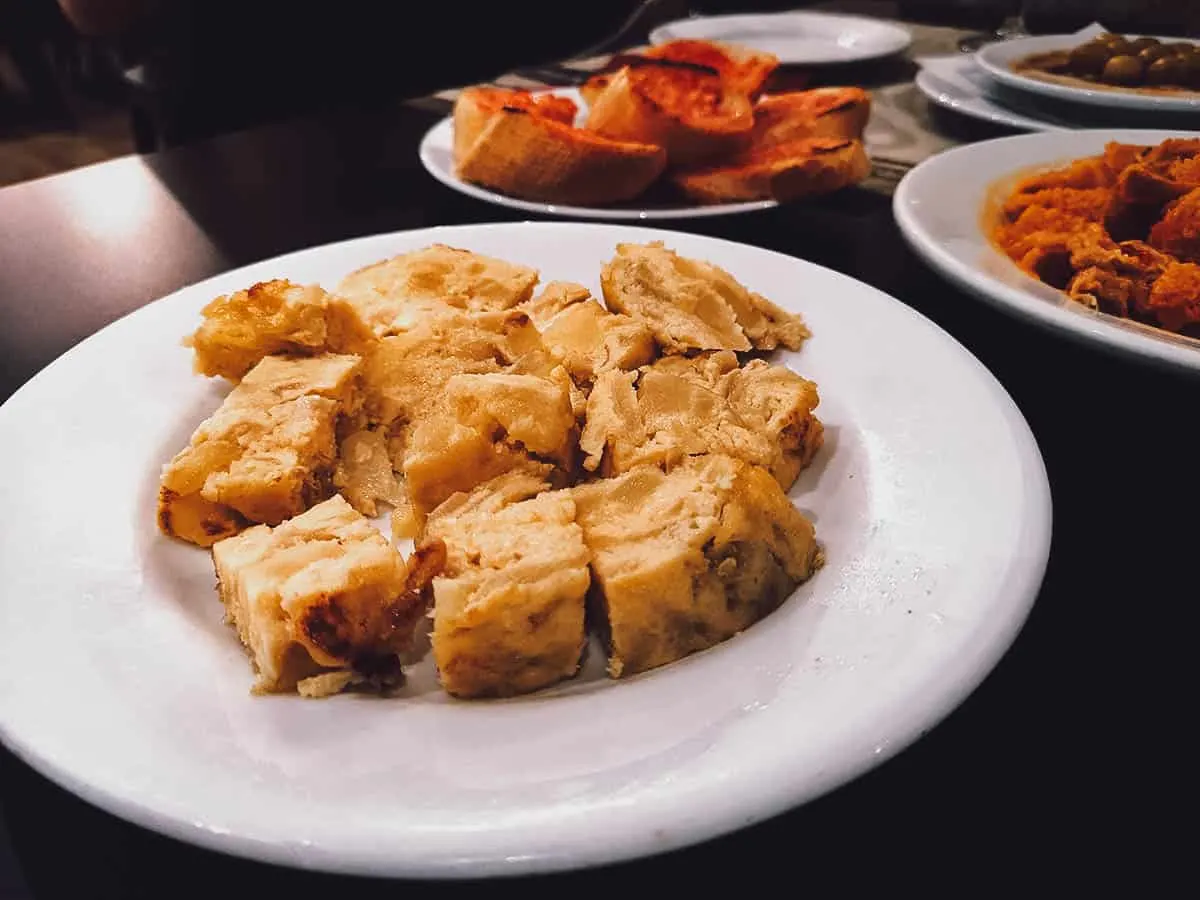
Tortilla española or tortilla de patatas is one of the most well-known Spanish foods. It refers to a Spanish omelette traditionally made with eggs, potatoes, and olive oil.
Tortilla española is often served as tapas or as a side dish. It can be made with onions, though the addition of onions is often met with controversy. Sincebollistas (without-onionists) believe that onions have no place in an authentic Spanish tortilla.
RECIPE: Tortilla Española
3. Patatas Bravas
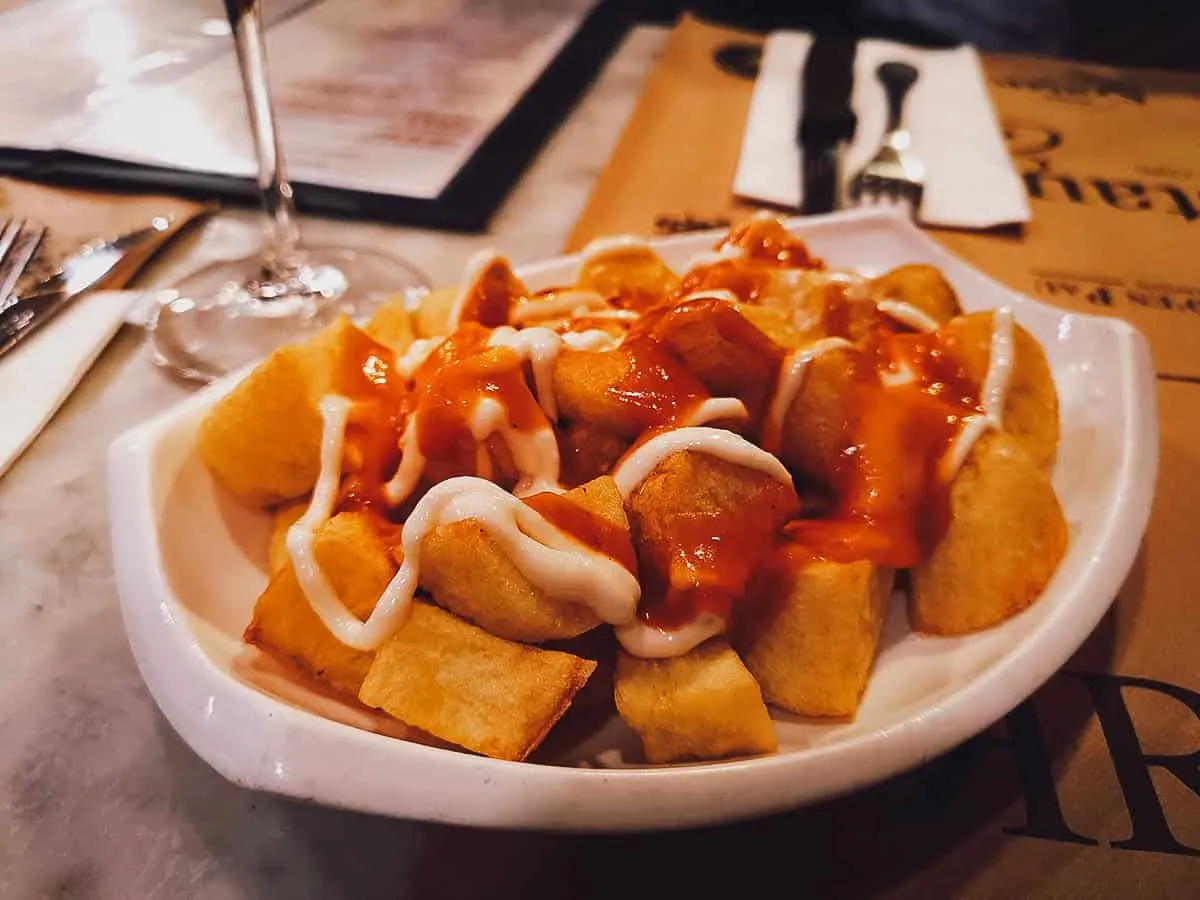
Patatas bravas or papas bravas is a popular Spanish tapa or side dish made with white potatoes cut into irregular chunks or cubes. They’re deep-fried in olive oil and served with salsa brava and mayonnaise or aioli. Salsa brava refers to a mildly spicy Spanish tomato sauce made with paprika.
Patatas bravas are originally from Madrid though it’s become one of the most popular tapas dishes throughout Spain.
RECIPE: Patatas bravas
4. Calcots
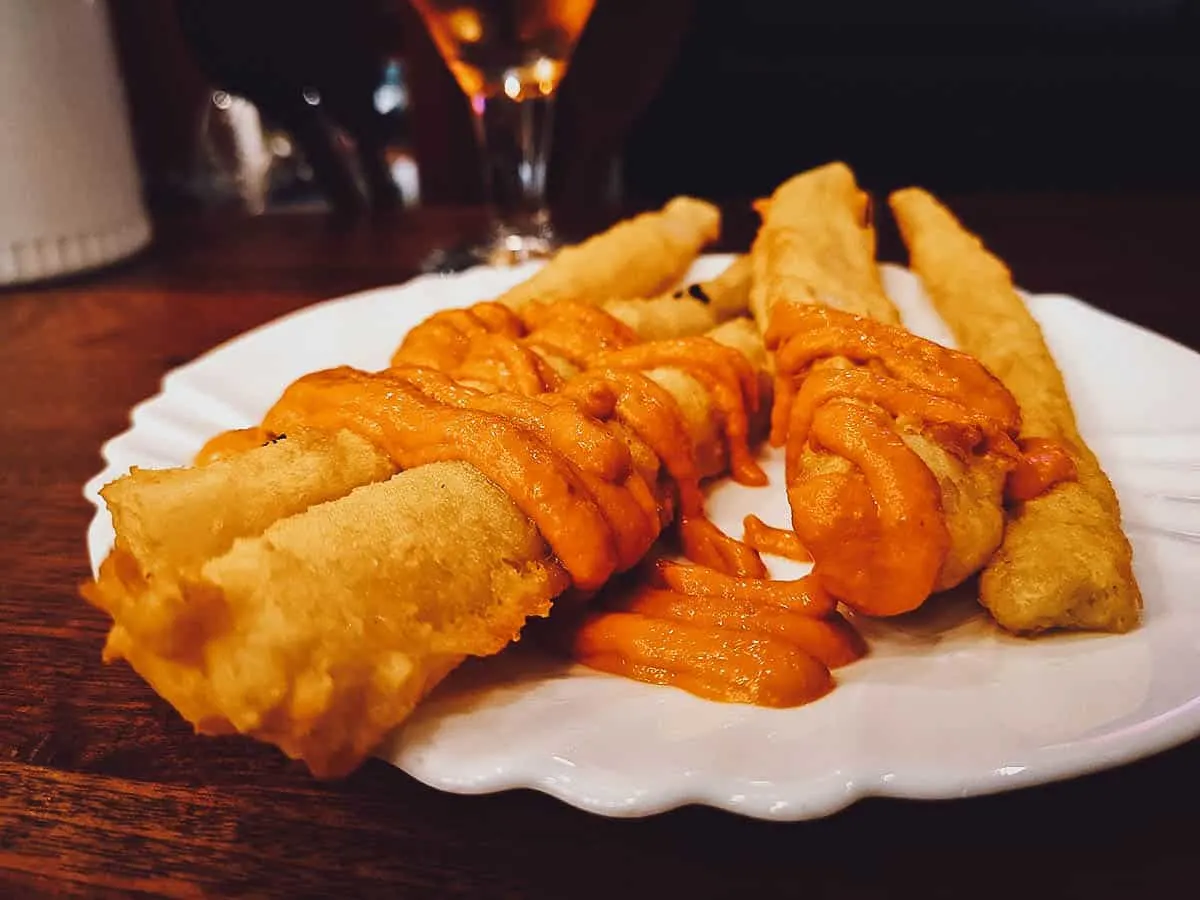
A calcot is a variety of scallion popular in Spanish Catalan cuisine. They’re similar to leeks and are larger and milder in flavor than a typical green onion.
In Spain, calcots are harvested between November and April and are best consumed during the calcotada season, which happens around February and March. We visited Barcelona in late April and were lucky enough to catch the tail end of the season which is often extended due to its popularity.
Calcots are typically grilled over an open fire and wrapped in newspaper to keep them tender. They’re served on warm terra cotta tiles and eaten with a salvitxada sauce made with almond, tomato, garlic, pepper, vinegar, and olive oil.
The version of calcots pictured below were deep-fried in batter, presumably after being grilled, and then served with a mildly spicy salsa brava.
RECIPE: Calcots with romesco sauce
5. Padron Peppers
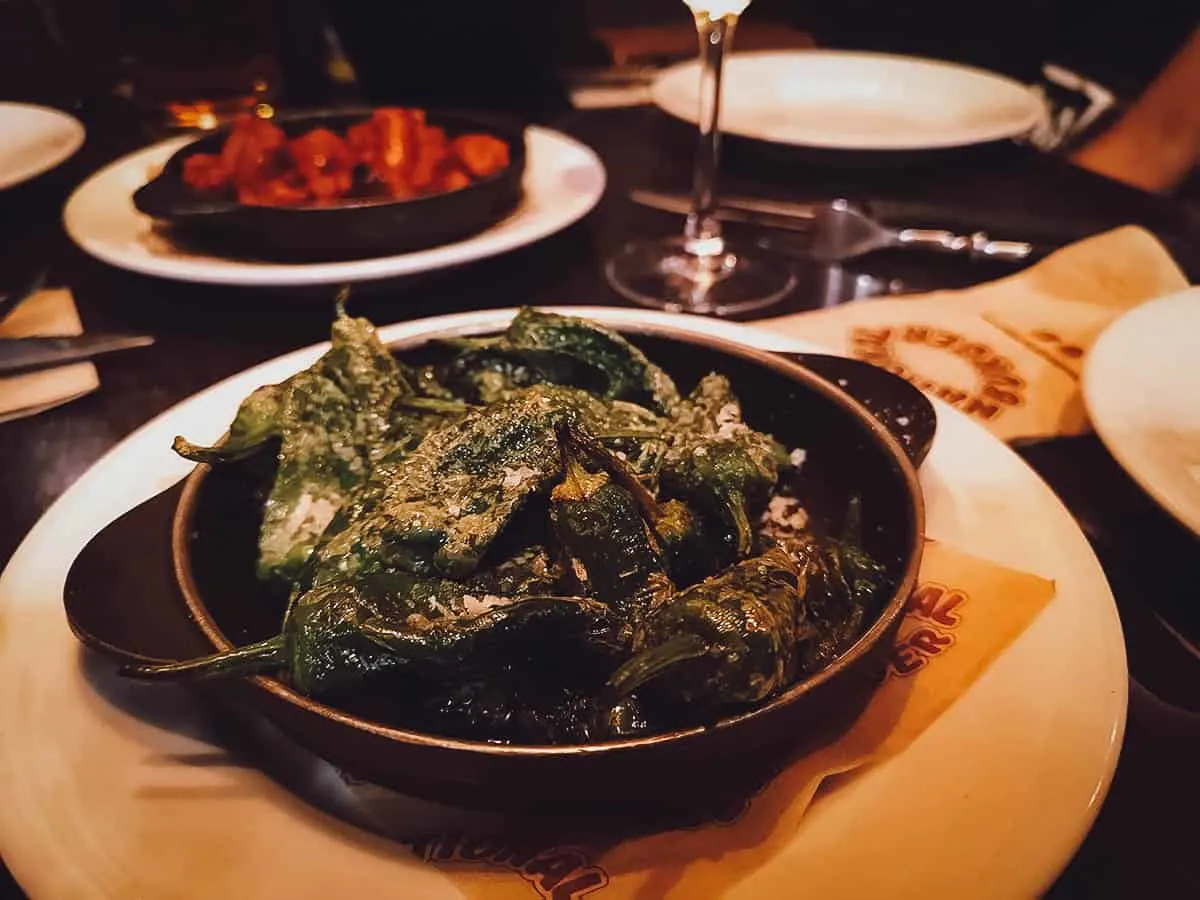
Padron peppers are a type of Spanish pepper that grow in the municipality of Padron in Galicia. Protected by EU law, they’re a Protected Designation of Origin (PDO) food product under the name Pimiento de Herbón.
Padron peppers are small, about 5 cm (2 inches) in length, and typically bright green to yellow green in color, though they can also be red. What makes them interesting is that about 10-25% of padron peppers are naturally hot while the rest are mild.
Whether a padron pepper matures to be hot or mild is linked to how much water and sunlight it receives as it grows. Until you eat it, there’s no way of knowing if a particular pepper will be mild or hot.
Padron peppers are customarily fried in olive oil until the skin blisters and the pepper collapses. They’re sprinkled with coarse salt and often eaten with bread as tapas.
RECIPE: Padron peppers
6. Pintxos de Txampis
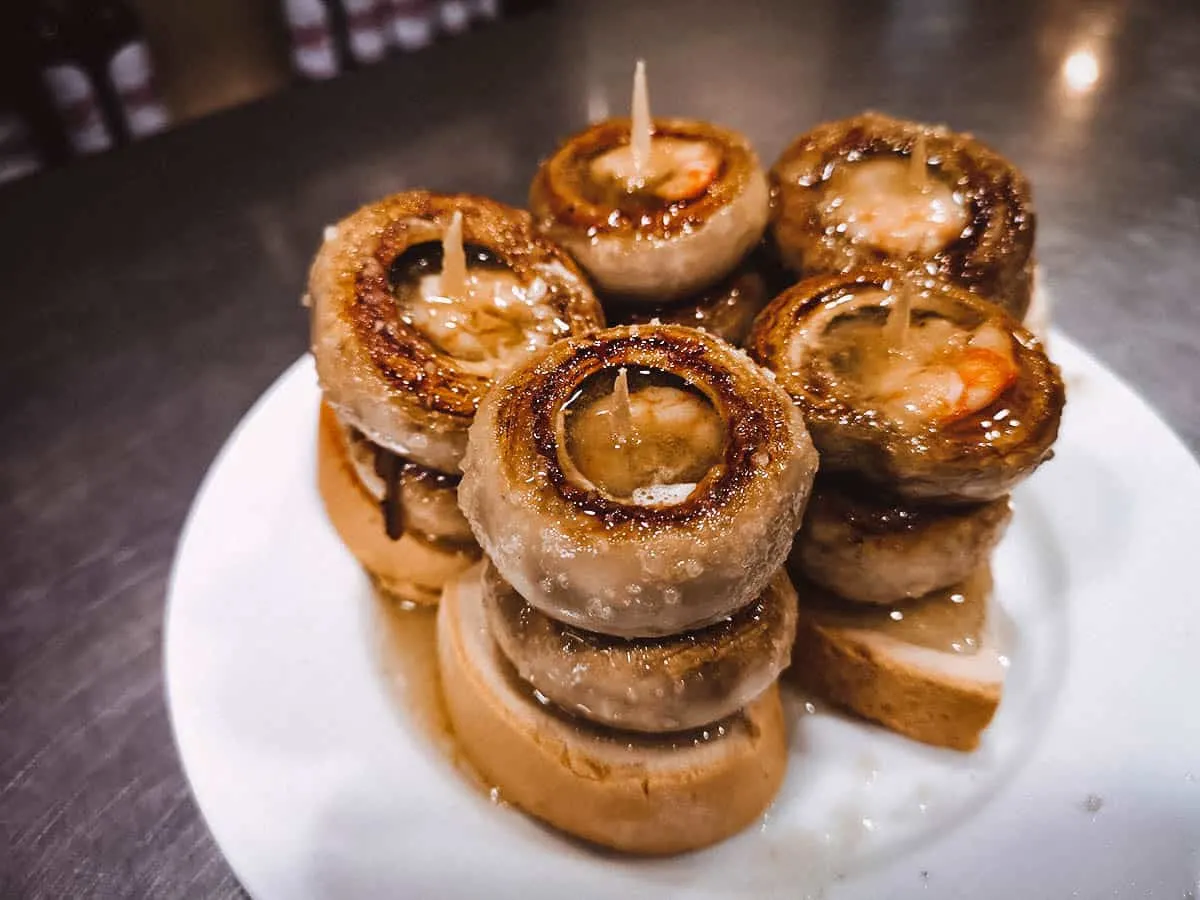
There are many delicious types of pintxos in San Sebastian but pintxos de txampis or mushroom pintxos is one of our favorites. It refers to a type of pintxo made with a stack of two or three cremini mushroom caps stuffed with shrimp.
You can find pintxos de txampis at some bars in San Sebastian but the best are made in Logroño. A couple of Spanish locals told us that Logroño has really mastered this dish and they weren’t kidding. Dripping in garlic and butter, they’re absolutely delicious and one of the best tapas or pintxos we had in Spain.
Logroño is the capital of La Rioja province and located about two hours south of San Sebastian. If you’re comfortable renting a car, then I highly recommend spending an afternoon there. You can check our Logroño pintxos guide for suggestions on what and where to eat.
RECIPE: Pintxos de txampis
7. Queso de Cabrales
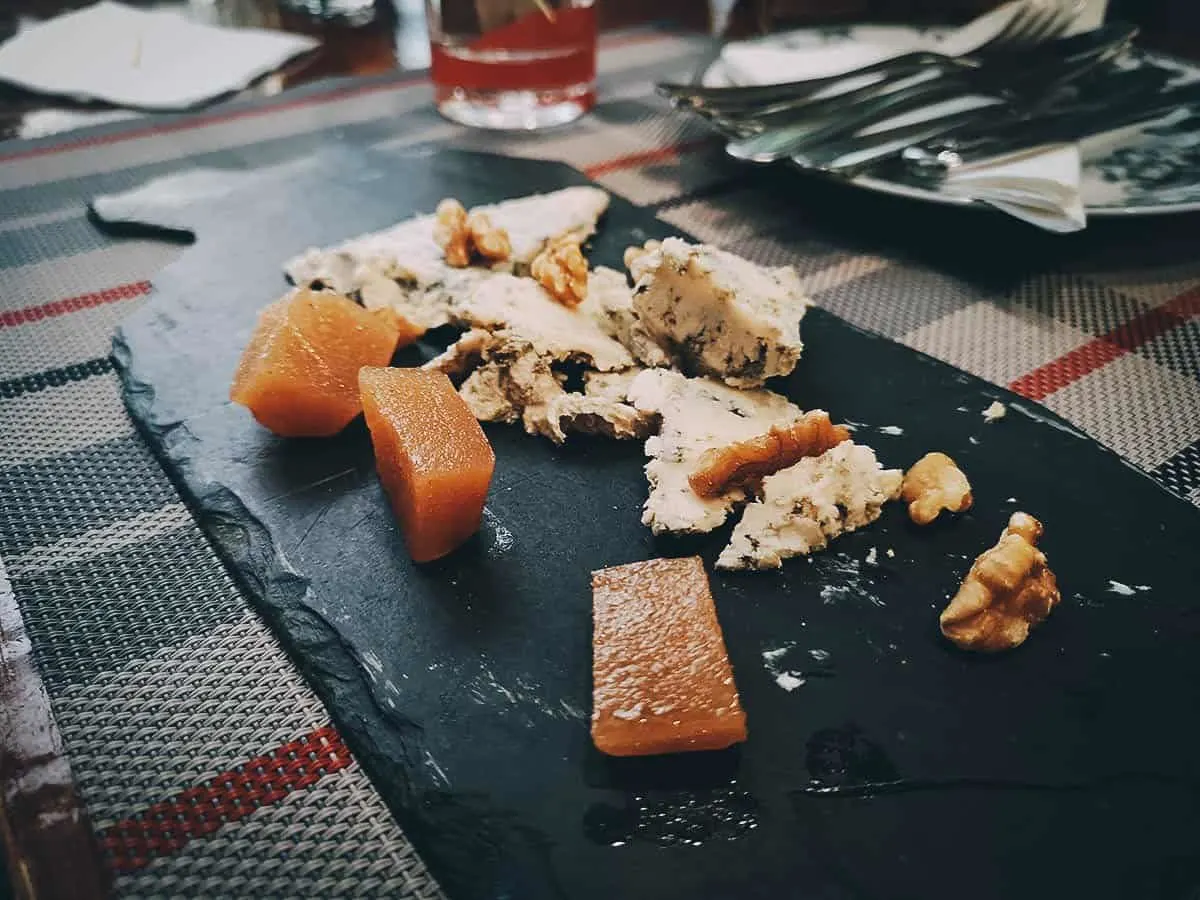
Queso de Cabrales is a type of Spanish blue cheese made by rural dairy farmers in Asturias. It can be made with pure unpasteurized cow’s milk, or blended with goat’s and/or sheep’s milk to give the cheese a stronger, spicier taste.
除了风味之外,卡布拉莱斯奶酪的独特之处在于它的制作方式。它完全采用产自欧洲之巅山脉的奶牛所产的牛奶制成。
奶酪在圆柱形模具中放置约两周使其凝固变硬后,还要在天然石灰岩洞穴中再陈化两到五个月。
高湿度(90%)和低温(7–13°C / 45–55°F)有利于青霉菌的生长,从而使奶酪内部形成蓝绿色的纹理。这正是奶酪独特风味的来源。
与罗克福奶酪和戈贡佐拉奶酪一样,卡布拉莱斯奶酪是一种著名的欧洲蓝纹奶酪,享有原产地保护地位。
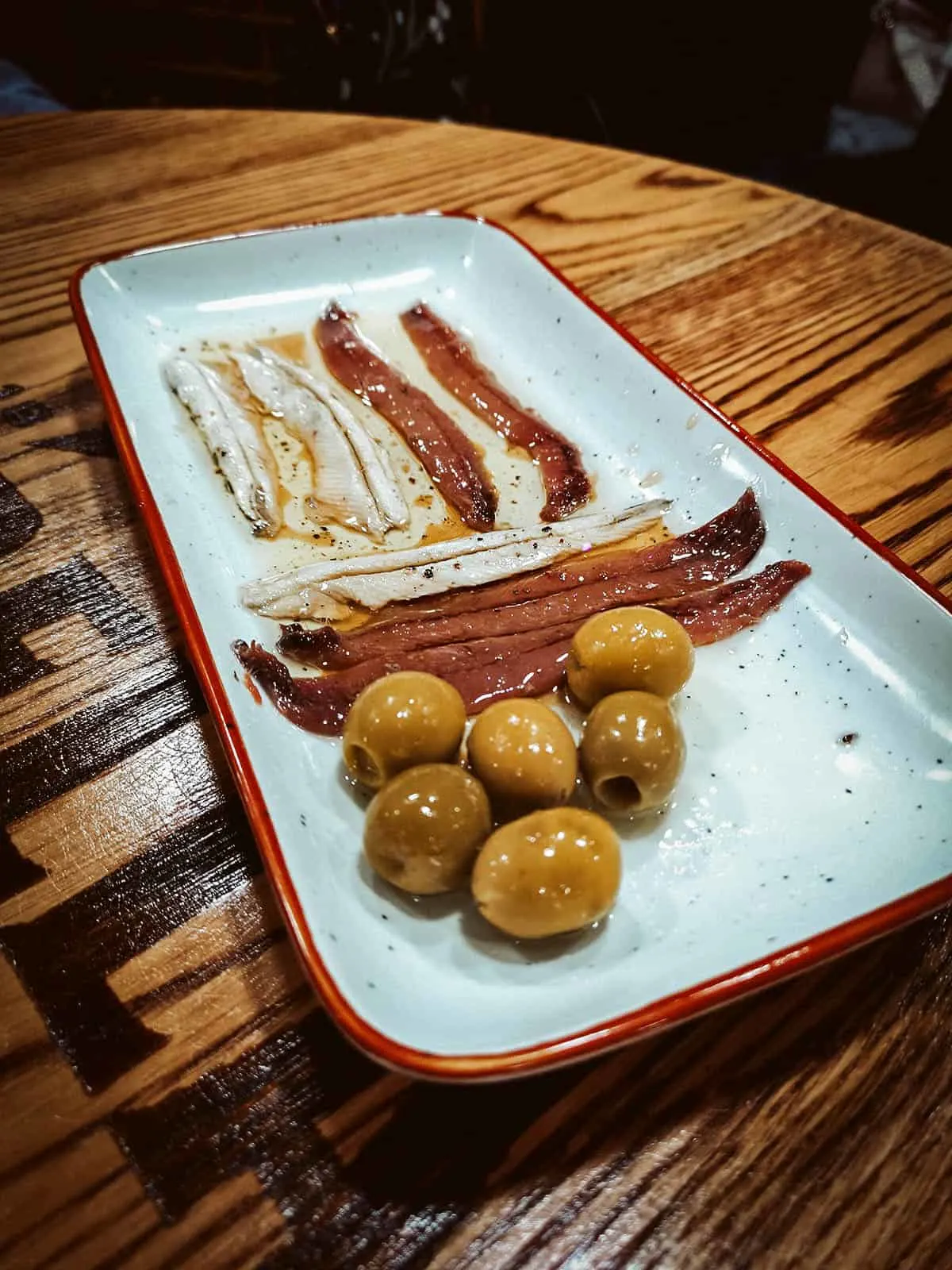
8. 凤尾鱼/凤尾鱼
Anchoas 和 boquerones 都是西班牙很受欢迎的食物,在西班牙各地都能品尝到。它们都指的是用凤尾鱼制作的西班牙小吃。
如果我理解正确的话,anchoas 指的是盐腌凤尾鱼,而 boquerones 指的是新鲜或未腌制的凤尾鱼。下图颜色较深的鱼片是 anchoas,颜色较浅的是 boquerones,更准确地说是醋腌凤尾鱼(boquerones en vinagre)。油炸凤尾鱼叫做 boquerones fritos。
食谱: 醋渍凤尾鱼
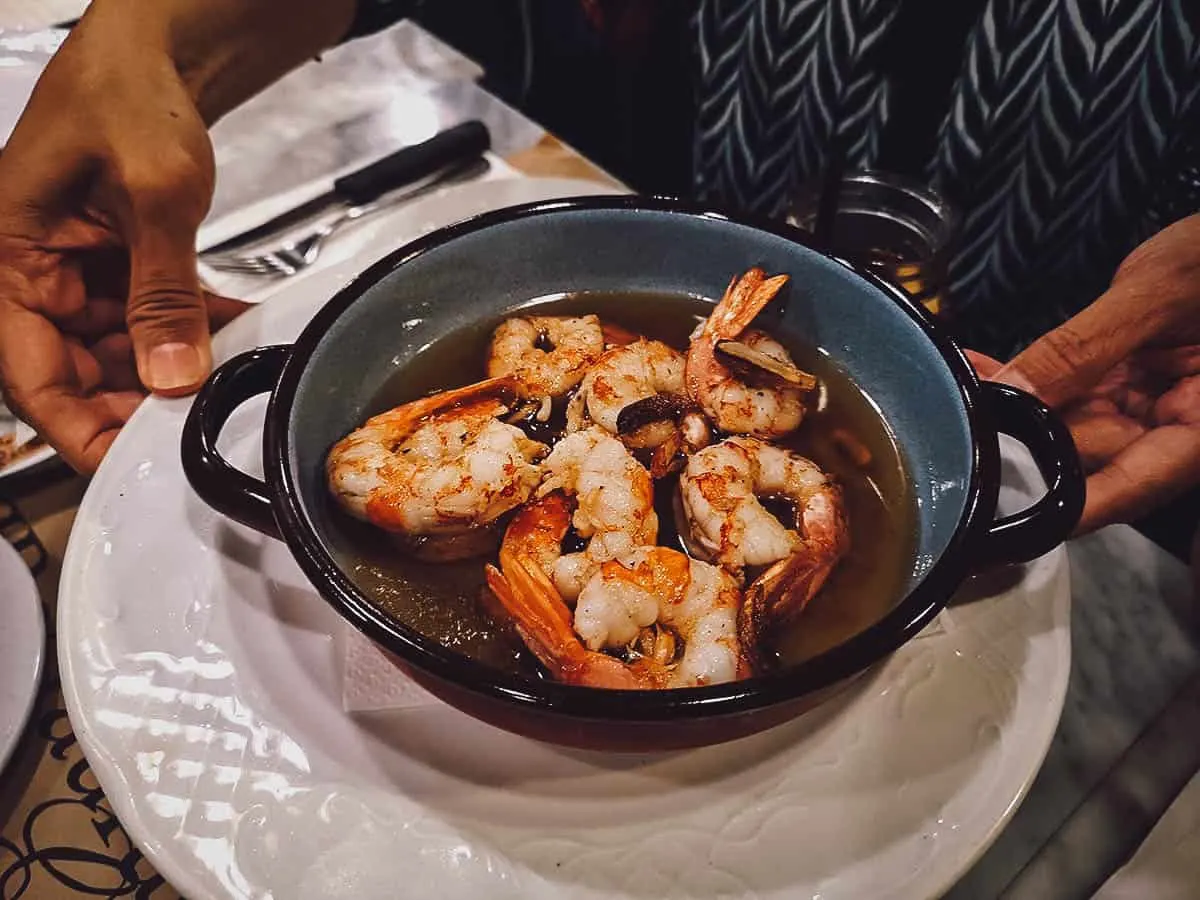
9. 蒜蓉虾
蒜蓉虾(Gambas al ajillo)是西班牙最受欢迎的菜肴之一。即使在西班牙以外,它也广为人知。这道西班牙名菜是用大量大蒜和橄榄油炒制的虾。Gambas al ajillo 的字面意思是“蒜蓉虾”或“蒜香虾”。
蒜香虾通常会配上一条西班牙硬皮面包,你可以用面包蘸着蒜香橄榄油吃。
食谱: 蒜香虾
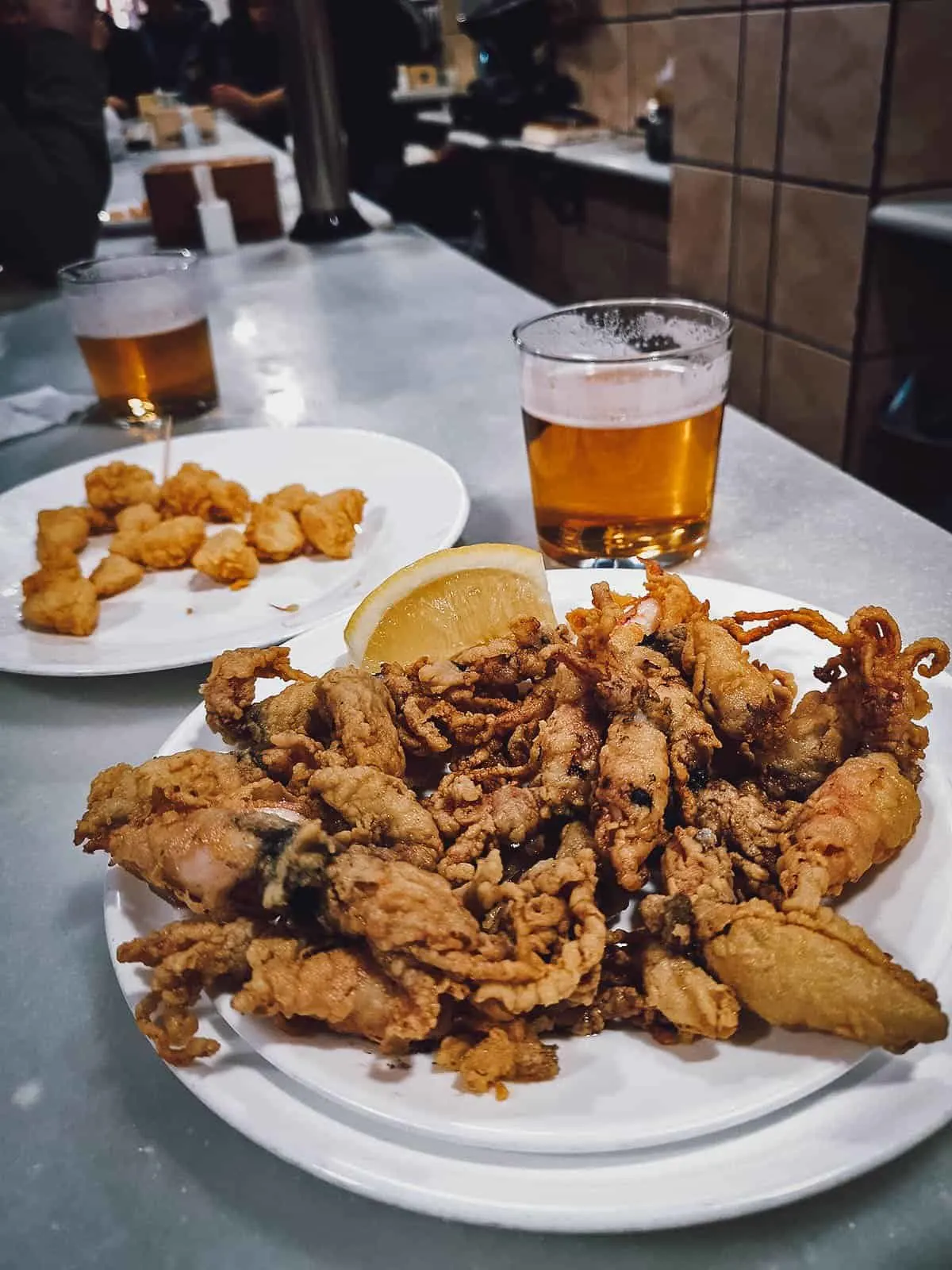
10. 炸薯条
炸小鱿鱼(Chipirones fritos)或许不如蒜香虾(gambas al ajillo)那么出名,但同样美味。这道西班牙小吃是用裹上面糊油炸的小鱿鱼或小墨鱼制成的。通常配上一片柠檬,在西班牙南部地区尤其受欢迎。
食谱: 炸鱿鱼圈
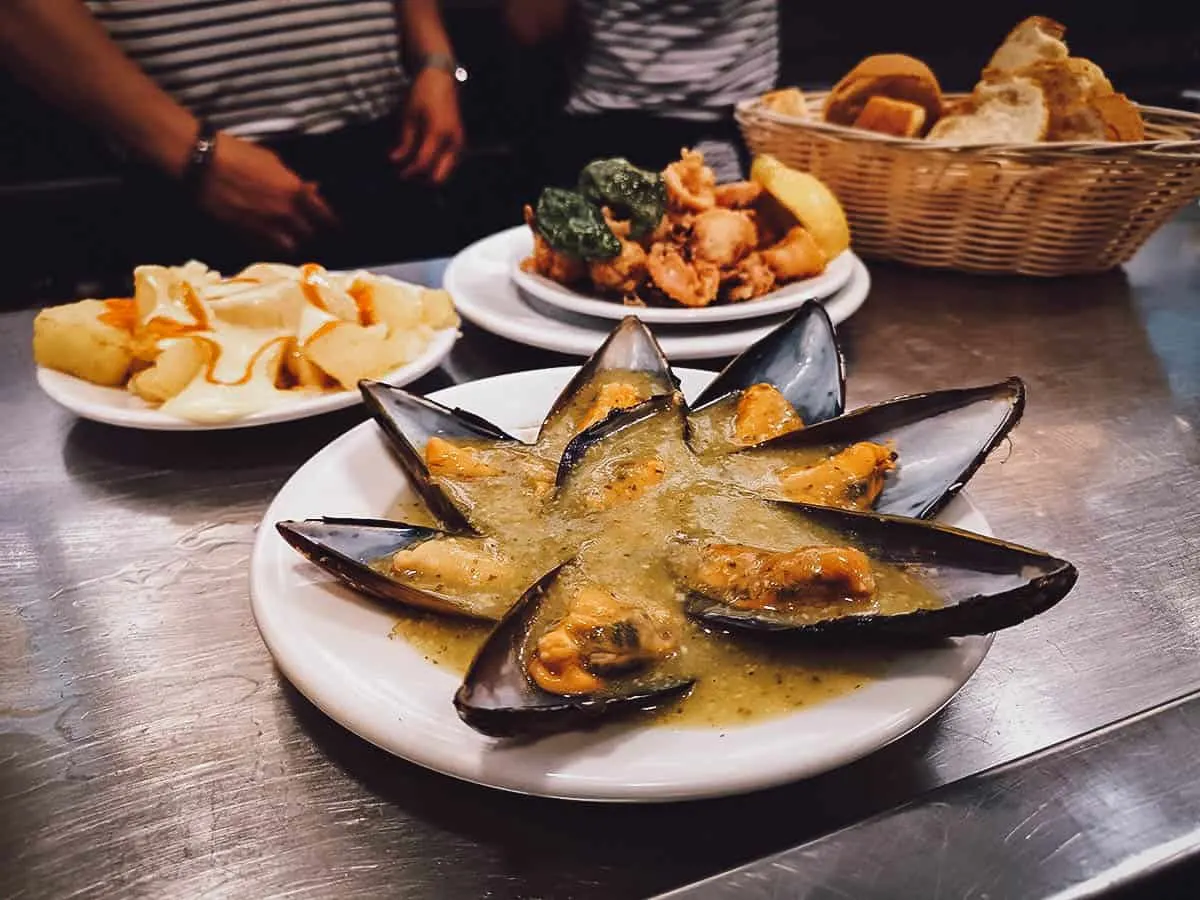
11. 梅希隆
Mejillones 是西班牙语,意为贻贝。它是一种受欢迎的小吃配料,可以通过多种方式制备,例如 mejillones en escabeche(腌制)、mejillones al Vapor(蒸)、mejillones a la Marinera(海员酱)和 mejillones rellenos(酿制)。
12. 纳瓦哈斯
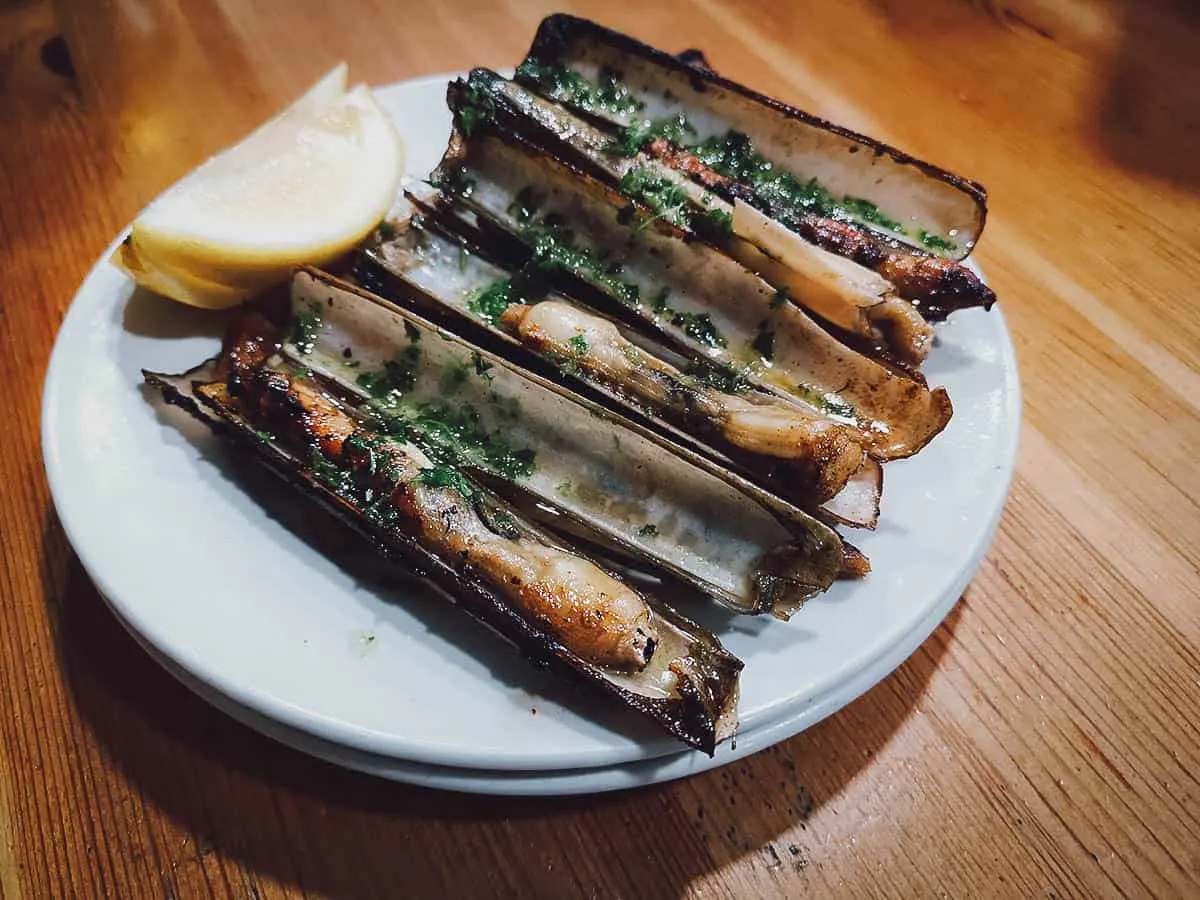
Navajas是西班牙语中蛏子的意思。在西班牙,蛏子通常以“a la plancha”的方式烹制,也就是放在扁平的金属板上烤制。它们用橄榄油、大蒜和新鲜欧芹烹制,并配以一片柠檬。
食谱: 蒜蓉炸鱼
13. 鳕鱼
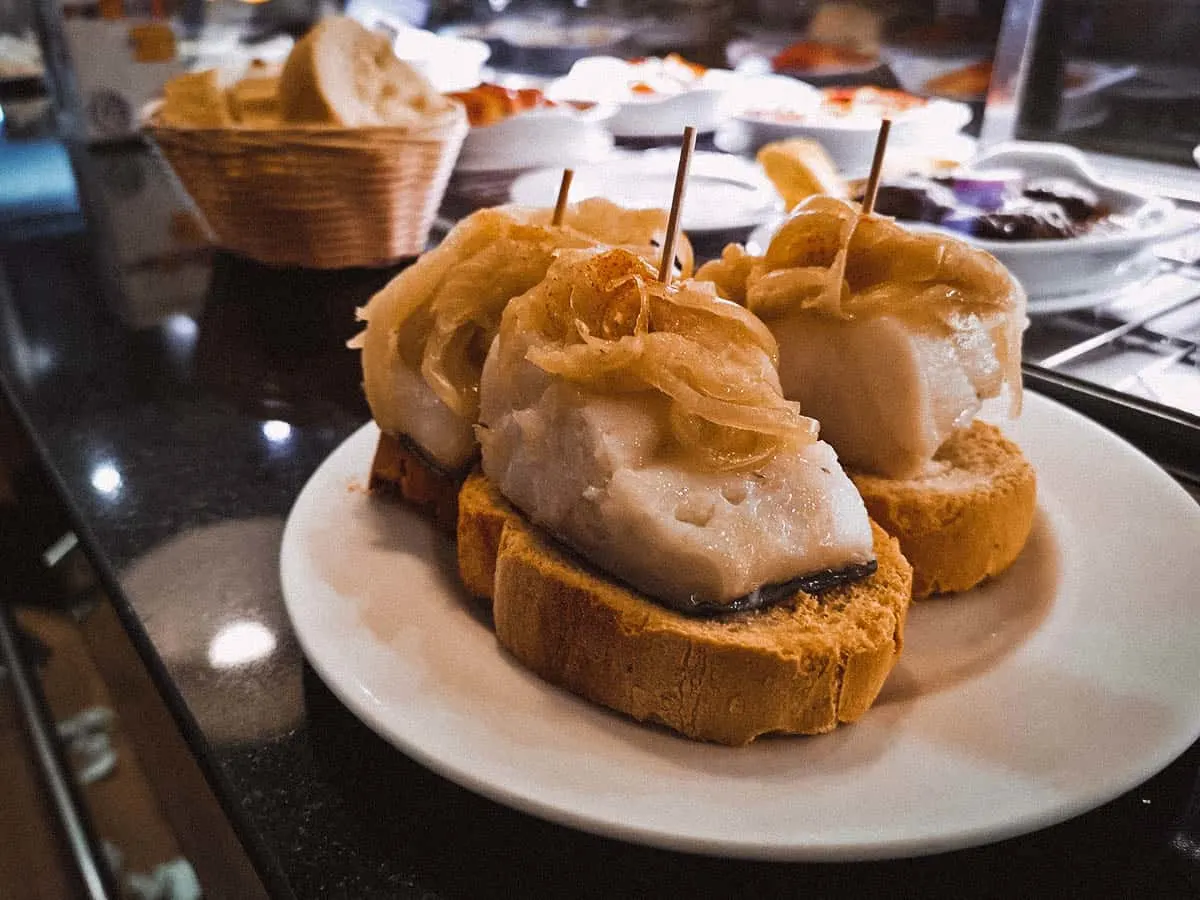
Bacalao is one of the most popular Portuguese foods but it’s widely consumed in Spain as well. It refers to salted cod that can be prepared in a number of ways, some of the most popular being bacalao con tomate (tomato sauce), bacalao a la Vizcaina (stewed), and bacalao al pil pil (with garlic and olive oil).
At tapas bars, we’ve had bacalao served in croquetas, as fritters, or topped over pieces of bread. Pictured below are hefty chunks of bacalao pintxos from a bar in Logroño.
RECIPE: Bacalao a la Vizcaina
14. Pulpo a la Gallega
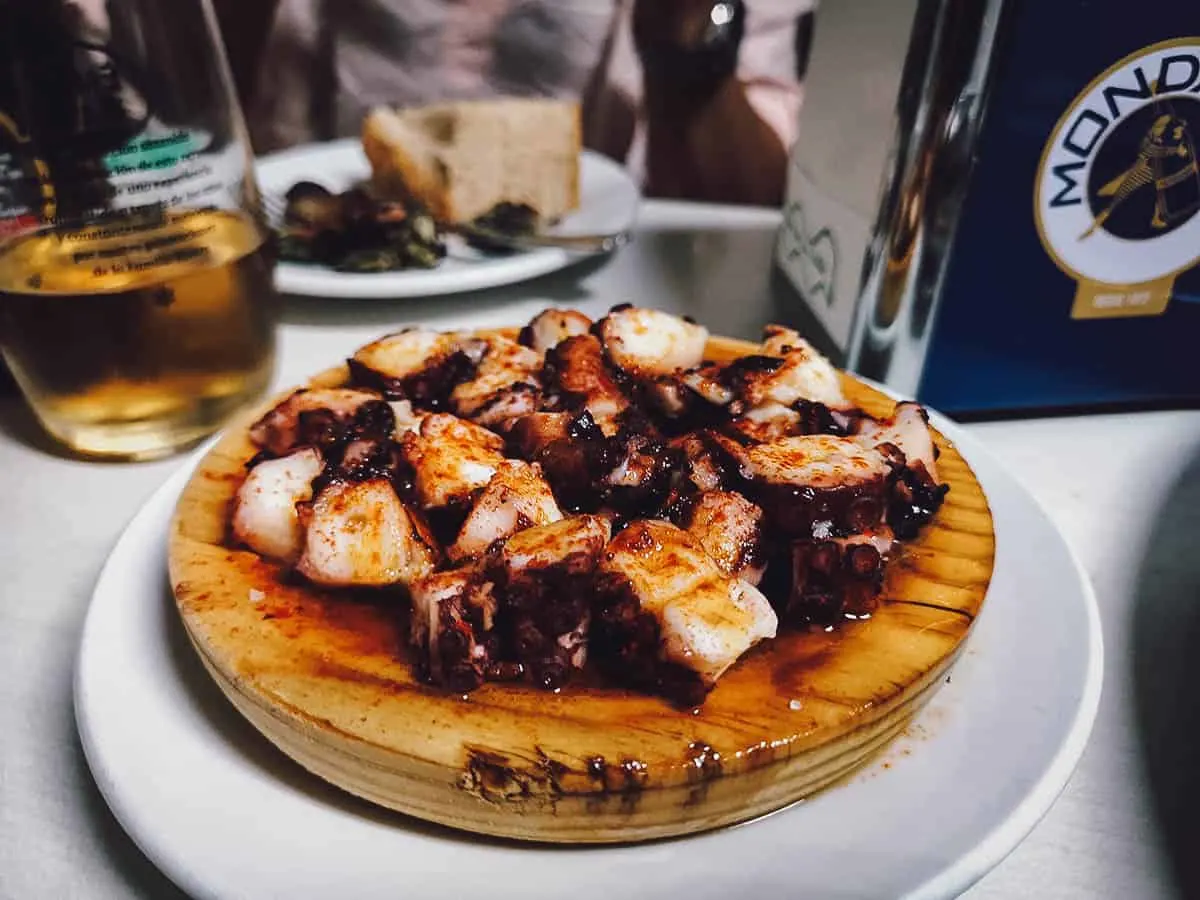
Pulpo a la gallega (or polbo a feira) refers to a traditional Galician-style dish of boiled octopus served with a generous amount of paprika.
To make pulpo a la gallega, the octopus is boiled in a copper cauldron for 40-90 minutes until it achieves a texture that’s neither rubbery nor overcooked, similar to al dente pasta. It’s then trimmed into bite-sized pieces with scissors and sprinkled with coarse salt, sweet and spicy paprika, and drizzled with olive oil.
This popular Spanish dish is traditionally served on a wooden plate with bread and enjoyed with red wine.
RECIPE: Pulpo a la Gallega
15. Percebes
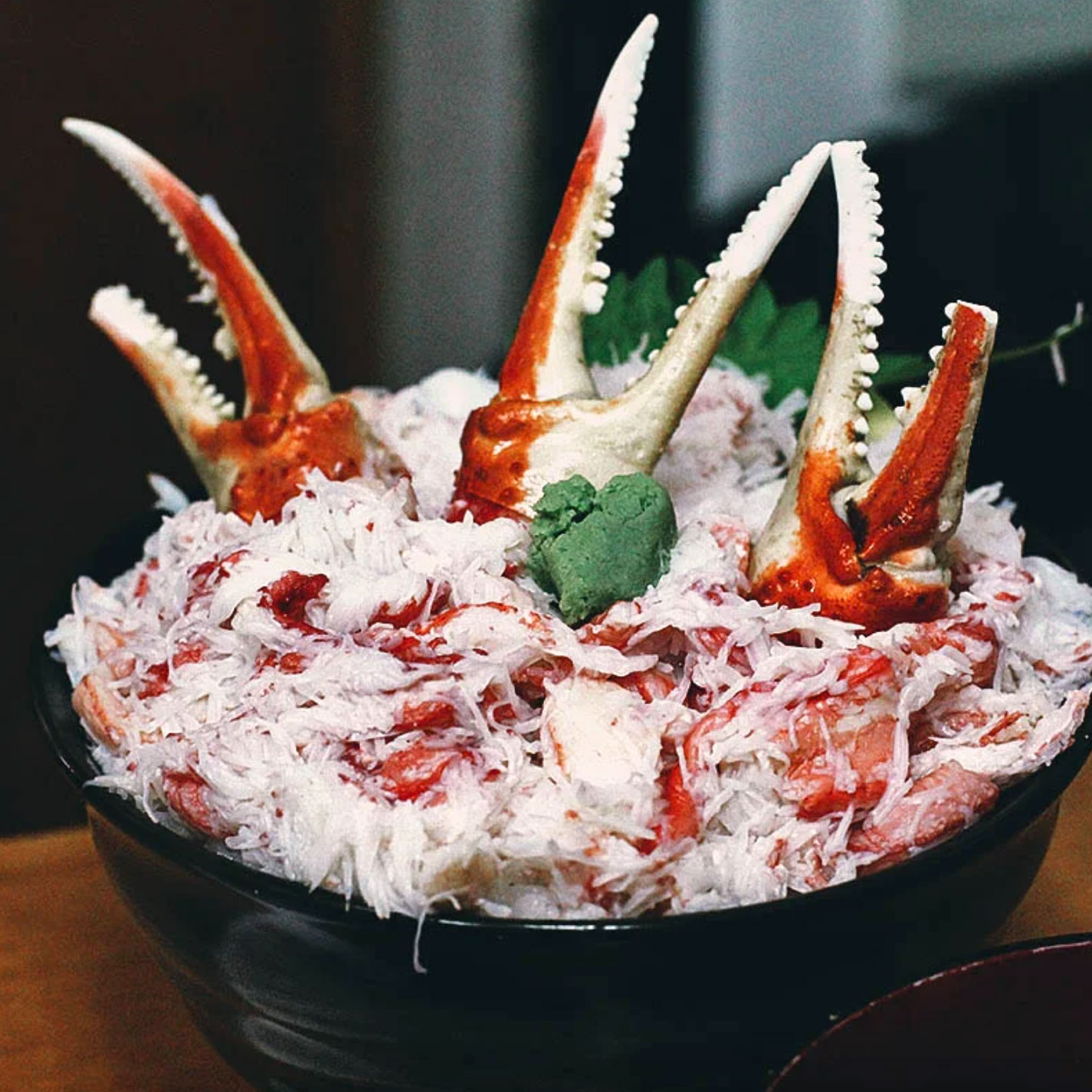
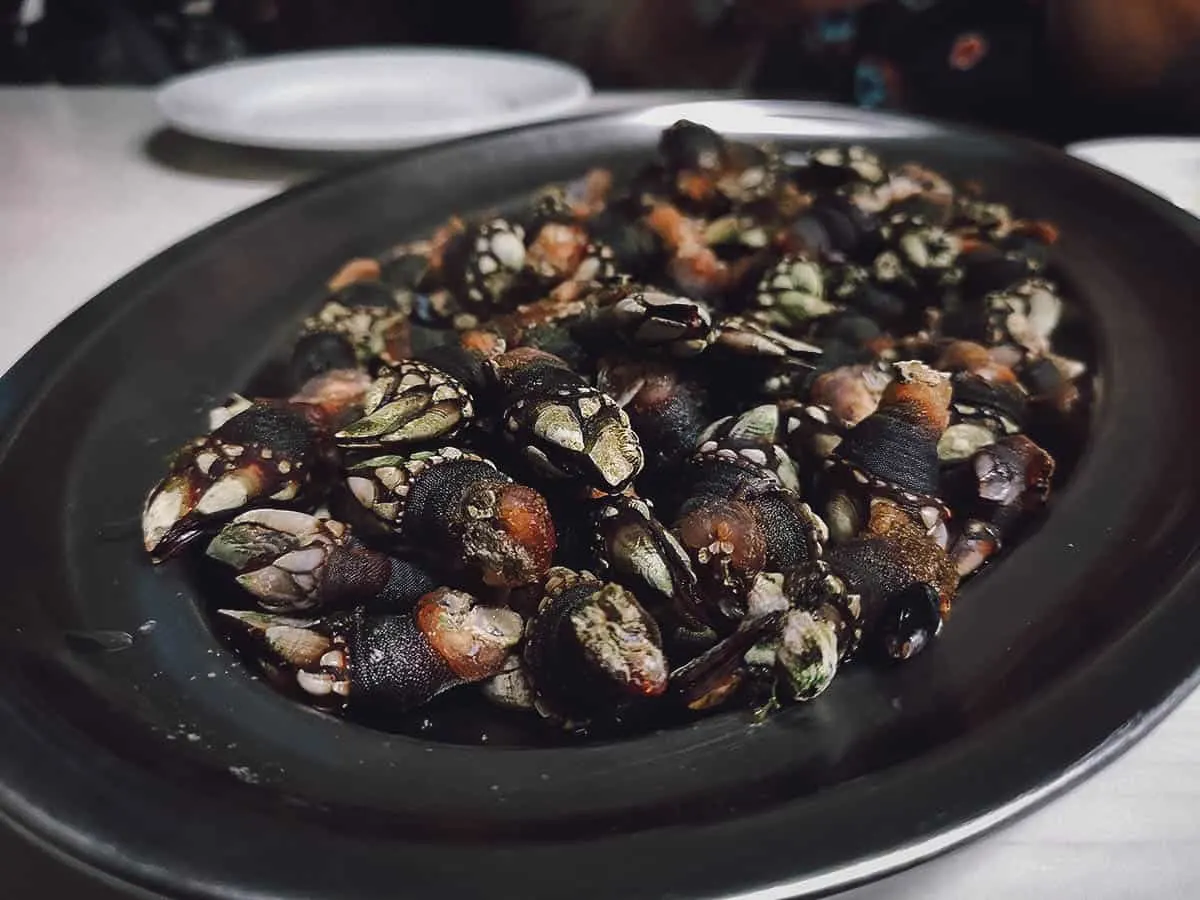
These odd, claw-like creatures are called percebes or gooseneck barnacles. Like pulpo a la gallega, they’re a delicacy in Galicia and along the Portuguese coast.
Percebes are nicknamed “Lucifer’s Fingers” because of their devilish appearance and the fact that they’re notoriously difficult to harvest. They grow on craggy rocks in the ocean’s intertidal zone where crashing waves feed them a steady diet of plankton. They’re impossible to farm so percebes divers have to risk life and limb to harvest them.
We had percebes several times in Spain and Portugal and they were always prepared the same way – boiled in seawater and served as is. To eat, you squeeze the barnacle at the bottom so the flesh pops out from the top. They taste like the ocean and have a meaty, firm texture similar to sea snails.
RECIPE: Gooseneck barnacles with lemon
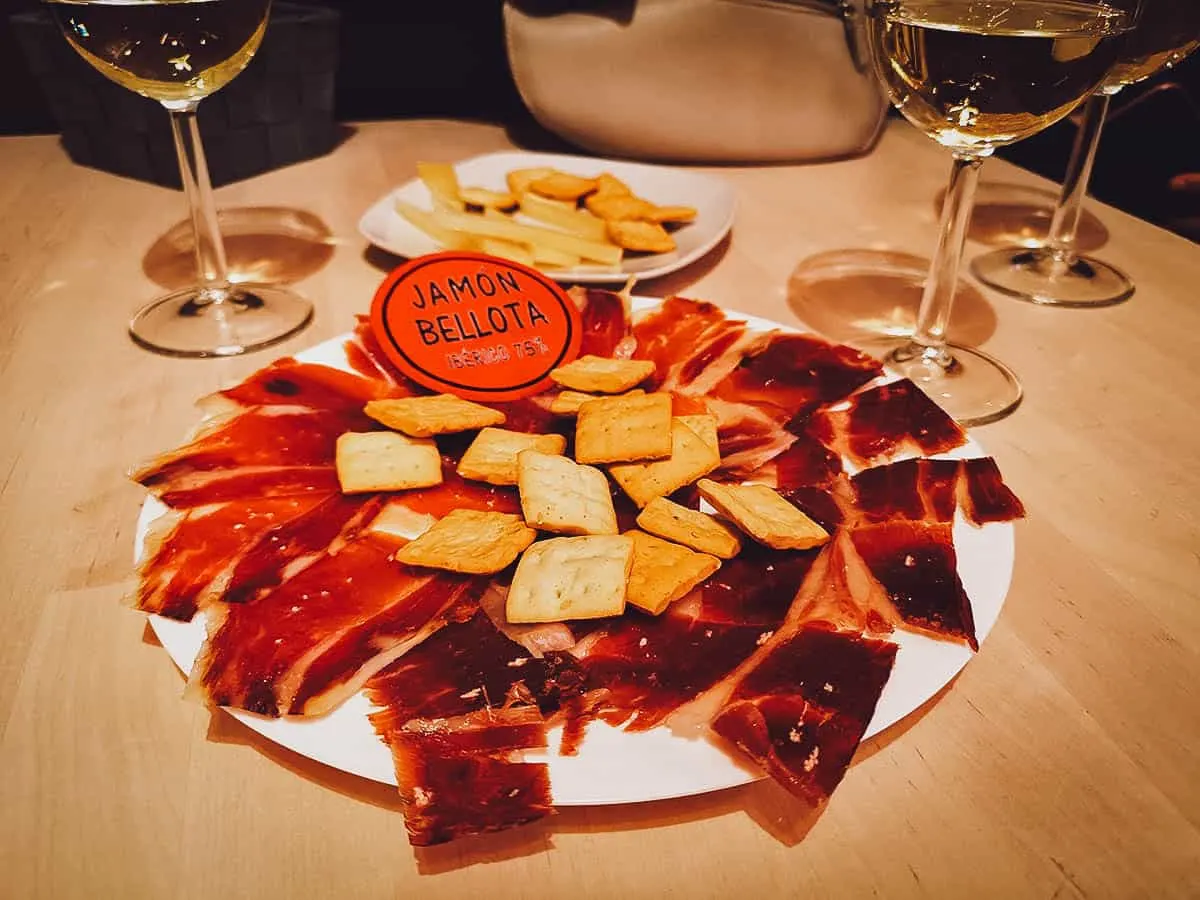
16. Jamon Iberico de Bellota
Jamon iberico refers to a type of dry-cured Spanish ham made from Iberico or Black Iberian pigs. It’s one of the best and most sought after cured hams in the world, famous for its smooth texture and rich savory-sweet taste.
The finest grade of jamon iberico is known as jamon iberico de bellota. It’s made from Iberico pigs that freely roam the oak forests of Spain and Portugal and feed almost exclusively on a diet of acorns.
Jamon iberico de bellota is cured for 36 months and can be made from pure bred or non-pure bred Iberico pigs. Black label jamon iberico is made from 100% pure-bred pigs and is considered the finest type of Spanish jamon.
Like paella, jamon iberico is one of the most well-known and sought-after Spanish foods. It’s a dish that you absolutely must try in Spain.
RECIPE: Jamon Iberico and pan tomaca
17. Chorizo
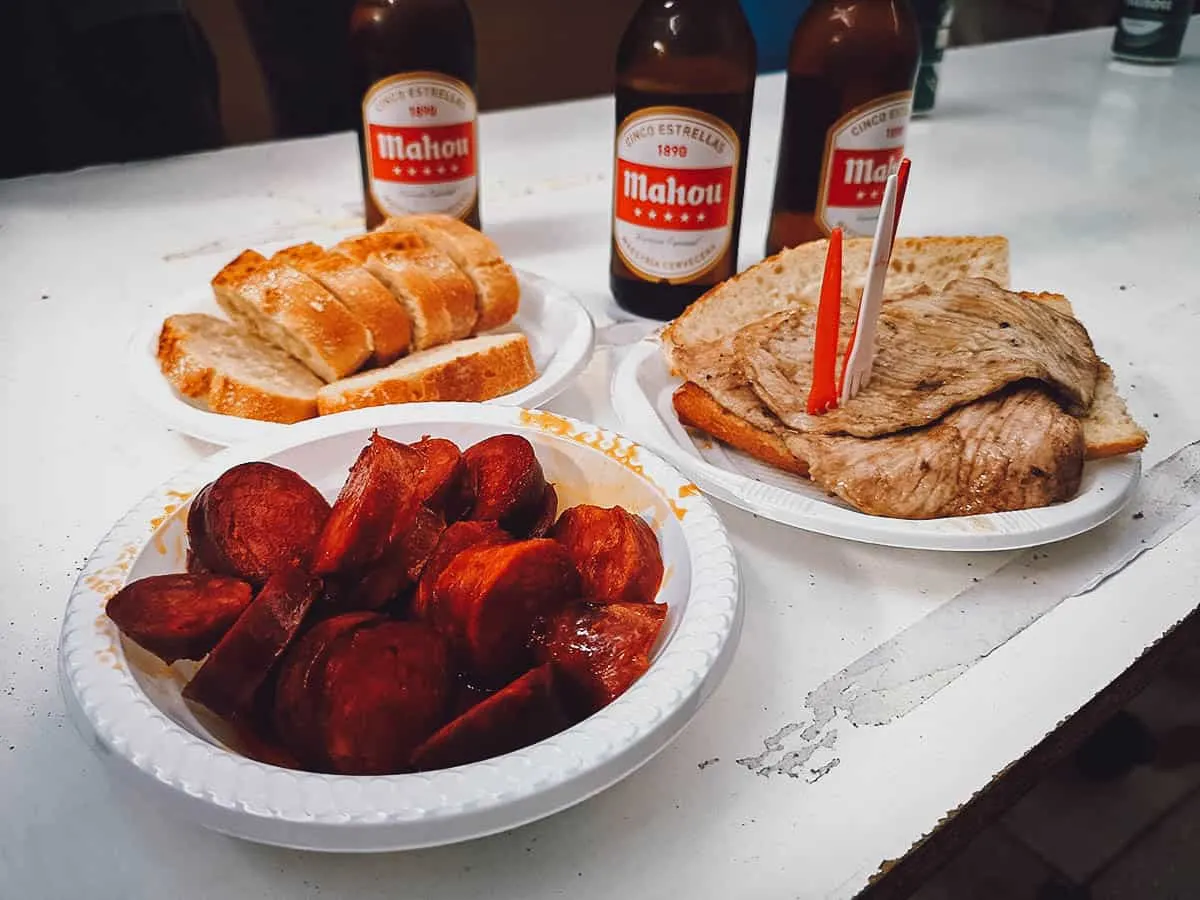
Chorizo refers to a fermented and cured smoked sausage popular in Spanish cuisine. It’s typically made from coarsely chopped pork and pork fat seasoned with garlic, pimenton, and salt.
There are hundreds of varieties of Spanish chorizo, though they’re generally classified as either spicy (picante) or sweet (dulce) depending on the type of pimenton used. They can be either short or long, hard or soft, and can be eaten as tapas or used as an ingredient in other Spanish dishes.
RECIPE: Chorizo a la sidra
18. Albondigas
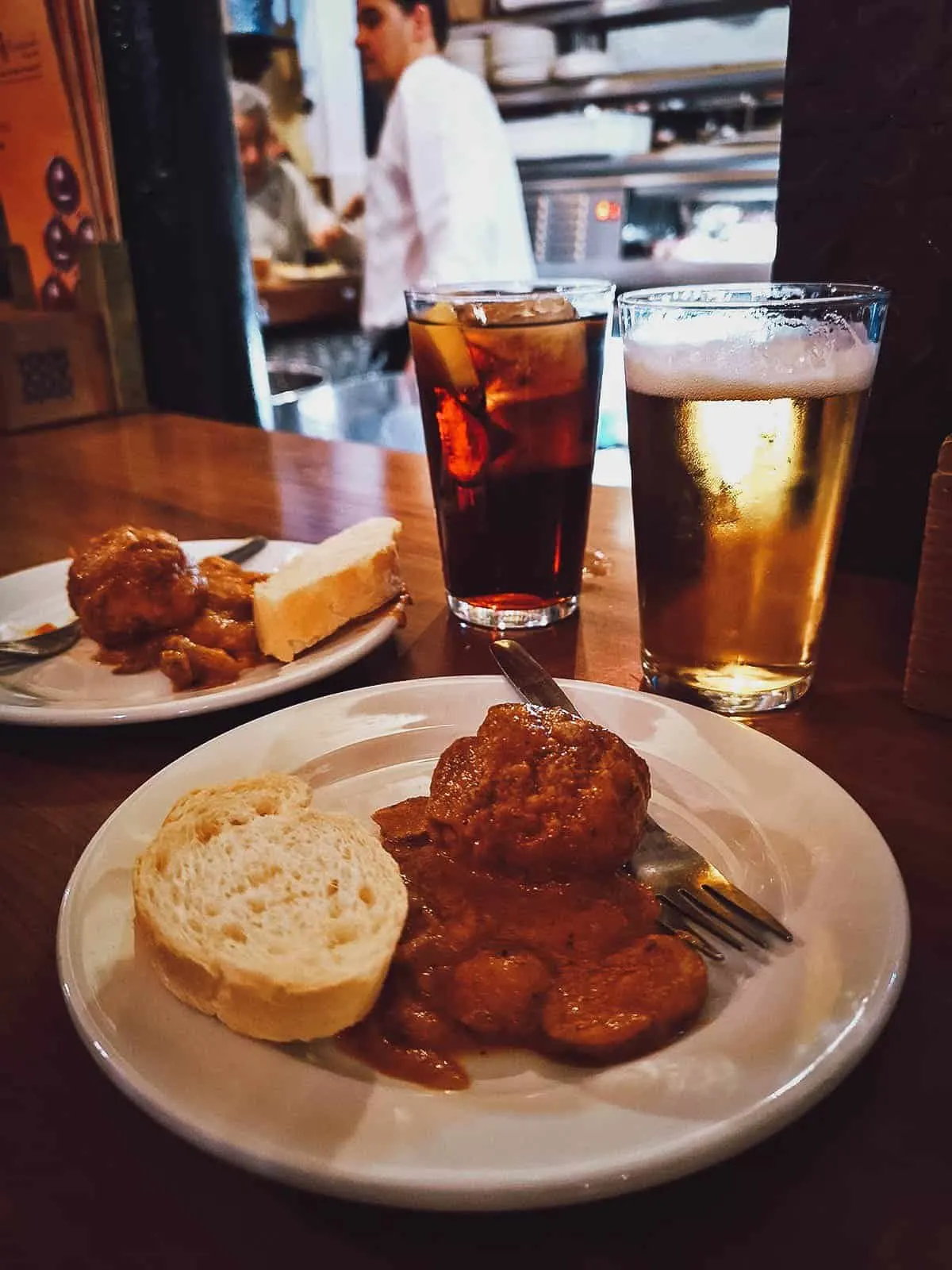
Albondigas refers to Spanish meatballs. They’re believed to be a Berber or Arabic dish that was introduced to Spain during the period of Muslim rule. The term albondigas is derived from the Arabic word “al-bunduq” which means hazelnut or small round object.
Spanish albondigas are typically made from pork or beef and served in a tomato sauce, either as tapas or as the main course.
RECIPE: Albondigas
19. Croqueta
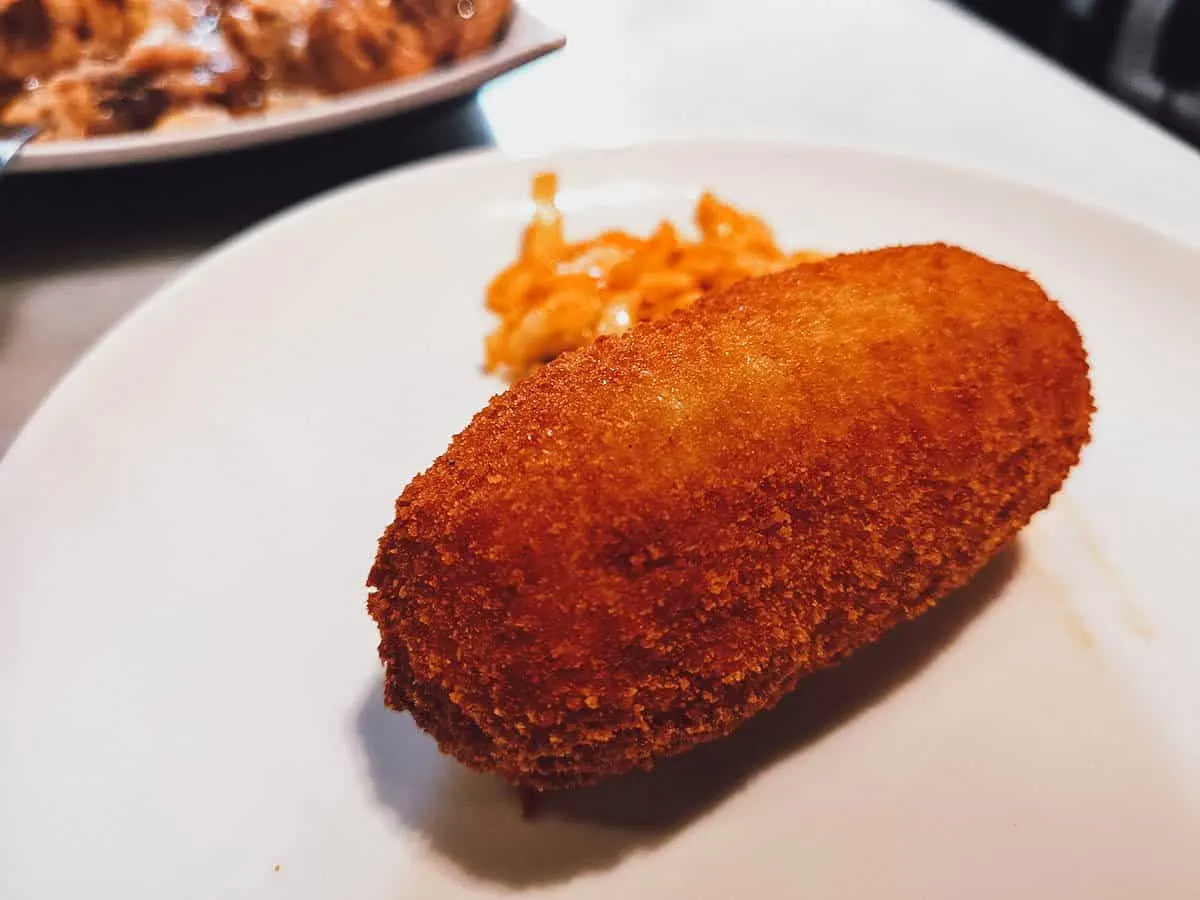
The croqueta is one of the most popular tapas dishes in Spanish cuisine. It refers to a Spanish croquette typically made with a thick bechamel sauce that’s breaded and deep-fried.
Croquetas are usually filled with jamon, chicken, or bacalao but they can be stuffed with any number of ingredients. You can find less traditional croquetas made with various ingredients like mushroom, blood sausage (morcilla), tuna, and cuttlefish cooked in its own ink.
We’re used to eating croquettes made with mashed potato but this was the first time we’ve tried them with bechamel sauce. Bechamel croquettes have a taste and texture that’s quite different from croquettes made with potato.
RECIPE: Croquetas de jamon serrano
20. La Bomba
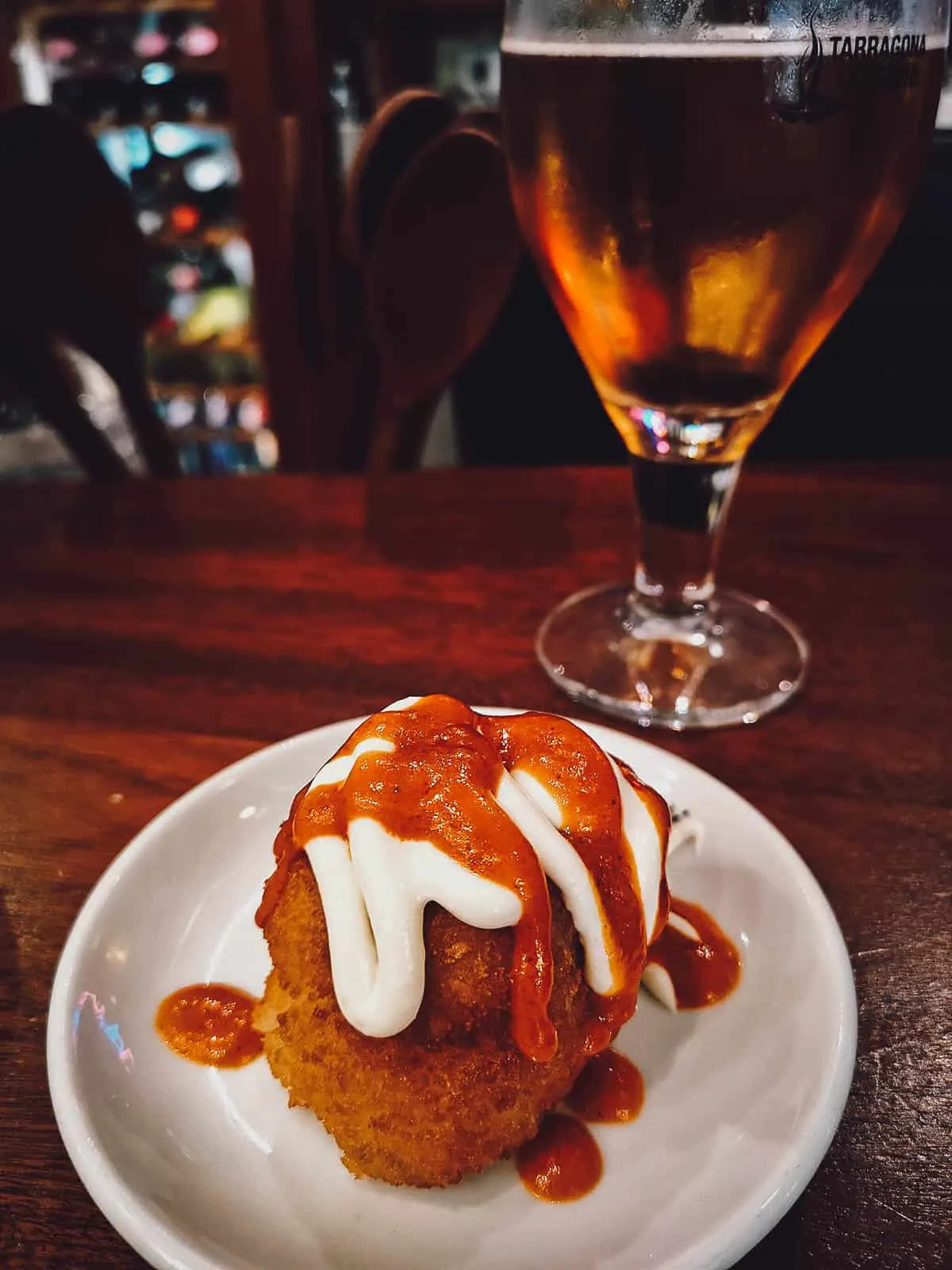
La bomba refers to a type of Spanish croquette made with mashed potato and meat. It can be found throughout Spain but it’s largely associated with Barcelona where it was invented.
La bomba was created in the mid-1950s by La Cova Fumada. It’s an iconic Spanish tapas bar in the former fishing neighborhood of La Barceloneta. Meaning “the bomb” in Spanish, la bomba got its name from a customer who exclaimed – “Wow! This is a bomb!” – after tasting the spicy sauce on top.
La bomba is filled with beef and/or pork and topped with aioli and this legendary sauce. At La Cova Fumada, you can have the sauce either spicy or very spicy.
La bomba is available at many Spanish tapas bars in Barcelona but you may want to have it at La Cova Fumada where it was invented.
RECIPE: Bombas
21. Pinchos Morunos
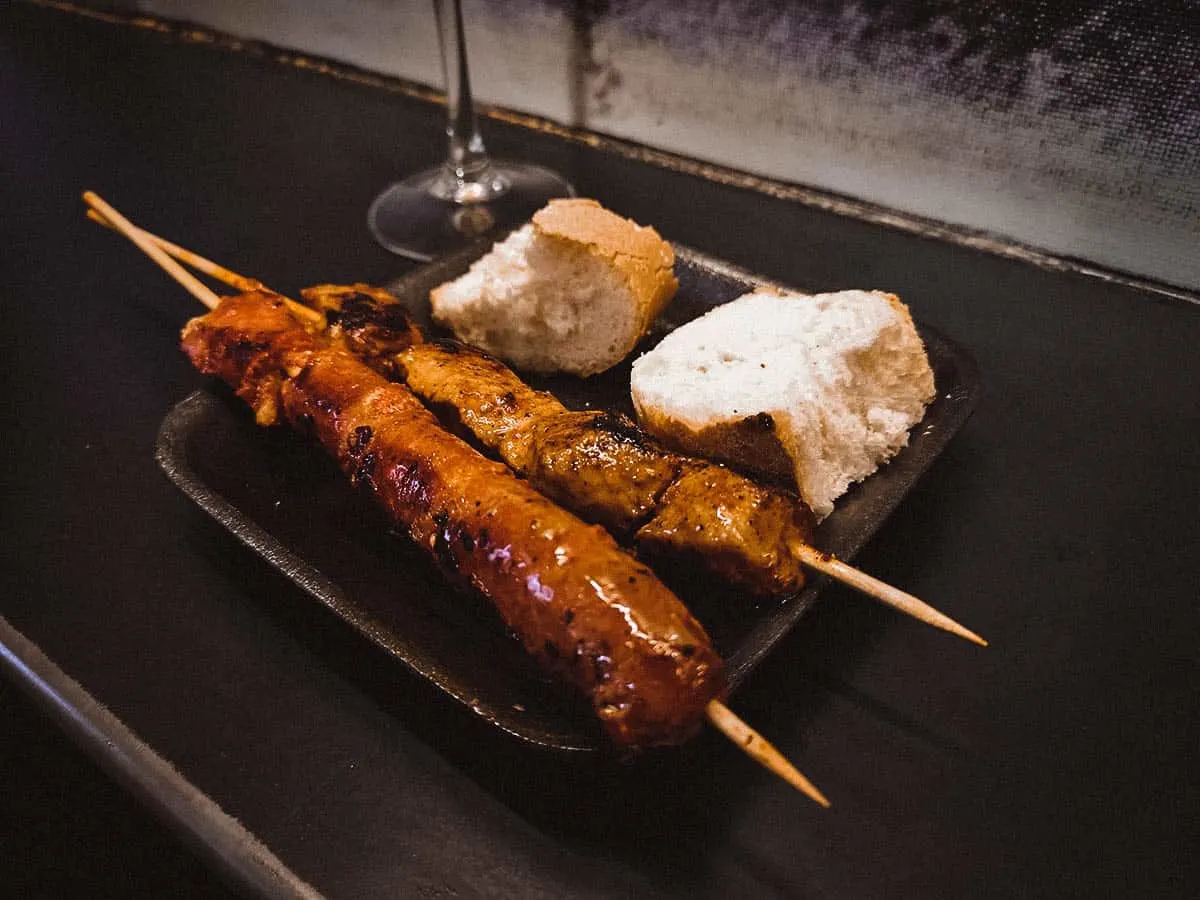
Pinchos morunos or pinchitos are kebab-like skewers of meat. They’re a traditional Spanish dish of Moorish origin and typically made with pork or chicken.
To prepare, small cubes of lean diced pork or chicken are marinated in olive oil and a spice blend known as ras el hanout. Recipes vary but this spice blend can be made with up to forty different spices like cumin, oregano, thyme, coriander, turmeric, paprika, nutmeg, and cinnamon.
The seasoned meat is threaded onto skewers and traditionally cooked over charcoal. They’re often served with pieces of bread, wedges of lemon, and wine.
RECIPE: Pinchos morunos
22. Morcilla
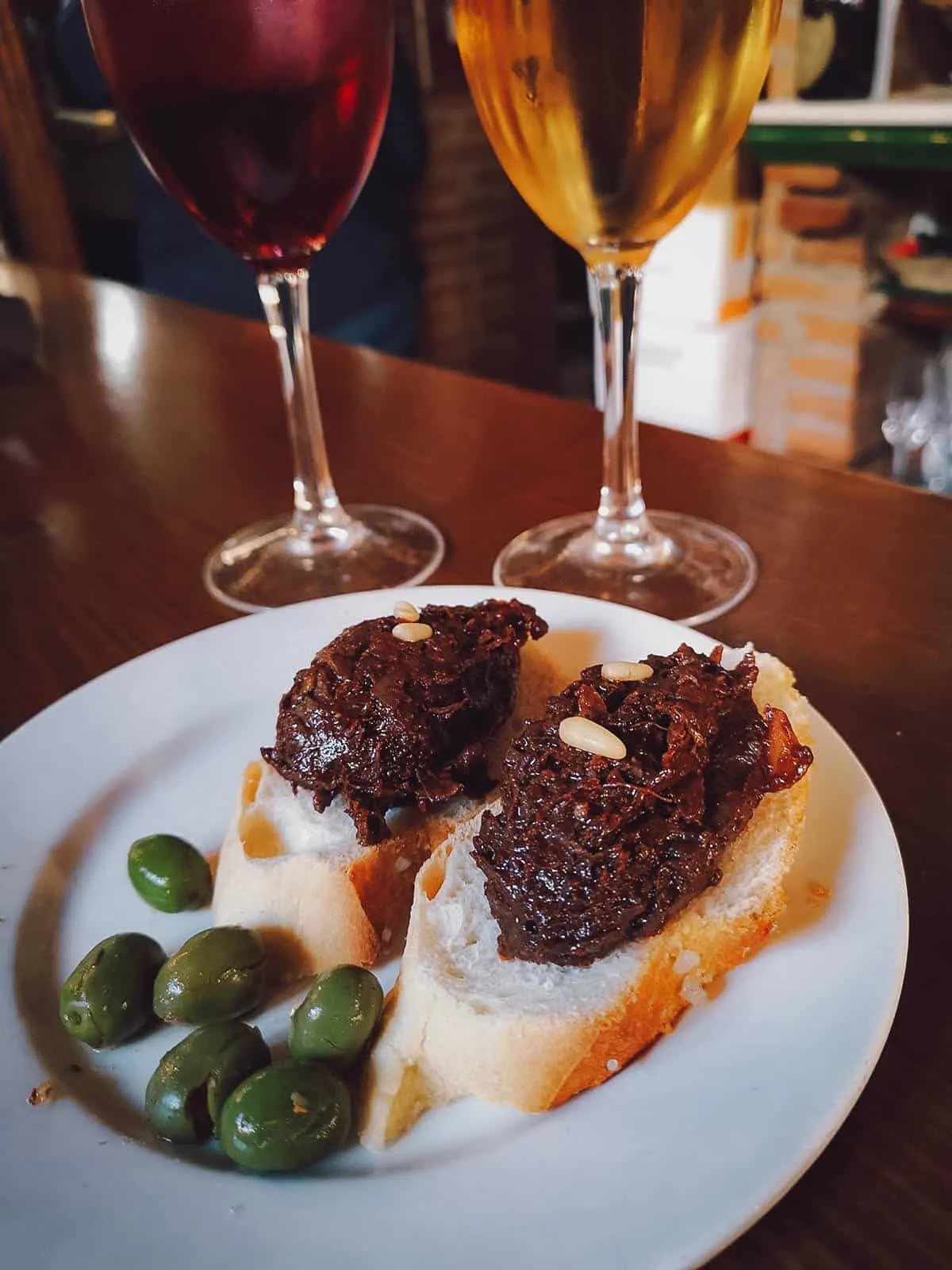
Morcilla is the Spanish word for blood sausuage. It can be found in many cultures throughout the world, including Spanish cuisine where it exists in many variants.
One of the most popular types of Spanish blood sausage is morcilla de Burgos. It’s made primarily with pork blood and fat, rice, onions, and salt. Other varieties include morcilla patatera made with roughly mashed potatoes and morcilla dulce which is a sweeter type of blood sausage.
Morcilla is typically fried, grilled, stewed, or roasted and is used as an ingredient in many Spanish dishes like croquetas, omelettes, and puff pastries.
Pictured below are the delicious morcilla tapas we enjoyed at a Spanish tapas bar in Granada. It was served over soft white bread and topped with pine nuts.
RECIPE: Morcilla de Burgos
23. Pintxos with Foie Gras
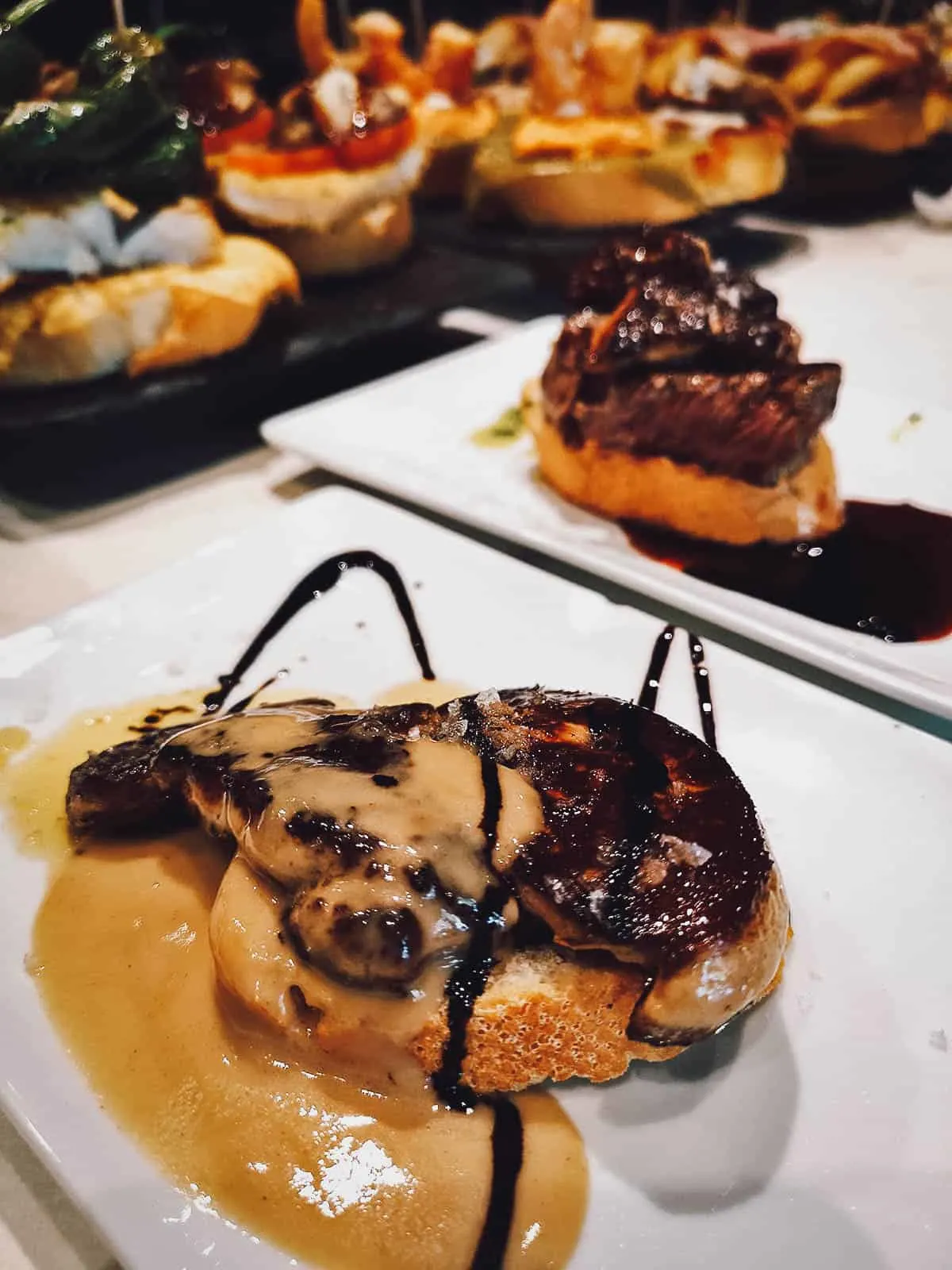
I don’t know if there’s a formal name for this type of pintxo but you’ll find them at many pintxos bars in San Sebastian. It’s a type of warm pintxo made with foie gras served over a piece of crusty Spanish bread.
In the foreground below is foie a la plancha and behind it is solomillo con foie. Foie a la plancha is made with just grilled foie gras while solomillo con foie includes hefty chunks of sirloin. Both are sensational and something you should eat as often as you can while in San Sebastian.
24. Oreja a la Plancha
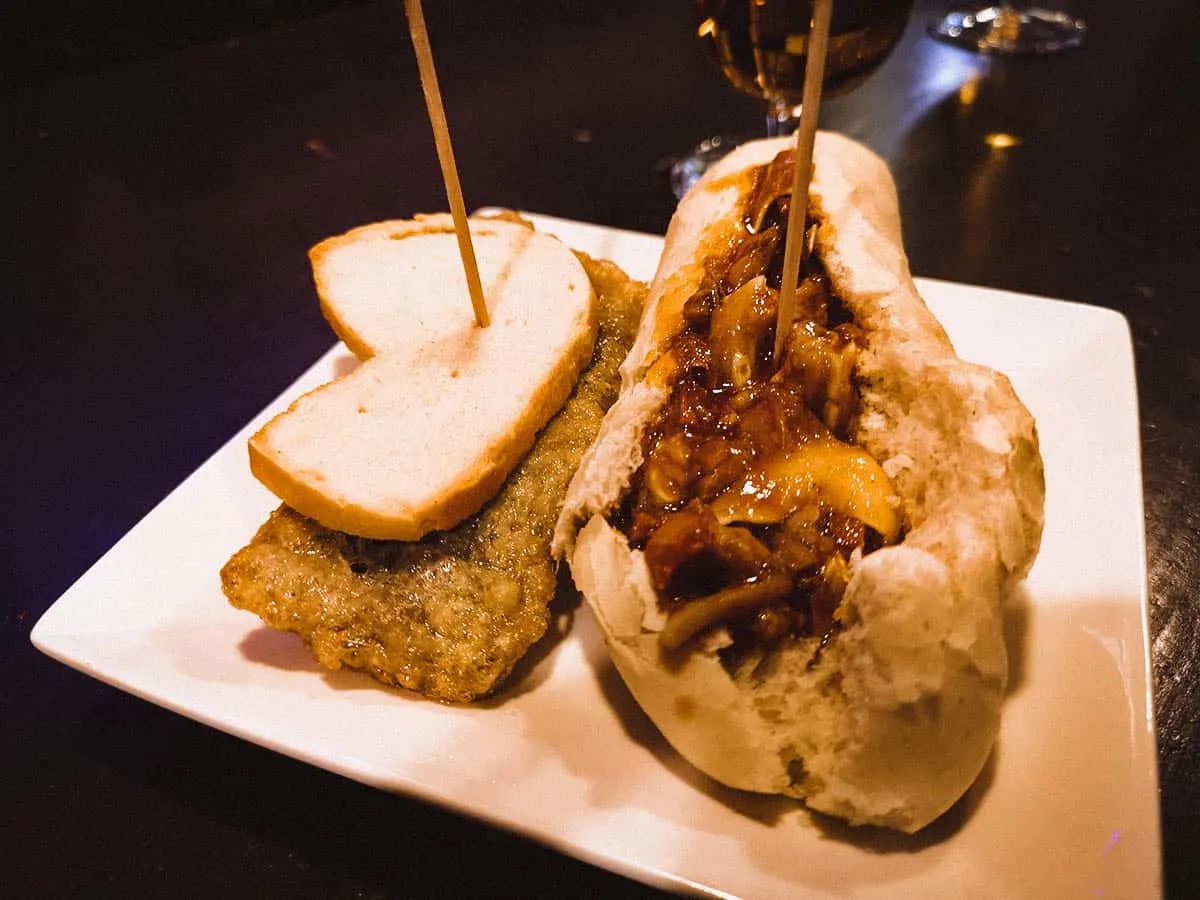
Oreja a la plancha refers to a Spanish tapas dish made with pork ears. Popular in Madrid, pig’s ears are chopped into slices or cubes then grilled in olive oil with different spices and seasonings. It’s typically served with bread in a salsa brava or spicy tomato sauce.
In Madrid, oreja a la plancha is often served with mushroom, bacon, and wedges of lemon. In the Basque Region, it’s served with salsa vizcaina which is a sauce made with onions, garlic, and red peppers.
BREADS / SANDWICHES
25. Pa Amb Tomaquet
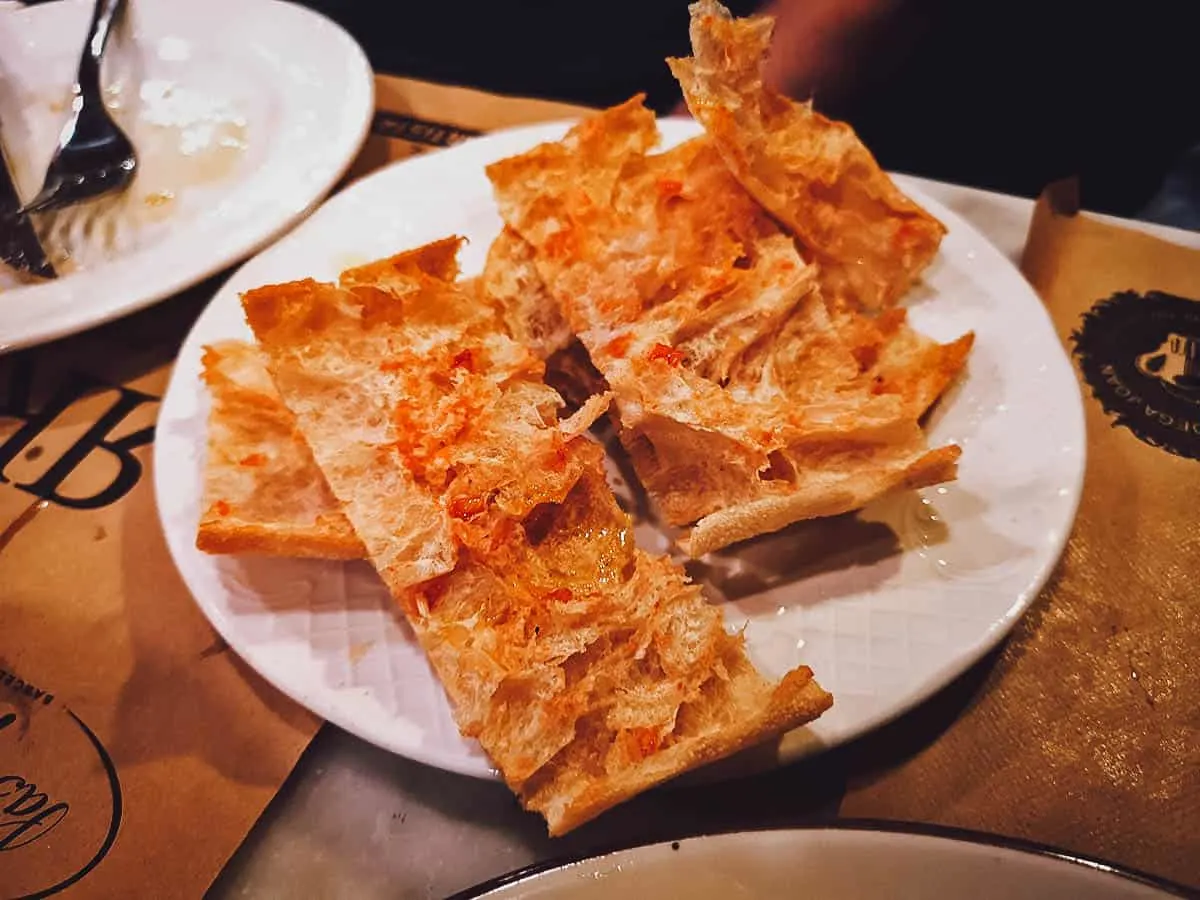
Pa amb tomaquet or pan con tomate is one of the most well-known Spanish foods. It’s especially popular in Catalonia where it’s considered a staple Spanish food.
Pa amb tomaquet is a traditional Spanish food classic of toasted or untoasted white bread rubbed over with fresh tomato and (sometimes) garlic, and seasoned with olive oil and salt. It’s served at many Spanish restaurants and bars, either as tapas or as a side dish to accompany any meal from breakfast to dinner.
We enjoyed pa amb tomaquet at nearly every meal in Barcelona. Some Spanish restaurants will serve the bread already brushed with the tomato mixture while others will let you do it yourself.
RECIPE: Pa amb tomaquet
26. Bocadillo de Jamon
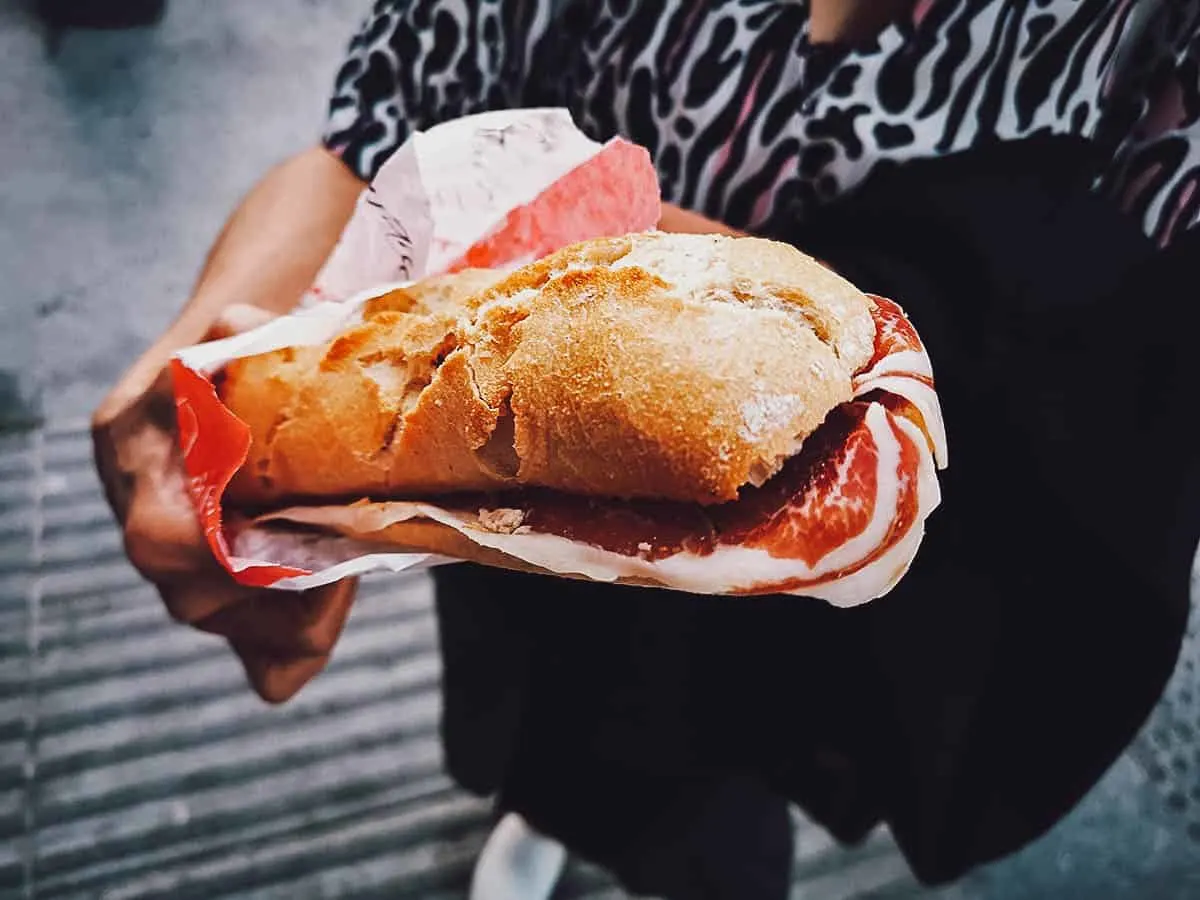
Bocadillo de jamon refers to a sandwich made with a Spanish-style baguette layered with slices of ham like jamon serrano or jamon iberico.
At its most basic, it can be made with just white bread and jamon but it can also be filled with other ingredients like manchego cheese, tomato, roasted piquillo peppers, and black olives. To make it even more flavorful, the bread is often brushed with olive oil, tomato, and garlic ala pa amb tomaquet.
You can find bocadillo de jamon pretty much anywhere in Spain. Personally, I find it hard walking into a jamoneria and not walking out munching on one of these simple but delicious sandwiches.
RECIPE: Bocadillo de jamon
27. Bocadillo de Calamares
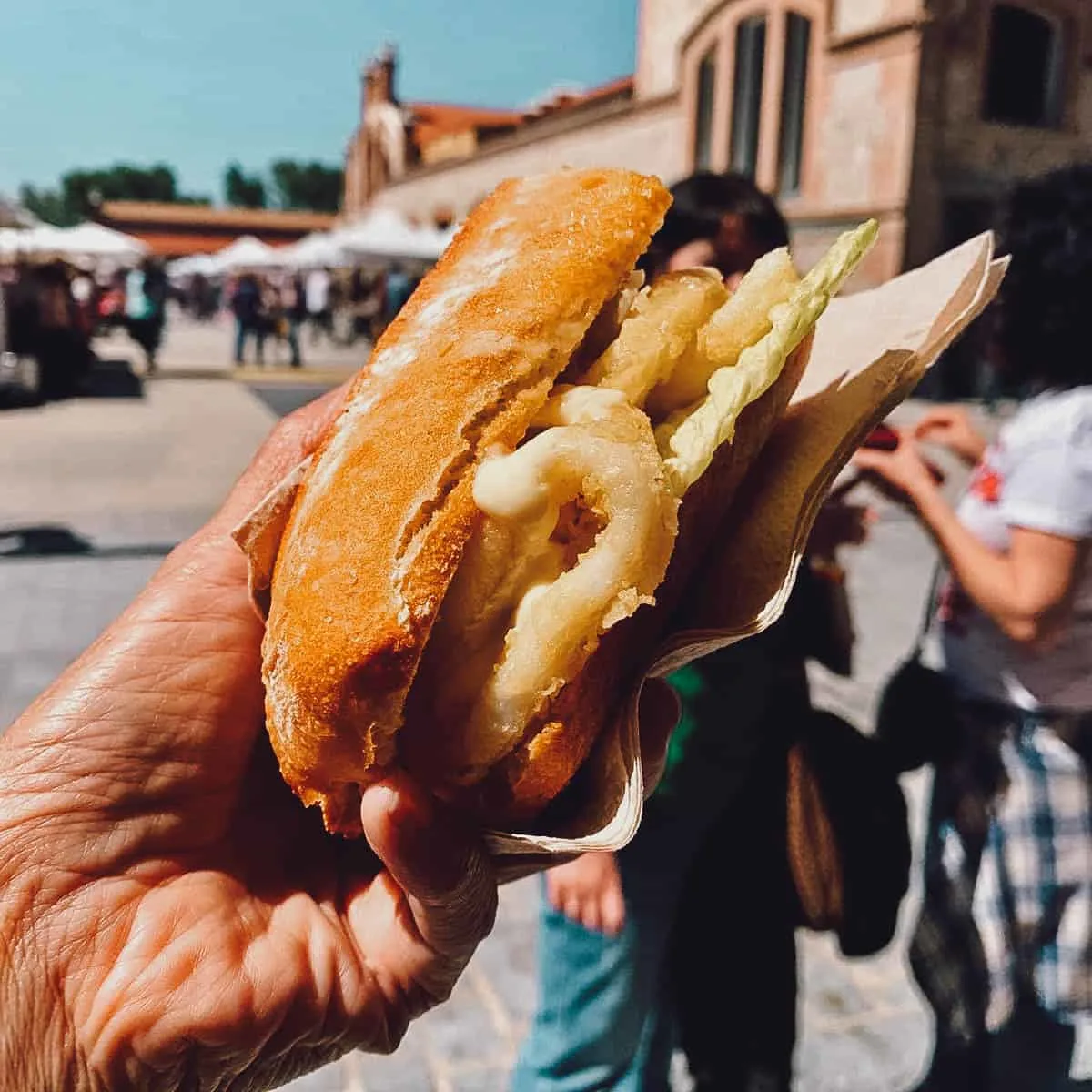
Bocadillo de calamares refers to a Spanish squid sandwich popular in Madrid. You can find it at many Spanish bars and shops throughout the capital, especially around Plaza Mayor.
To prepare, squid is cut into one-centimeter thick rings and battered in flour before being deep-fried in olive oil. It can be served on its own in a Spanish-style baguette or topped with a mildly spicy sauce made with tomato, mayonnaise, and garlic.
RECIPE: Bocadillo de calamares
MAINS
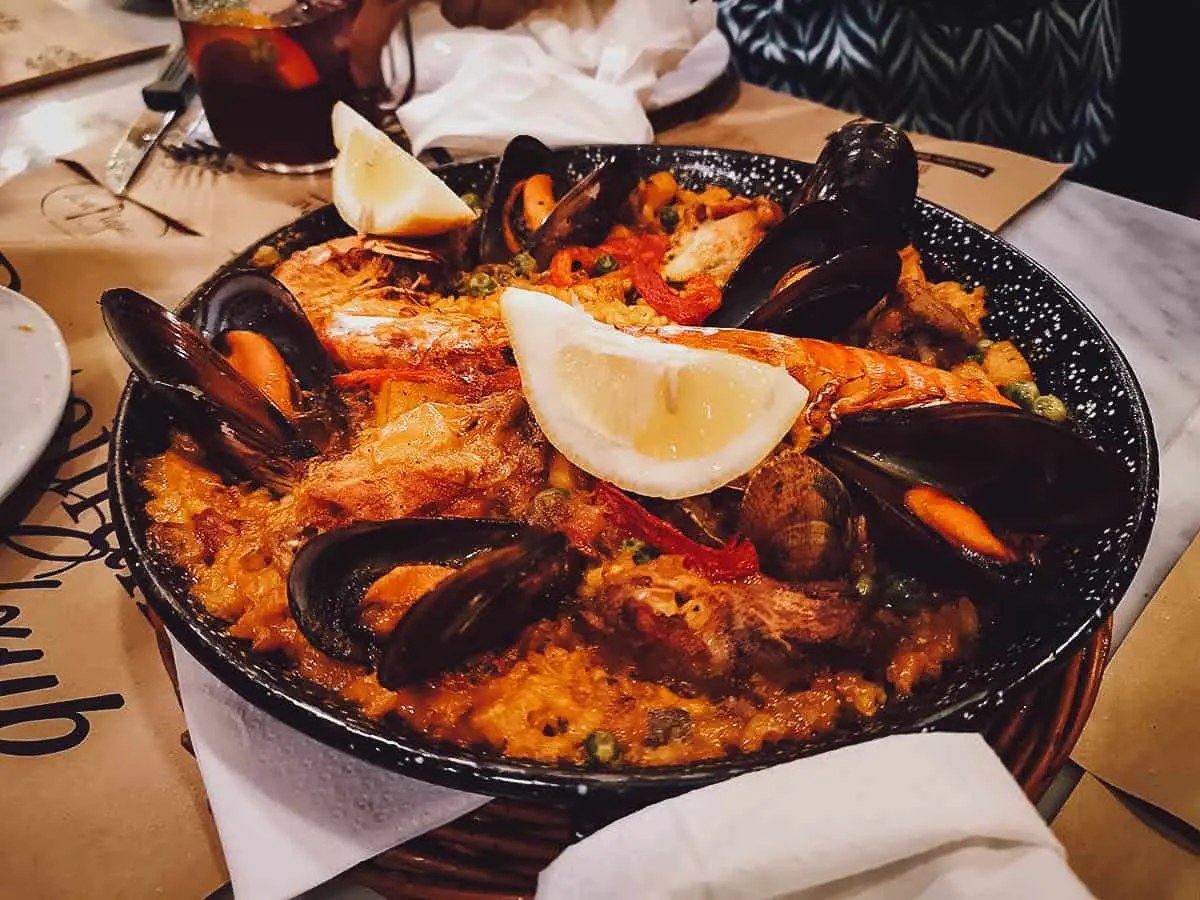
28. Paella
Paella is one of the most famous dishes in Spanish cuisine. This hugely popular rice dish is available throughout Spain and is considered by many to be a Spanish national dish, though it has its roots in Valencia.
Paella refers to a traditional Spanish rice dish made with round grain rice, saffron, olive oil, meat, seafood, beans, and green vegetables. It gets its name from the wide shallow pan with two side handles used to cook the dish, traditionally over an open fire.
Paella has become one of the most popular Spanish dishes outside of Spain. It’s made with any number of ingredients though to the Valencian, there are only two authentic versions of paella – paella valenciana and paella de marisco (seafood paella).
You can read more about this hugely popular Spanish rice dish in my article about paella.
RECIPE: Paella de marisco
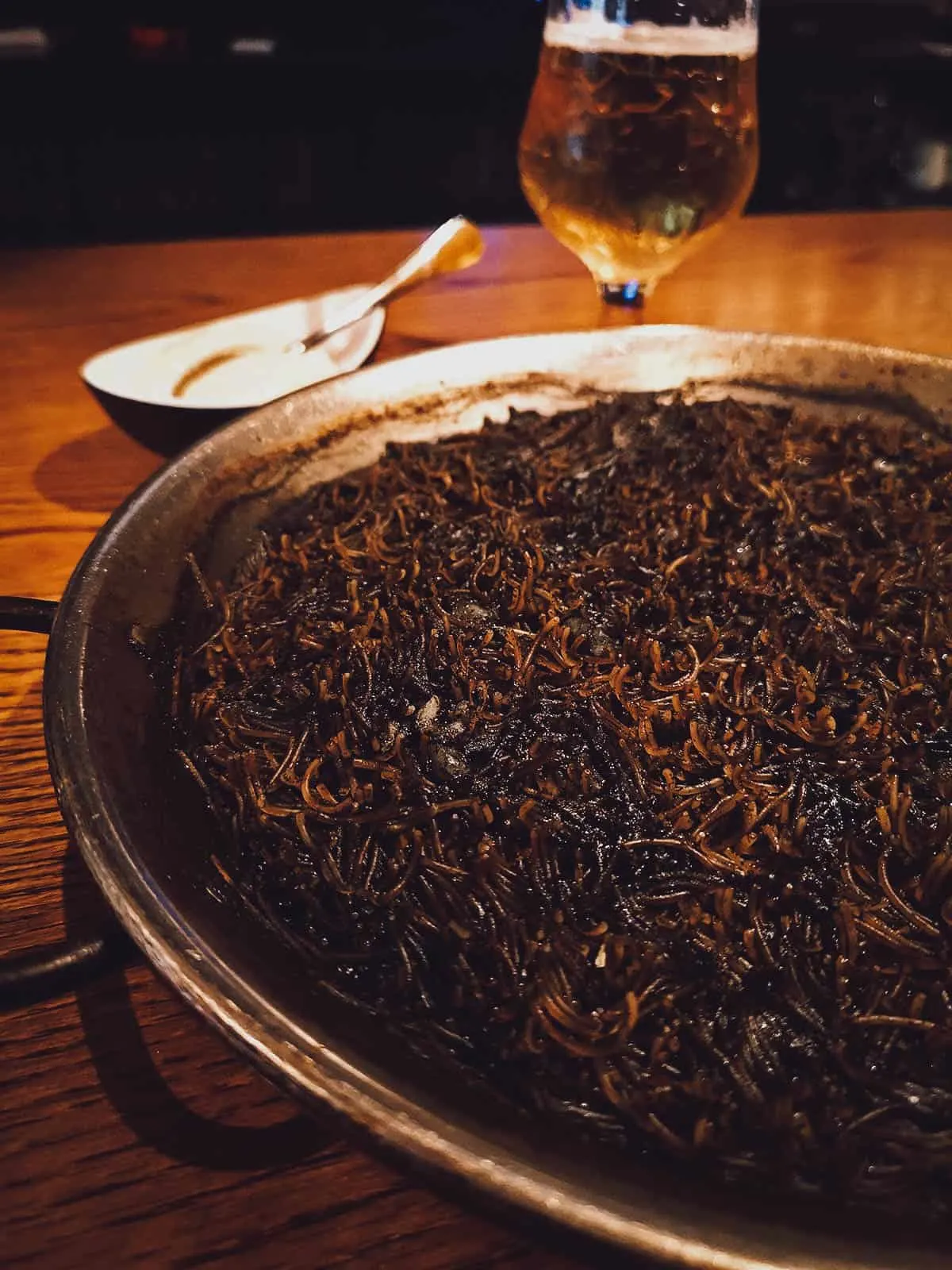
29. Fideua
Fideua refers to the lesser known cousin of paella. Originally from the coast of Valencia, it’s almost identical to seafood paella except its made with noodles instead of rice.
Fideua is typically made with a variety of seafood and thin, chopped up noodles similar to spaghettini or angel hair pasta. It isn’t as filling as traditional seafood paella which some people may prefer.
Pictured below is the delicious fideua negra I enjoyed in Barcelona. It’s made with squid ink which turns the entire dish (and your teeth) black.
RECIPE: Fideua
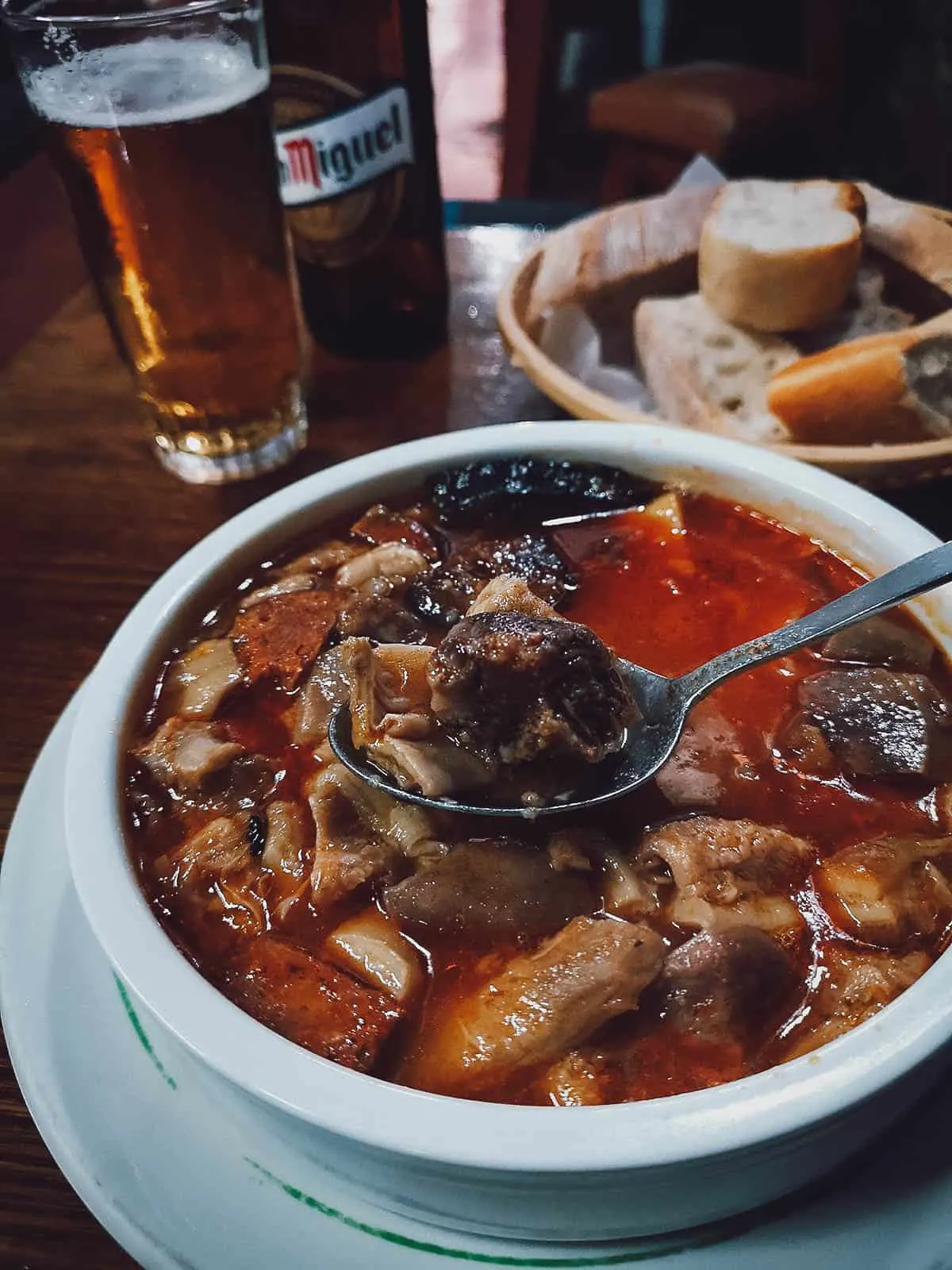
30. Callos
Callos is another popular Spanish dish. It’s a stewed tripe dish available throughout Spain, though it’s typically associated with Madrid where it’s known as callos a la madrileña.
In Madrid, callos is traditionally made with beef or pork tripe, pork snout and trotters, chorizo, serrano ham, morcilla, pimenton, and soup vegetables like carrot and onion. It’s cooked slowly until the tripe is tender and the broth becomes rich in gelatin from the pork bones and cartilage.
Callos is one of my favorite Spanish foods and something we enjoy often in the Philippines. The Philippine version is made with chickpeas which they don’t seem to use in Spain, at least not in Madrid.
RECIPE: Callos
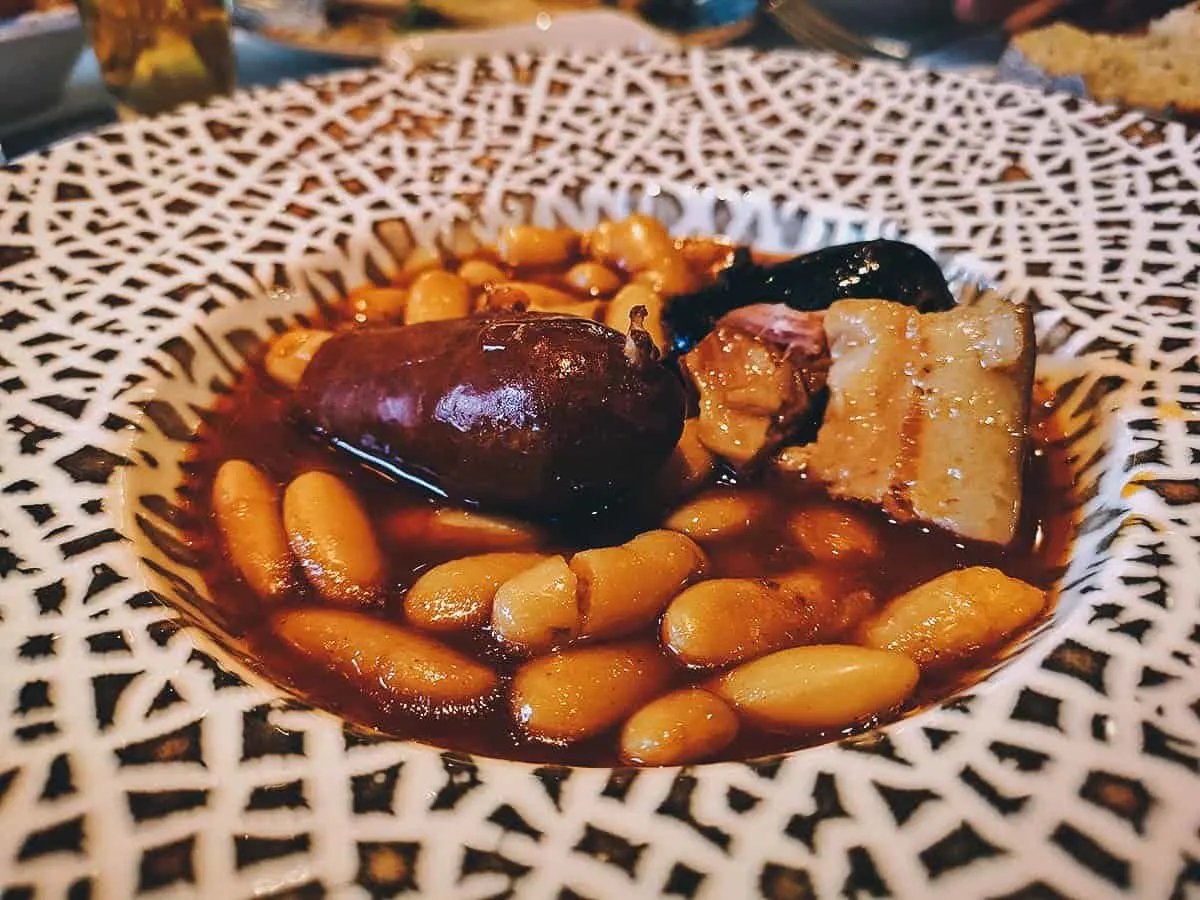
31. Fabada Asturiana
Fabada asturiana refers to a Spanish bean stew made with fabes de la granja, a type of large white bean from Spain. Fabada is originally from Asturias in northwestern Spain but it’s widely available throughout the country, even at Spanish supermarkets where it’s sold in cans.
Fabada is a rich and filling traditional Spanish dish that’s most commonly eaten in winter. It can be served as a starter or main course and is made with a variety of meats like asturian chorizo, lacon gallego (Galician dried ham), bacon, and morcilla.
We enjoyed this hearty bowl at La Corte de Pelayo, a popular restaurant in Oviedo that was a finalist in the 2018 Fabada World Championships.
RECIPE: Fabada Asturiana
32. Cap i Pota
Cap i pota refers to a classic Catalan stew made with slow-cooked beef head and leg. Cap means “head” and pota means “leg”.
During the postwar period in Spain, chicken and steak were luxuries so Spanish people improvised and created dishes using less desirable animal parts like the head, offal, and sweetbreads.
From what I understand, Spanish dishes like cap i pota have become less fashionable in modern times. It’s considered rustic “grandmother food” but we were fortunate to experience it on an excellent Barcelona food and wine tour.
RECIPE: Cap i pota
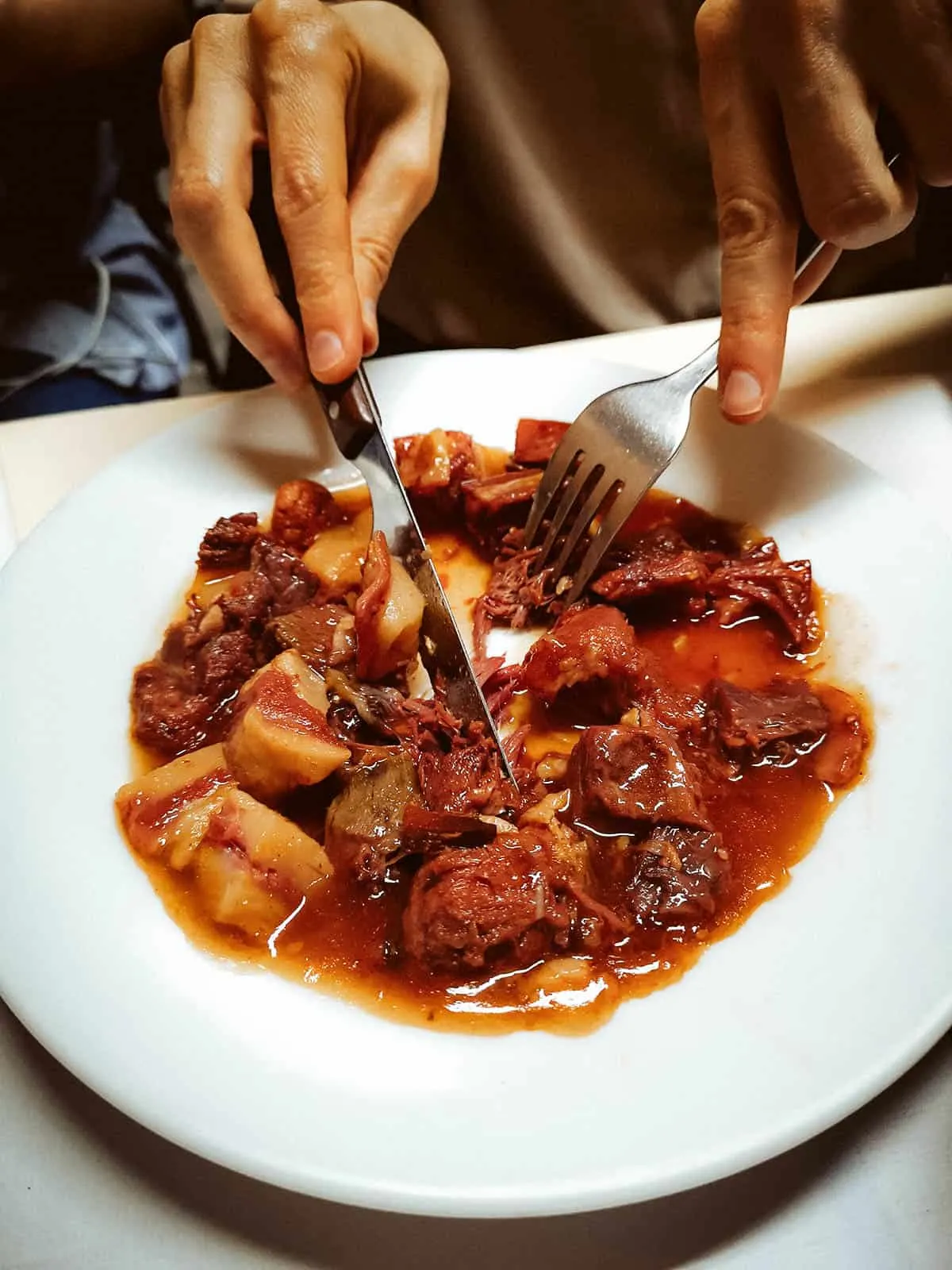
33. Rabo de Toro
Rabo de toro refers to a traditional Spanish dish of braised oxtail. From what I understand, it was originally made with bull tail though it’s now more commonly prepared with oxtail or cow tail.
Rabo de toro is originally from the Andalusian region of Spain where it was traditionally made after bull fights. It’s become popular throughout Spain, especially in Madrid where bullfighting is apparently still a thing.
Oxtail is extremely bony and tough so it needs to be slow-cooked for several hours over a low flame. Once softened, it becomes fatty and gelatinous and practically dissolves in your mouth. Personally, it’s one of my favorite cuts of meat.
RECIPE: Rabo de toro
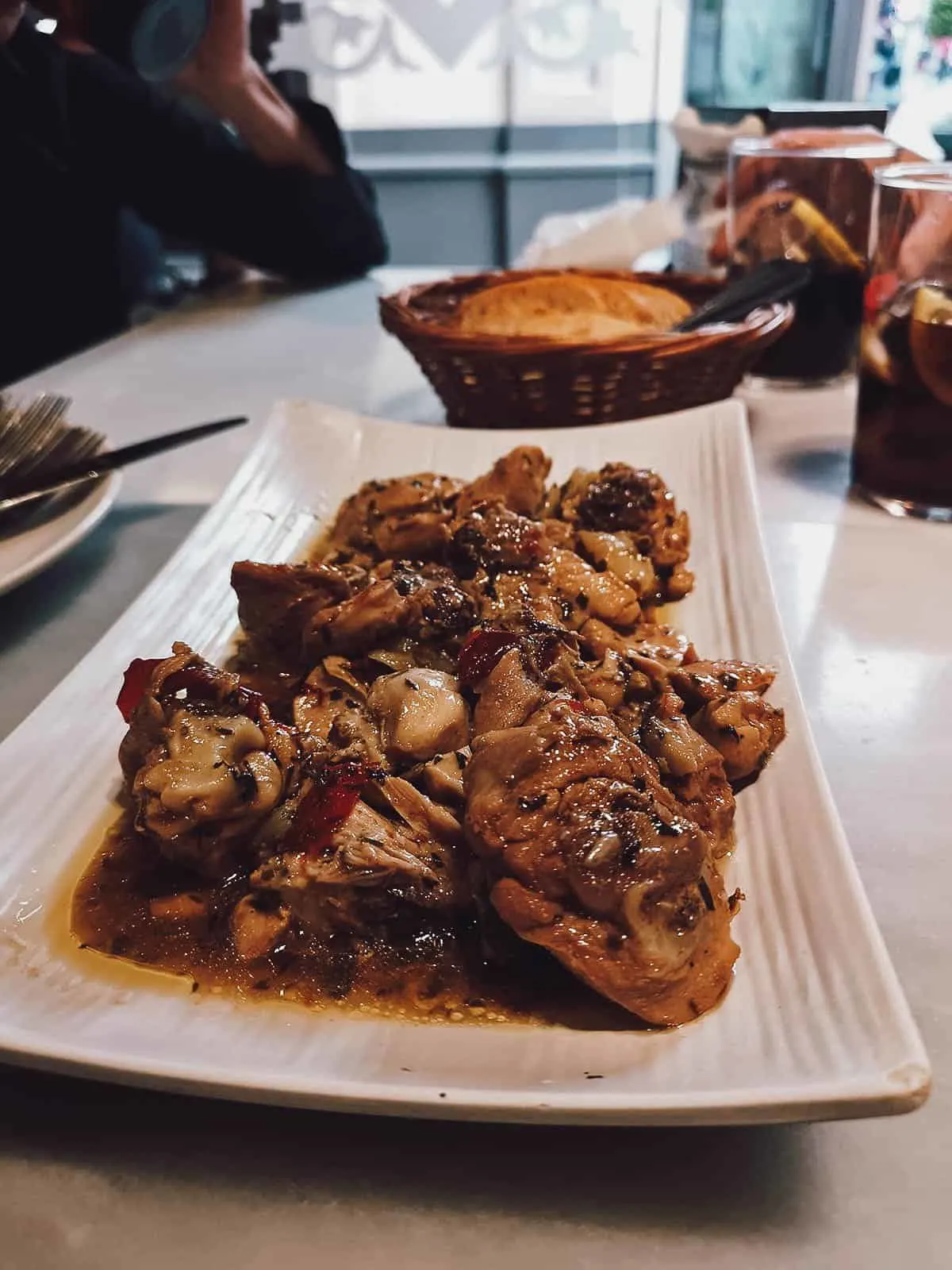
34. Botifarra amb Mongetes
Botifarra amb mongetes means “sausage with beans” and refers to a classic sausage and bean stew from Catalonia. It’s made with Iberian white kidney beans and Catalan sausage made from pork and spices.
Botifarra is typically made from lean cuts of pork thigh and shoulder, bacon, coarse ground black pepper, and sea salt. Depending on the butcher, they can be made with other ingredients as well, giving rise to variations like black botifarra (with boiled pork blood), botifarra d’arros (with boiled rice), bisbe (with tripe), and botifarra d’ou (with egg).
Unlike fabada asturiana where the beans are boiled, the beans in botifarra amb mongetes are fried and garnished with chopper garlic and parsley.
RECIPE: Botifarra amb mongetes
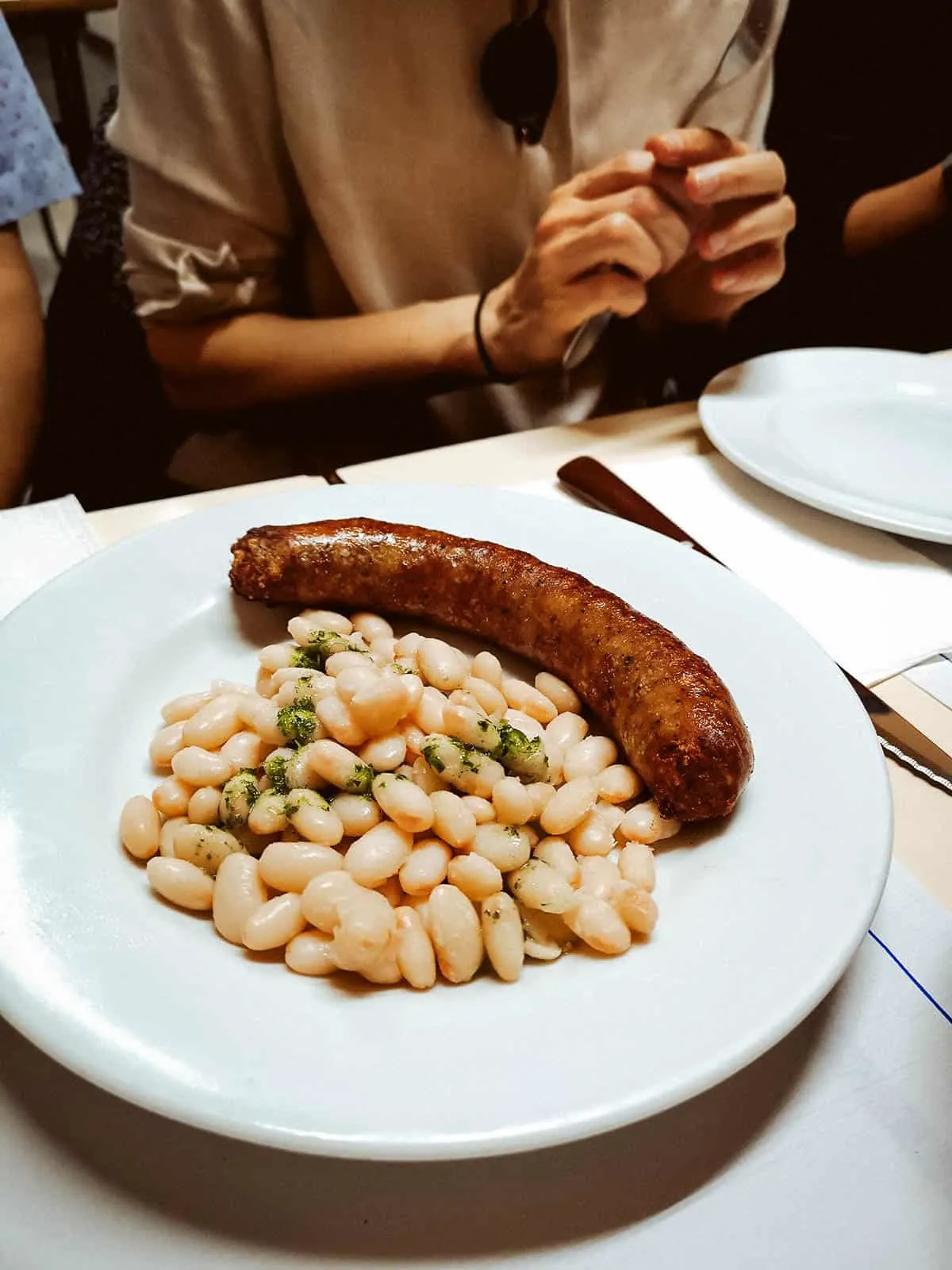
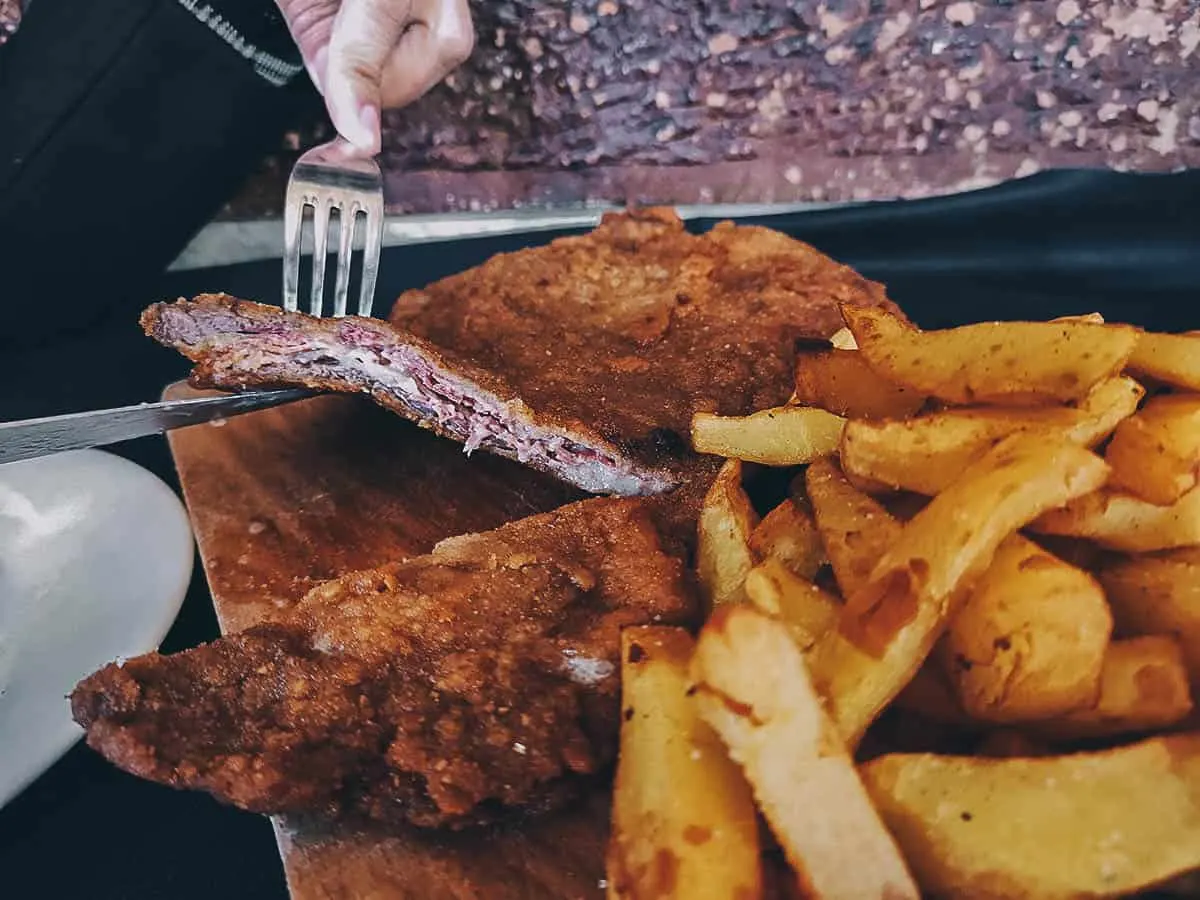
35. Cachopo
Like fabada, cachopo is a popular Spanish dish in the Asturias region of Spain. It consists of two breaded and fried veal fillets layered with ham and cheese and served with a side of fried potatoes.
Cachopo is traditionally made with veal though it can be made with other proteins as well like fish, chicken, and pork. They can be stuffed with a variety of ingredients like mushroom, pepper, and foie gras.
I grew up in an era where veal was considered inhumane but apparently, that no longer seems to be the case. Housing calves in tiny crates was outlawed in the UK in 1990 and the rest of Europe in 2007, with an increasing number of farmers hoping to change public perception by producing ethically-raised veal.
RECIPE: Cachopo
DESSERTS
Be sure to check out our article on Spanish desserts for more suggestions on what delicious sweet treats to look for in Spain.
36. Churros con chocolate
The churro is one of the most popular and beloved pastries in Spanish cuisine. It’s popular in Spain and Portugal and in former Spanish and Portuguese colonies like the Philippines and Latin America.
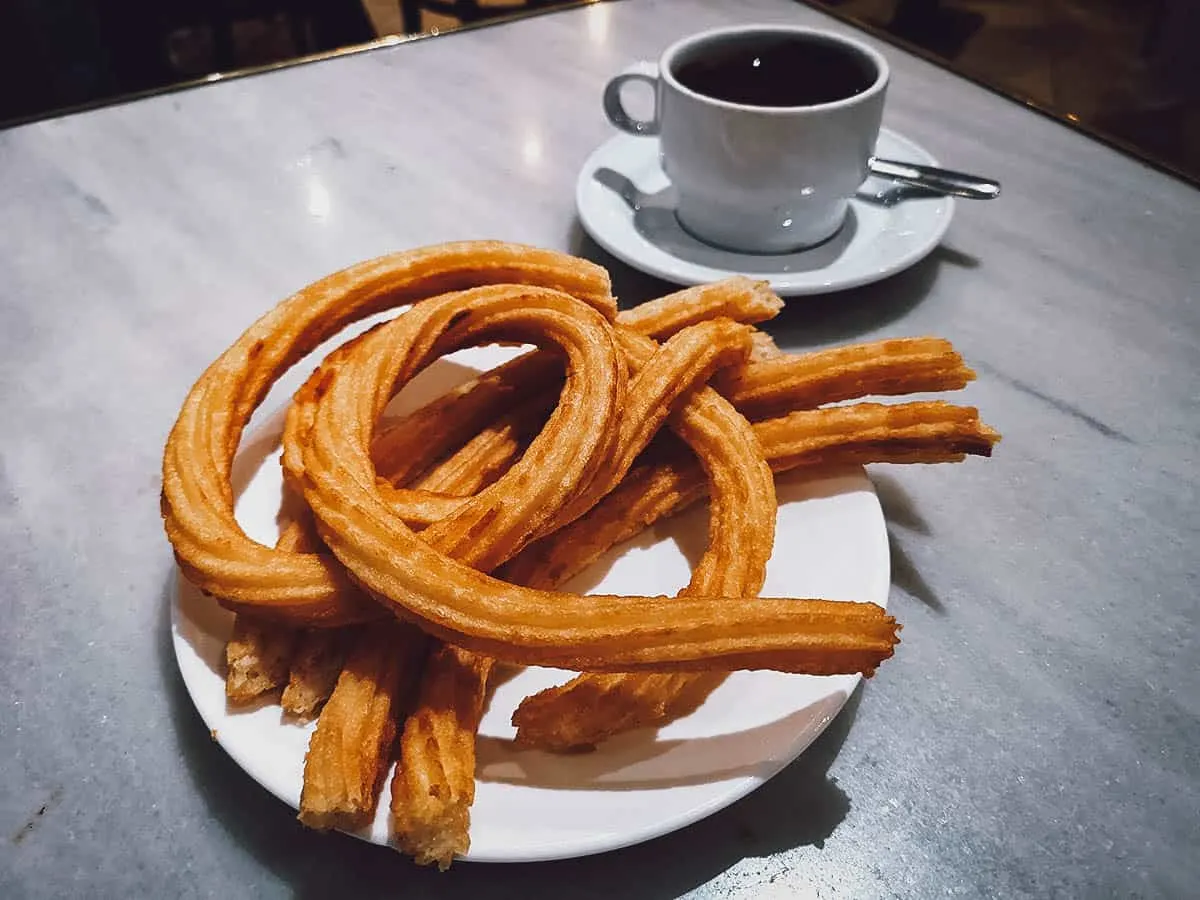
Churros are Spanish fried-dough pastries that are typically eaten for breakfast or as a snack with hot chocolate or cafe con leche. They’re fried till crunchy and maintain a ridged surface after being piped through a churrera – a syringe-like tool with a star-shaped nozzle.
Churros are among the most popular Spanish foods and can be enjoyed pretty much anywhere, from pastry shops to street food carts.
The plate of churros con chocolate below was from the iconic Chocolateria San Gines, one of the most famous chocolaterias in Madrid. They can be served curled, straight, or in spiral form.
RECIPE: Churros con chocolate
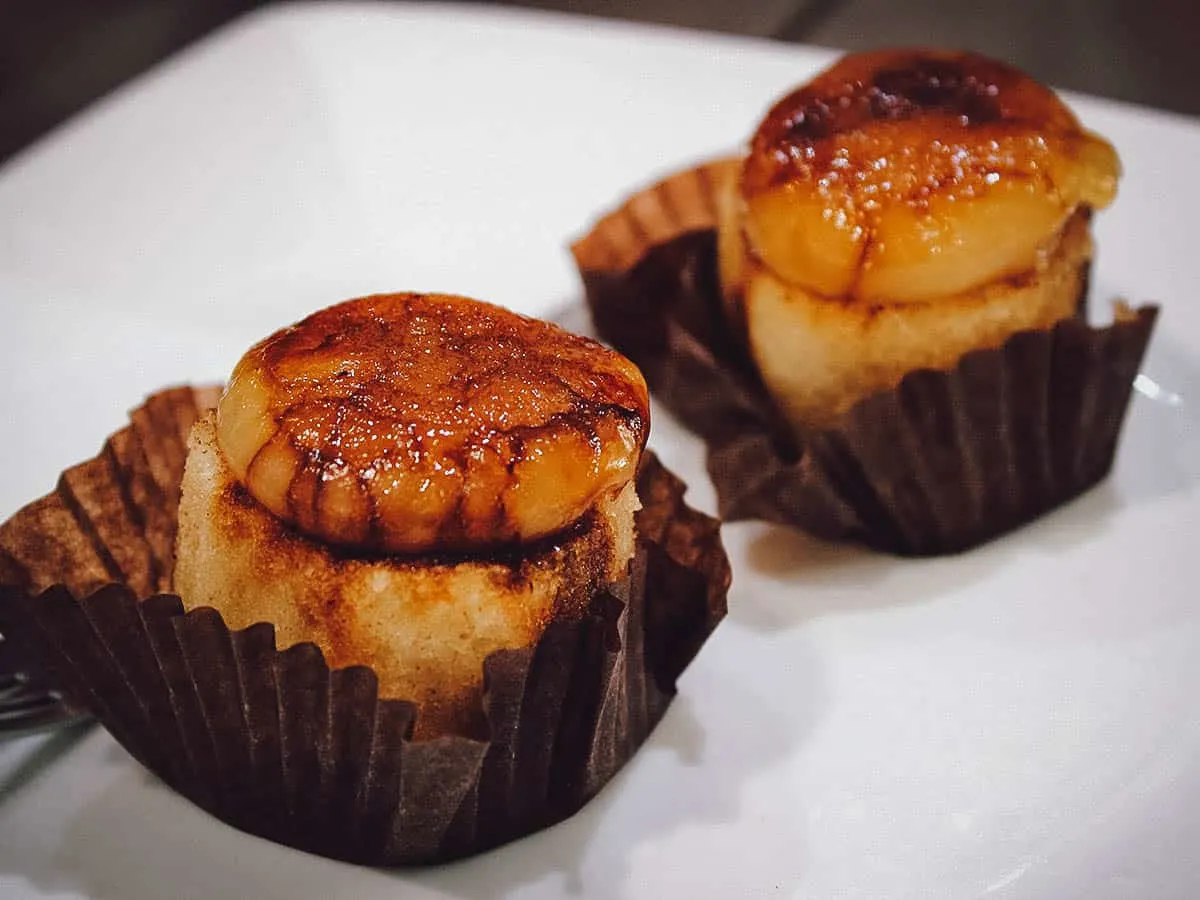
37. Basque Burnt Cheesecake
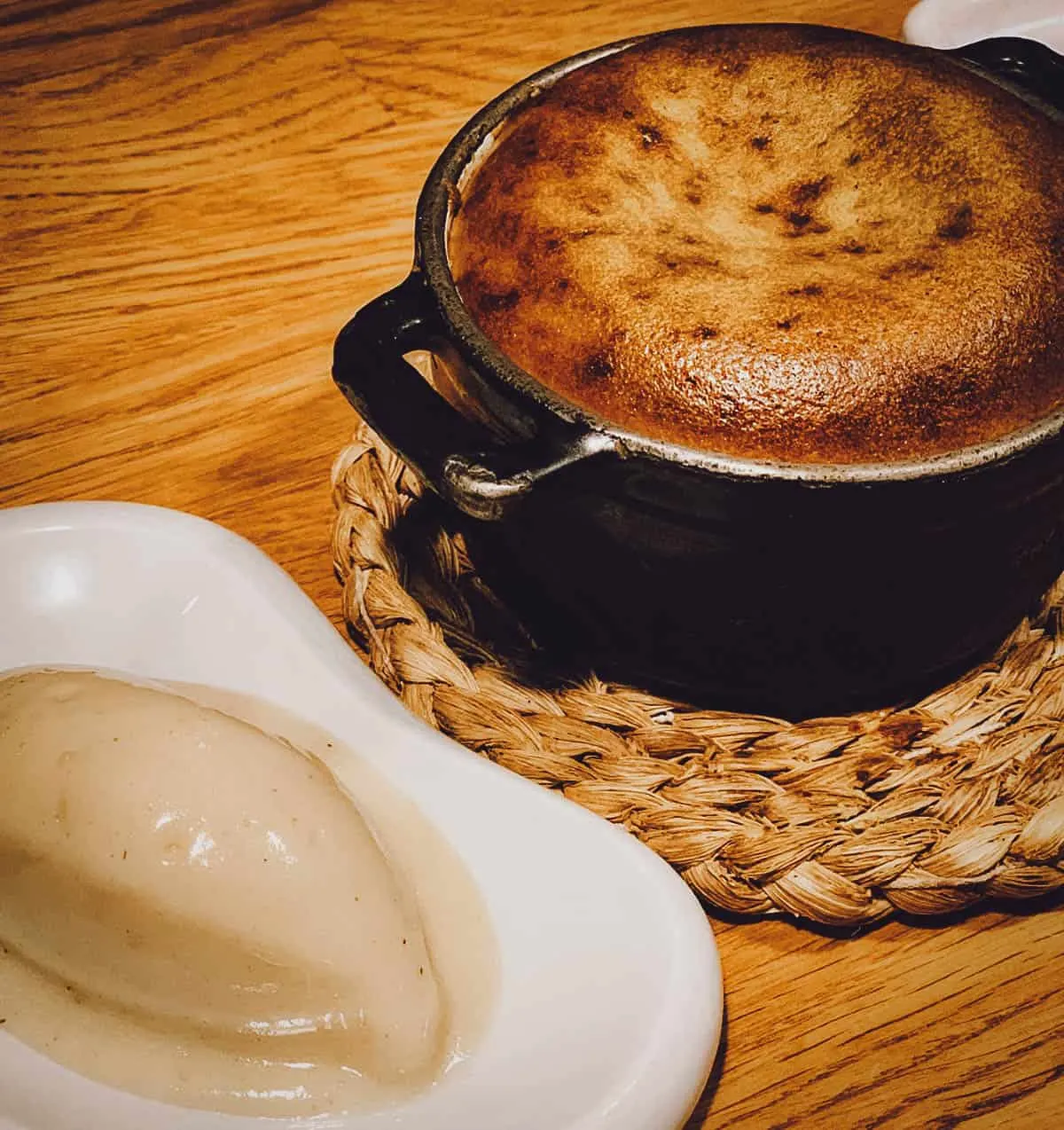
As its name suggests, Basque burnt cheesecake is a type of Spanish cheesecake from the Basque region. It’s a crustless cheesecake with a burnt top that was invented by the La Viña bar in San Sebastian.
纽约芝士蛋糕一直是我最爱的甜点之一,但巴斯克焦香芝士蛋糕更胜一筹。与口感整体偏硬的普通烤芝士蛋糕不同,巴斯克焦香芝士蛋糕边缘松软蓬松,中心则更加湿润绵密,入口即化。它绝对美味。
食谱: 巴斯克焦香芝士蛋糕
38. 加泰罗尼亚奶油
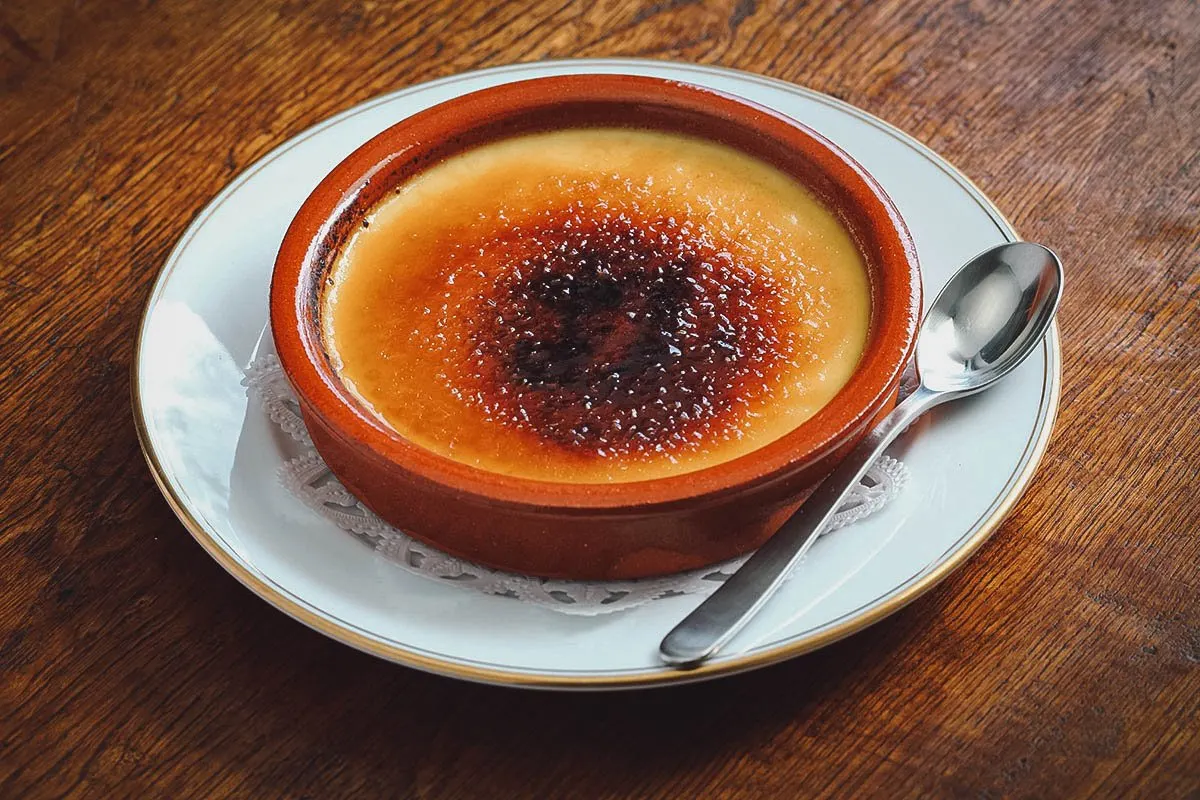
加泰罗尼亚奶油(Crema Catalana)基本上是西班牙版的焦糖布丁。焦糖布丁是用奶油制成,并以香草调味,而加泰罗尼亚奶油则用牛奶制成,并以肉桂和柠檬皮调味。顾名思义,这是一种在加泰罗尼亚地区很受欢迎的西班牙甜点。
食谱: 卡塔兰奶油
照片由 asimojet 提供
39. Mel i Mato
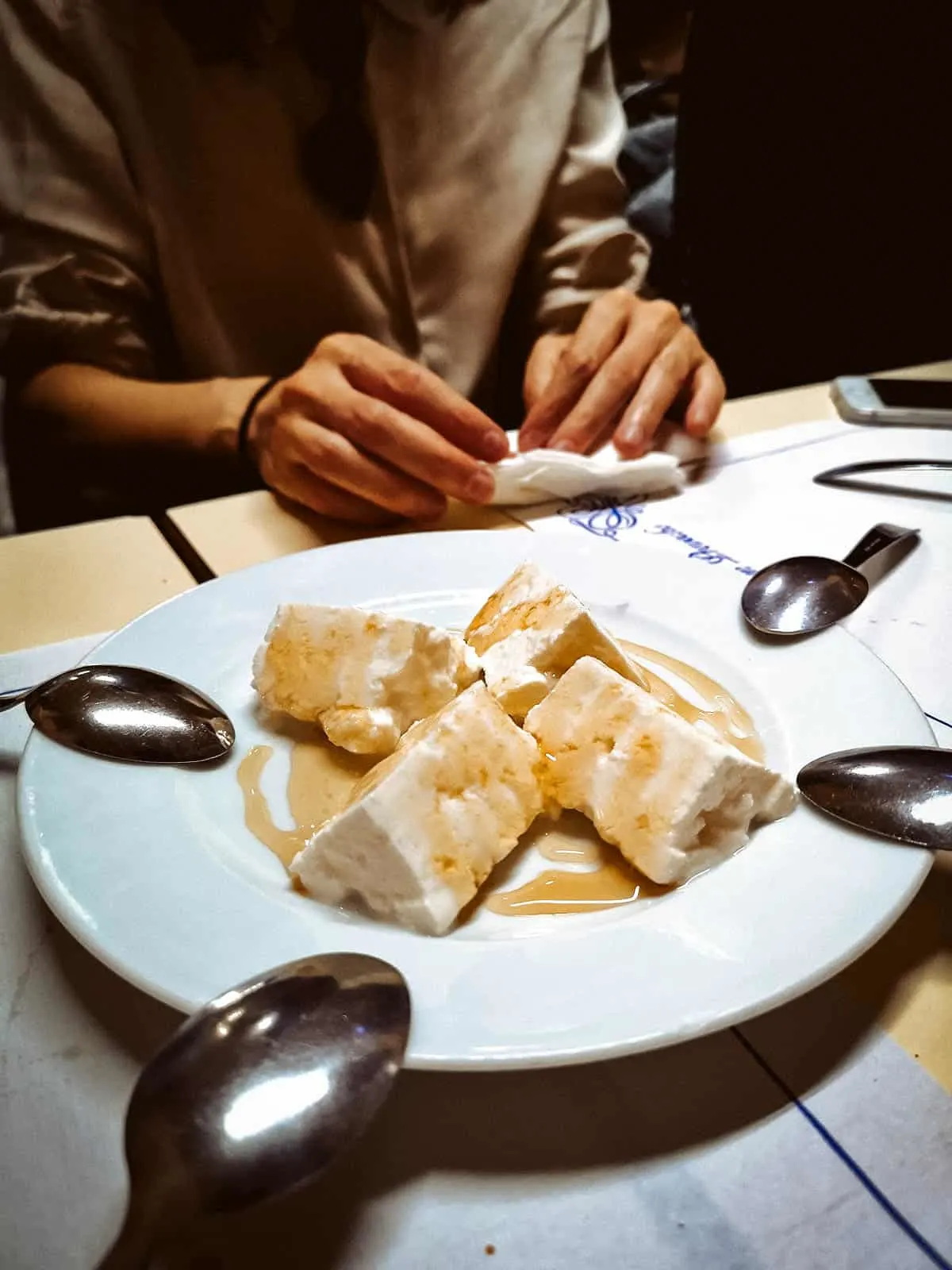
Mel i mato是另一种在加泰罗尼亚地区很受欢迎的西班牙甜点。它由蜂蜜和mato奶酪组成,mato是一种用山羊奶、绵羊奶或牛奶制成的味道略甜的新鲜奶酪。
一块马托果肉放在盘子里,淋上大量的蜂蜜。它可以单独食用,也可以搭配坚果、果酱以及干果或新鲜水果。
食谱: Mel i mato
40. 卡巴雍
卡巴永是一种西班牙杏仁酥皮点心,在奥维耶多很受欢迎。它的馅料由鸡蛋、杏仁粉、白兰地和糖混合而成,外层则用柠檬汁、糖浆和肉桂制成酥脆的外皮。
这种杏仁糕点在奥维耶多非常受欢迎,被认为是该市的文化象征。
配方: 卡巴雍
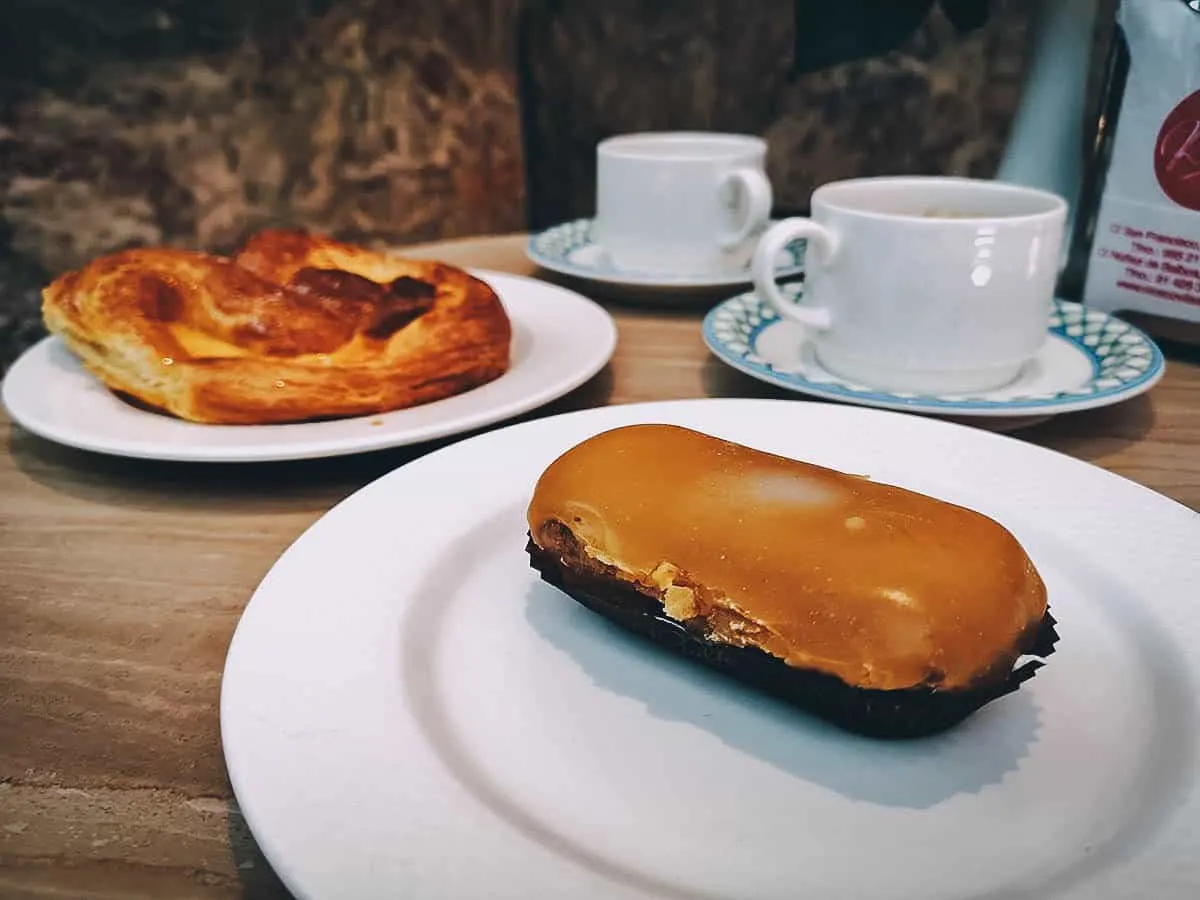
41. 皮奥诺诺
皮奥诺是一种源自安达卢西亚地区的西班牙糕点。它起源于圣菲,这是一个位于格拉纳达以西约 12.5 公里(7.8 英里)的小镇。
这种糕点由两部分组成——底层是淋满糖浆的卷酥皮,上面覆盖着一层烤奶油。它口感柔软、香甜、蓬松,通常几口就能吃完。
食谱: 皮奥诺诺
图片来自 Shutterstock,摄影师:Jimenezar
饮料
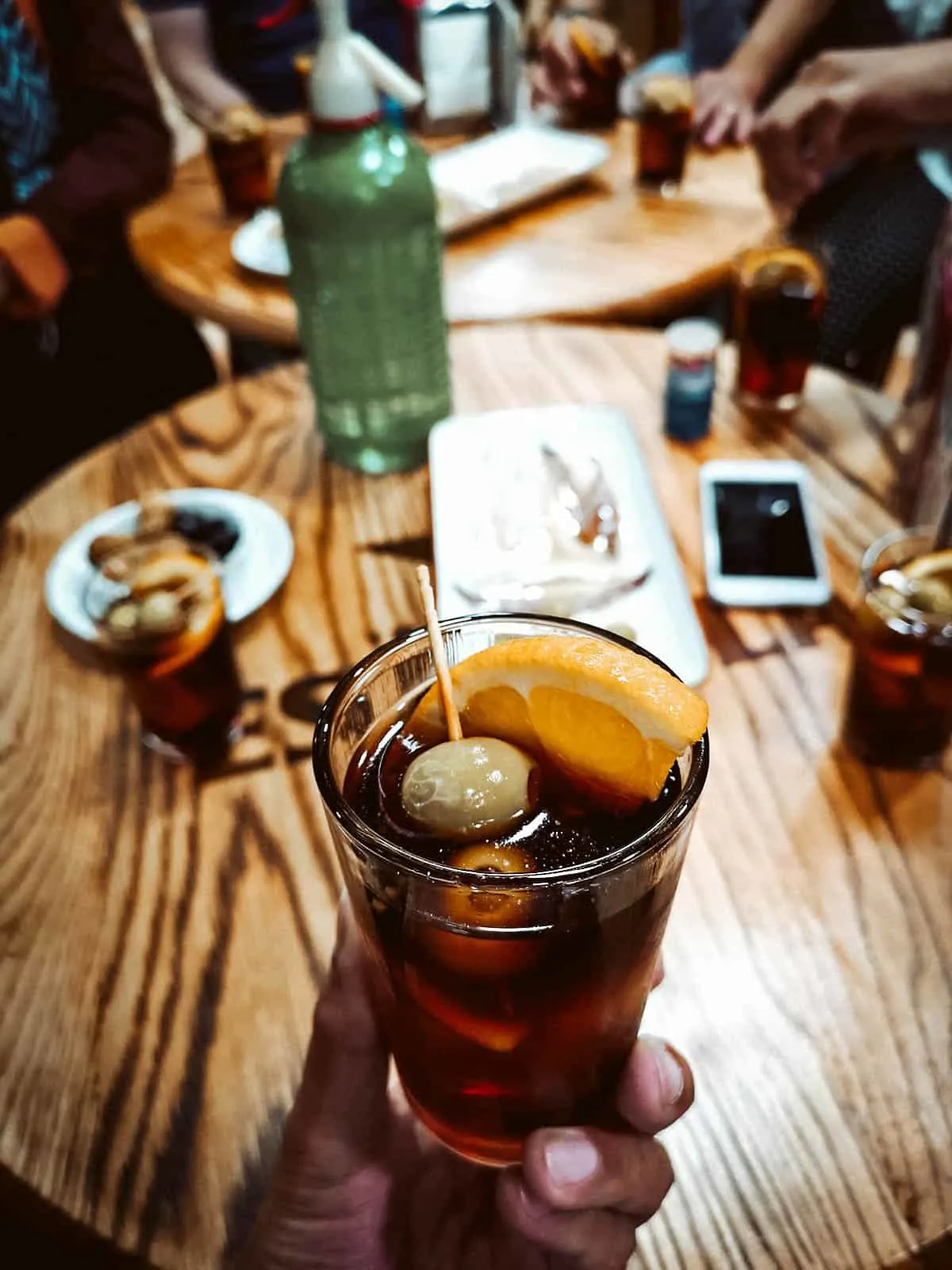
42. 苦艾酒
Vermut是西班牙语中“苦艾酒”的意思。它指的是一种添加了各种植物成分(如根、树皮、花朵、种子、草药和香料)调味的加香葡萄酒。
苦艾酒在西班牙非常受欢迎,常被用作餐前酒。周末,西班牙人经常会去酒窖或苦艾酒馆,在享用午餐前先品尝苦艾酒和西班牙小吃。
你可以直接享用苦艾酒,也可以用细筛喷上少许苏打水。它的味道很甜,与醋的酸味非常搭。
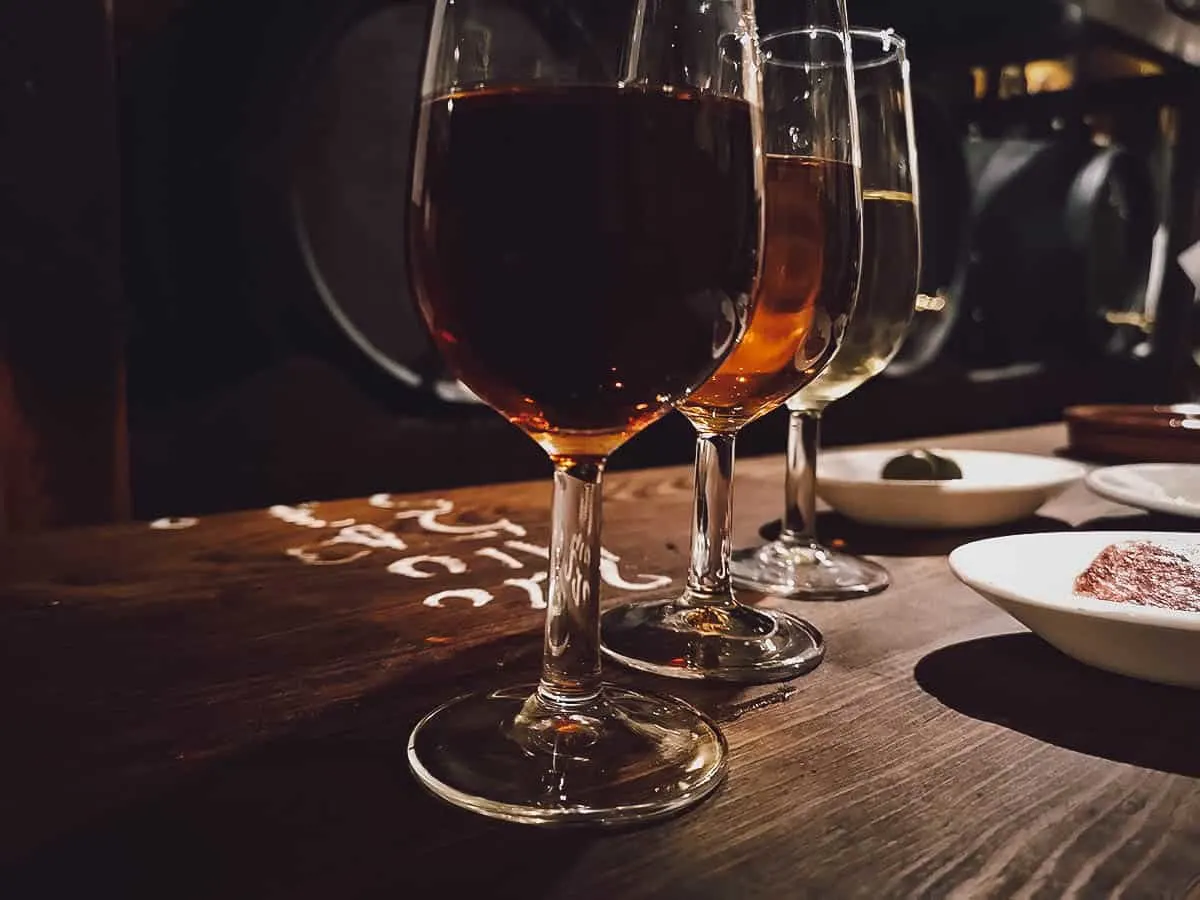
43. 雪利酒
雪莉酒(或称赫雷斯酒)是一种西班牙加强型葡萄酒,主要由安达卢西亚赫雷斯-谢雷斯-雪莉产区种植的帕洛米诺葡萄酿制而成。它用蒸馏酒进行强化,颜色从浅到深不等。
雪利酒是一种DOP葡萄酒,这意味着一瓶雪利酒必须在雪利三角产区内生产,并遵守一套特定的法规才能贴上“雪利酒”的标签。
44. 巴斯克苹果酒
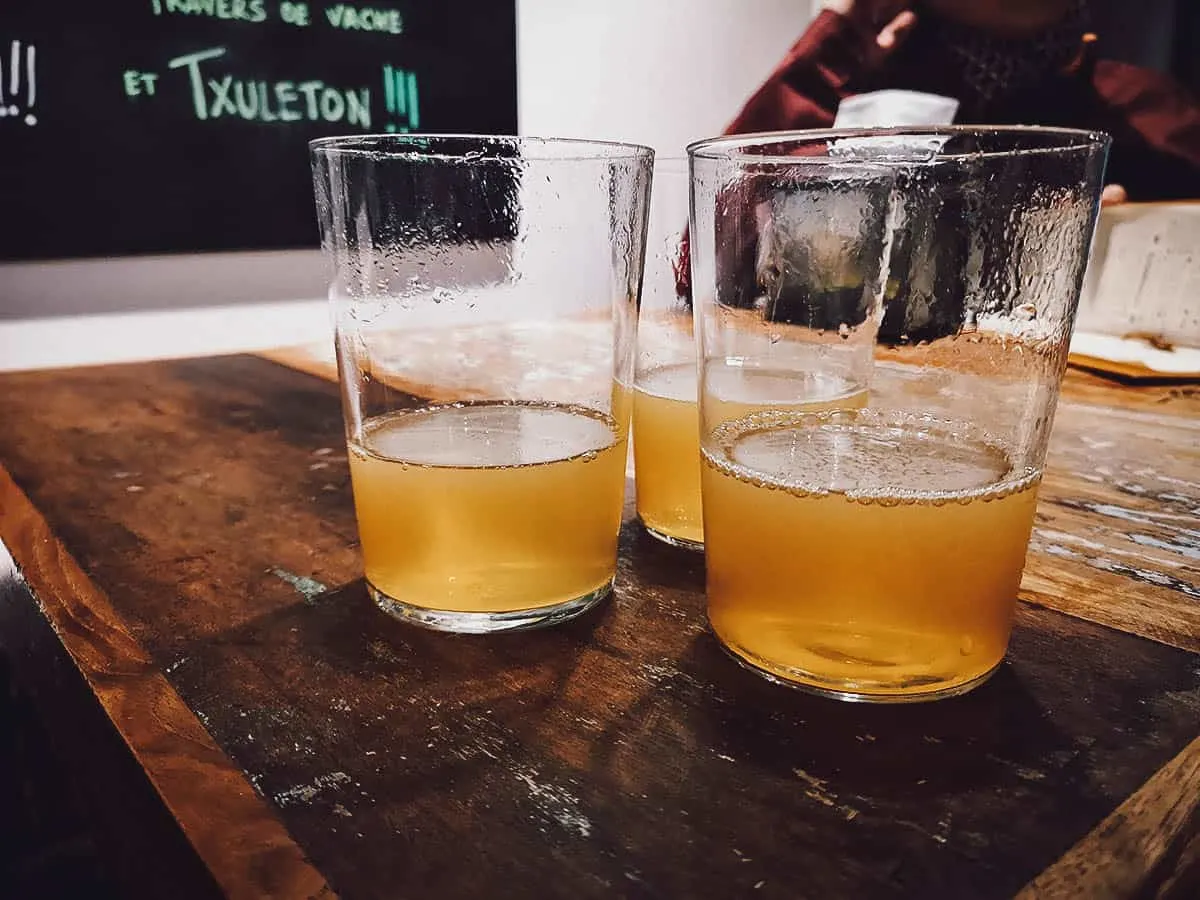
巴斯克苹果酒(或称萨加尔多亚酒)是一种在巴斯克地区流行的苹果酒。西班牙苹果经过自然发酵过程,酿造出一种口感辛辣、略带泥土和稻草味的饮品。
品尝巴斯克苹果酒的最佳时间是txotx季,大约从一月中旬一直持续到四月或五月。txotx指的是直接从酒桶中倒出苹果酒,并搭配传统的西班牙菜肴,例如鳕鱼、牛排、奶酪、苹果果冻和核桃。
45. 卡拉希略
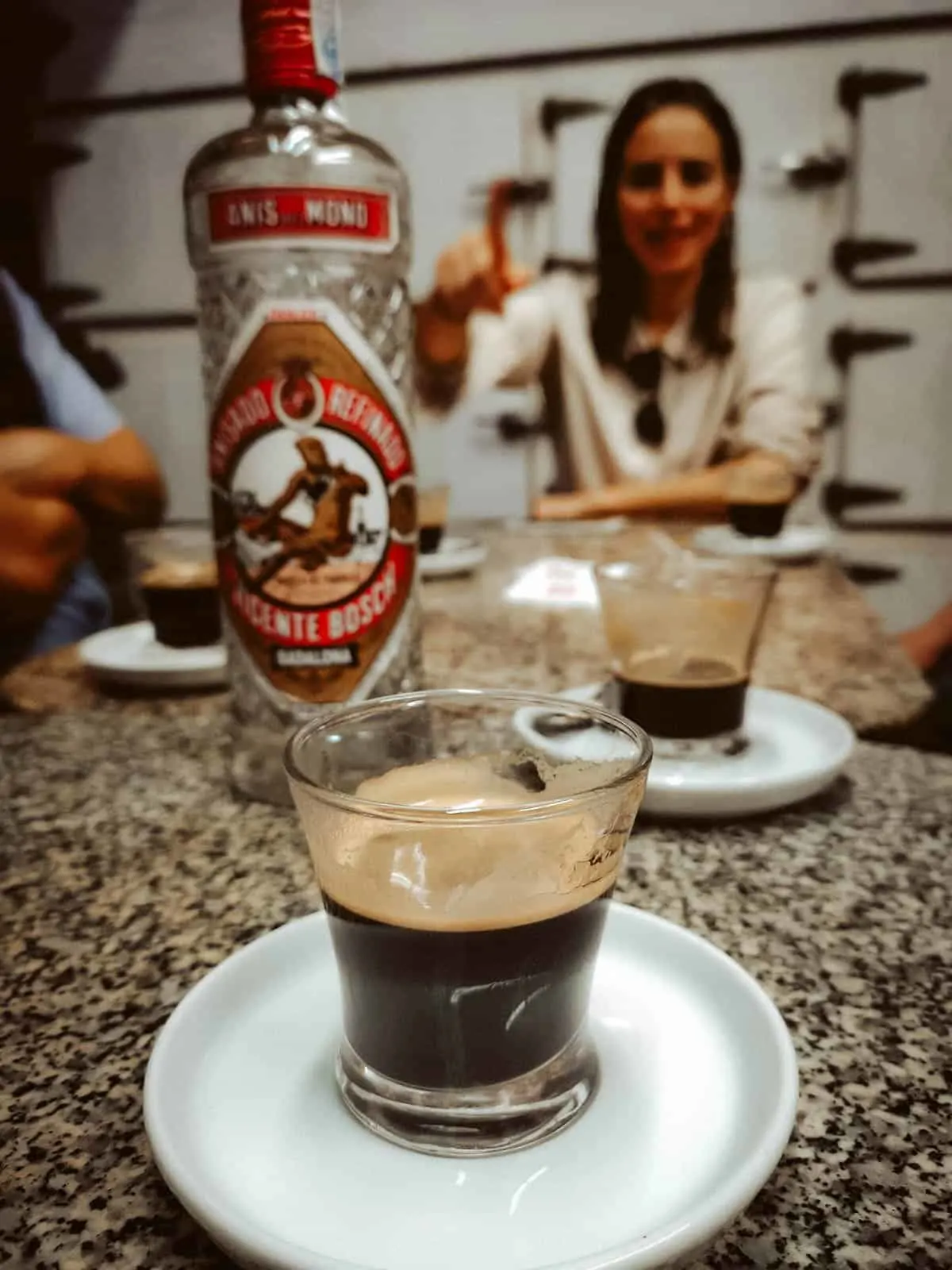
卡拉希略(Carajillo)是一种西班牙热咖啡饮品,其中加入了白兰地、威士忌或茴香酒。最简单的做法是将白兰地倒入一杯新鲜冲泡的咖啡中,但也有更复杂的版本,需要将酒精与糖、肉桂、咖啡豆和柠檬皮一起部分燃烧。
据我们在巴塞罗那的西班牙导游说,卡拉希略(Carajillo)这个名字源于西班牙语单词“coraje”,意思是“勇气”。这可以追溯到古巴还是西班牙殖民地时期,当时士兵们会在咖啡里掺入朗姆酒以壮胆。
西班牙美食之旅
没有人比当地人更了解西班牙美食,所以体验西班牙佳肴的最佳方式莫过于参加美食之旅。一位对美食痴迷的当地人将带您前往城中最棒的餐厅,并详细讲解每一道菜。
我们在巴塞罗那参加了一个西班牙美食之旅,结果这成了我们在西班牙最美好的回忆之一。想了解巴塞罗那以及西班牙其他城市的美食美酒之旅,可以查看Get Your Guide 网站。
西班牙烹饪课程
除了美食之旅,烹饪课也是我们旅行中最喜欢的活动之一。品尝西班牙美食是一回事,学习如何烹饪又是另一回事。对我来说,烹饪课是了解异国美食的最佳途径之一。您可以访问Cookly 网站,查看巴塞罗那以及西班牙其他城市的烹饪课列表。
关于传统西班牙食物的最后感想
和我们所有的美食指南一样,这份西班牙美食清单绝非最终版本,但我真心希望它能带您在西班牙发现一些美味佳肴。
由于我们非常喜欢西班牙美食和文化,我们已经在计划再次前往西班牙旅行。而且,如果真的去了,我们至少会待三个月。
我们渴望深入体验西班牙文化,真正领略西班牙美食的魅力。西班牙美食琳琅满目,我们想尽可能多地探索和品尝各种传统西班牙菜肴。这本西班牙美食指南的第一版只是个良好的开端,它仅仅揭开了西班牙美食的冰山一角。
感谢阅读,希望您在西班牙尽情享用这些美味佳肴,度过一段美好的时光。如果您有其他必尝的西班牙美食推荐,请在下方评论区留言。干杯!

评论(0)